October 2026
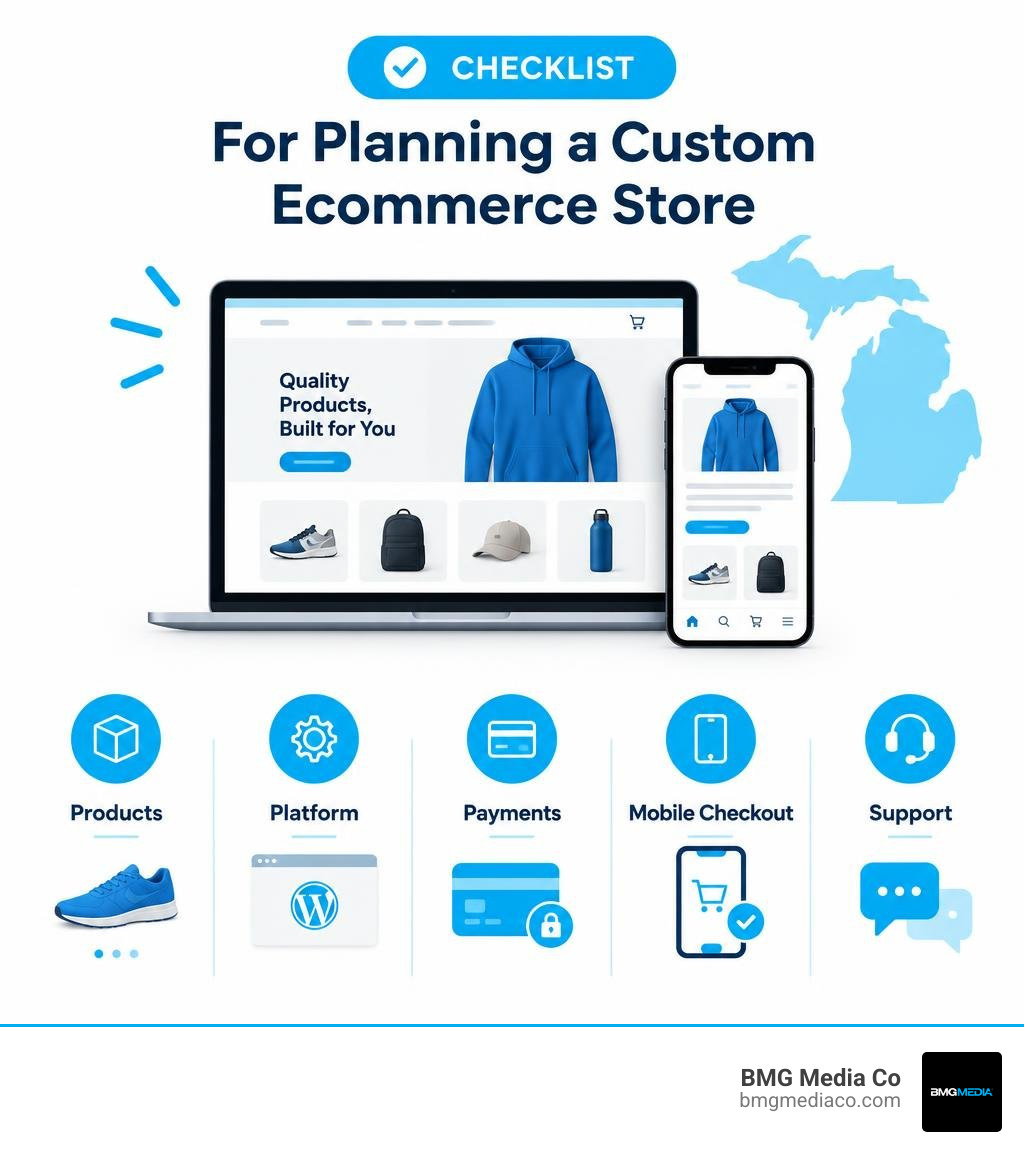
To build an online store that fits your business, start with the work it needs to do: show products clearly, keep inventory accurate, take secure payments, and make checkout easy on a phone. Then choose a platform and development partner based on those needs. Custom WordPress and WooCommerce can be a good fit when you need control over your design, content, and business-system integrations.
A Michigan-based team can also help shape the store around your customers, whether you sell to local shoppers or buyers across the country. Ask how the team will handle mobile design, search visibility, data migration, and support after launch—not just how the homepage will look.
I’m Blake George, founder of BMG Media Co.; my work in michigan ecommerce website development draws on my experience with custom WordPress sites, user experience, and digital strategy. In this guide, I’ll walk through the choices that matter before you invest in a build.
Related content about michigan ecommerce website development:
Every thriving business in Southeast Michigan—from advanced manufacturing shops in Troy and Auburn Hills to retail boutiques in Birmingham and commercial suppliers in Detroit—eventually runs up against the limitations of generic software. Out-of-the-box platforms often promise quick setups, but they frequently fall short when you need bespoke user journeys, proprietary catalog structures, and frictionless checkout experiences.
Investing in tailored custom web design and development services gives your organization total ownership of your digital sales engine. Instead of forcing your business model into pre-packaged molds, a custom-engineered WordPress and WooCommerce foundation adapts entirely to your operational workflows. This architectural freedom establishes immediate brand authority and builds lasting buyer confidence across every consumer and B2B touchpoint.
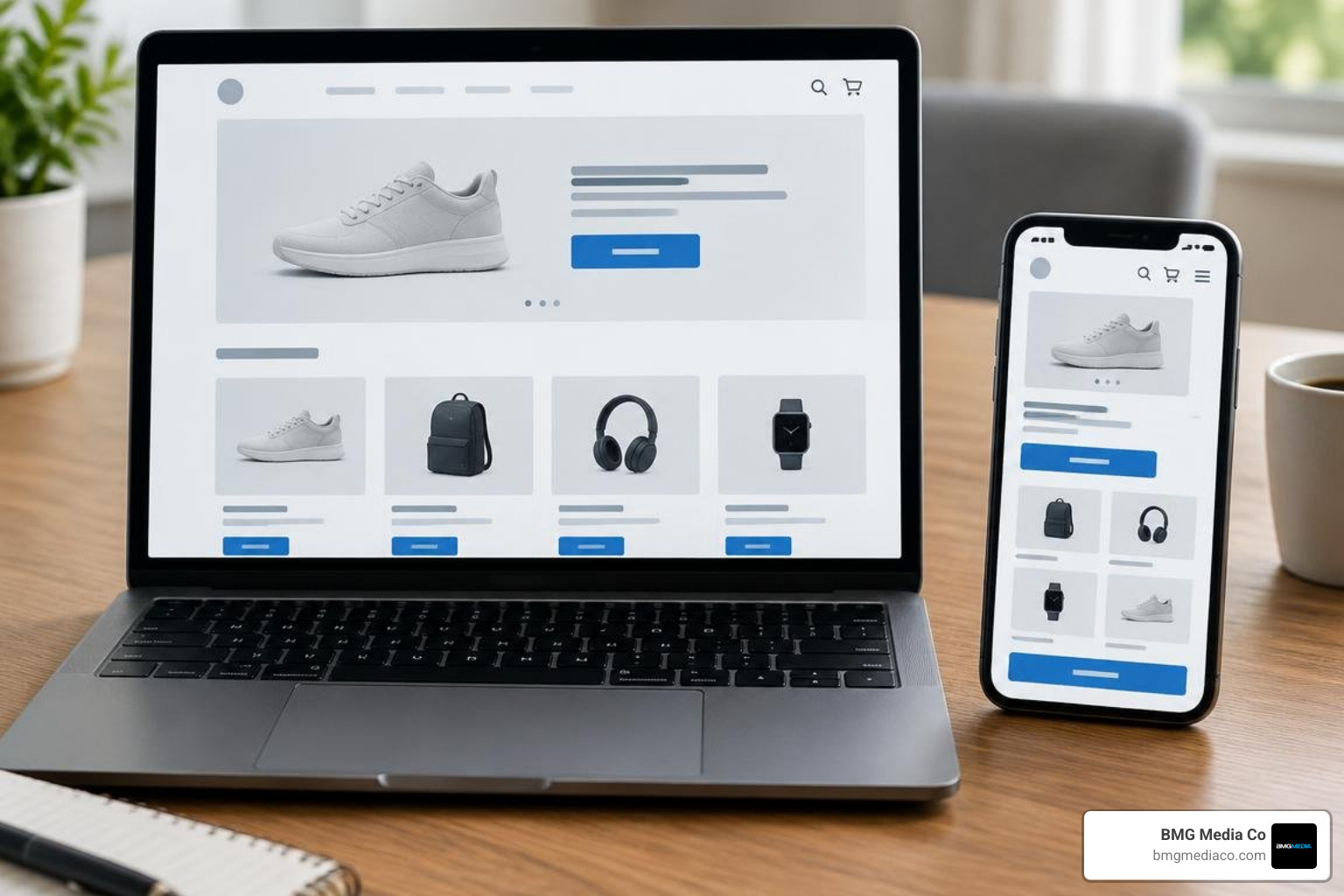
Template-based themes and visual page builders may seem convenient initially, but they carry hidden performance penalties. They rely on bloated codebases packed with excessive CSS and unused JavaScript libraries designed to accommodate every conceivable niche. As a result, page load times slow down, mobile interactions stutter, and technical SEO visibility drops significantly.
By contrast, bespoke WordPress architecture builds only what your brand requires to convert visitors into customers. Clean, custom-coded themes dramatically cut bloat, accelerate Core Web Vitals, and simplify long-term administrative management.
| Feature Area | Generic Theme Templates | Custom WordPress Architecture |
|---|---|---|
| Code Efficiency | Heavy, multipurpose codebases full of unused scripts | 100% bespoke, lightweight, and clean code |
| Page Load Speed | Slower response times due to plugin bloat | Sub-second load times optimized for Core Web Vitals |
| Design Flexibility | Locked into rigid grid systems and preset layouts | Tailored UI/UX mapped directly to user behaviors |
| Scalability & Security | Fragile plugin stacks prone to security exploits | Hardened WordPress builds with targeted API integrations |
| Backend Usability | Confusing visual builders with steep learning curves | Streamlined Advanced Custom Fields (ACF Pro) dashboards |
Winning commercial traction throughout Detroit, Ann Arbor, Rochester Hills, and Oakland County demands more than standard product listings. Local B2B buyers and regional retail consumers value reliability, fast inventory lookups, and clear transactional paths.
Integrating geographic search intent with bespoke functionality lets you address unique regional demands—such as multi-location inventory pickups, dynamic trade-pricing tables, and tiered freight delivery calculations. Adopting targeted custom CMS builds ensures that every page layout, local schema markup element, and digital asset communicates authentic industry leadership.
Selecting the foundation for an enterprise web property requires balancing usability against technical scalability. Complex businesses requiring multi-tiered product logic, custom portals, and automated ERP links need open-ended development flexibility.
Our custom WordPress and WooCommerce implementations deliver complete control over your codebase, database structures, and server hosting environments without recurring licensing overhead or restrictive API call limits.
Scaling an enterprise storefront requires a modern, modular backend. We implement bespoke custom themes paired with Advanced Custom Fields (ACF Pro), building streamlined publishing controls without relying on heavy page builders.
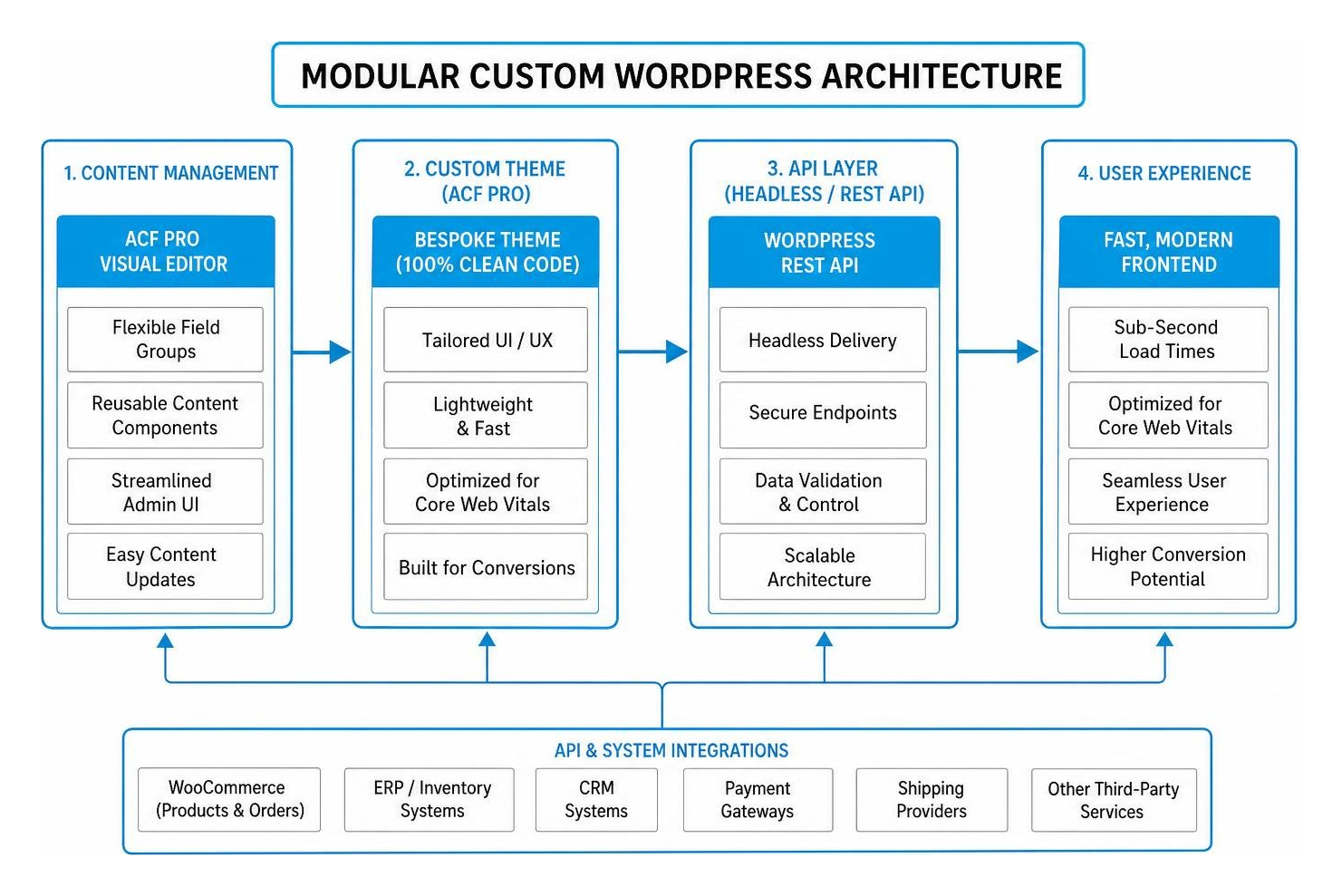
When enterprise workflows demand rapid product filtering across vast catalogs, we leverage headless architectures, dedicated microservices, and custom plugin modules. For complex operations—such as heavy manufacturing and supply chain platforms—tailored industrial sector website development bridges the gap between intricate engineering specifications, custom quote-generation engines, and automated sales funnels.

A high-converting online presence balances stunning aesthetic design with rigorous technical performance. Fast page rendering and seamless mobile browsing directly lower bounce rates and elevate search engine placements across competitive regional markets.
Our engineering standards focus on:
Enterprise digital properties require robust defense systems, reliable data bridges, and safe deployment protocols. Handling high-volume transactions and sensitive customer details means cutting corners on technical infrastructure is never an option.
Data protection is essential for maintaining customer trust. We build on hardened server environments featuring enterprise SSL encryption, strict role-based user permissions, automated continuous backups, and proactive Web Application Firewall (WAF) filtering.
When expanding technical capabilities through custom software integration, we replace risky third-party scripts with secure, custom-engineered API connectors. This minimizes external attack vectors, preserves database integrity, and ensures full compliance with modern PCI-DSS standards.
An effective digital store functions as the digital front door to your core business operations. Seamless data synchronization prevents manual order entry errors and eliminates inventory discrepancies.
We routinely engineer bidirectional integrations connecting custom WordPress builds to:
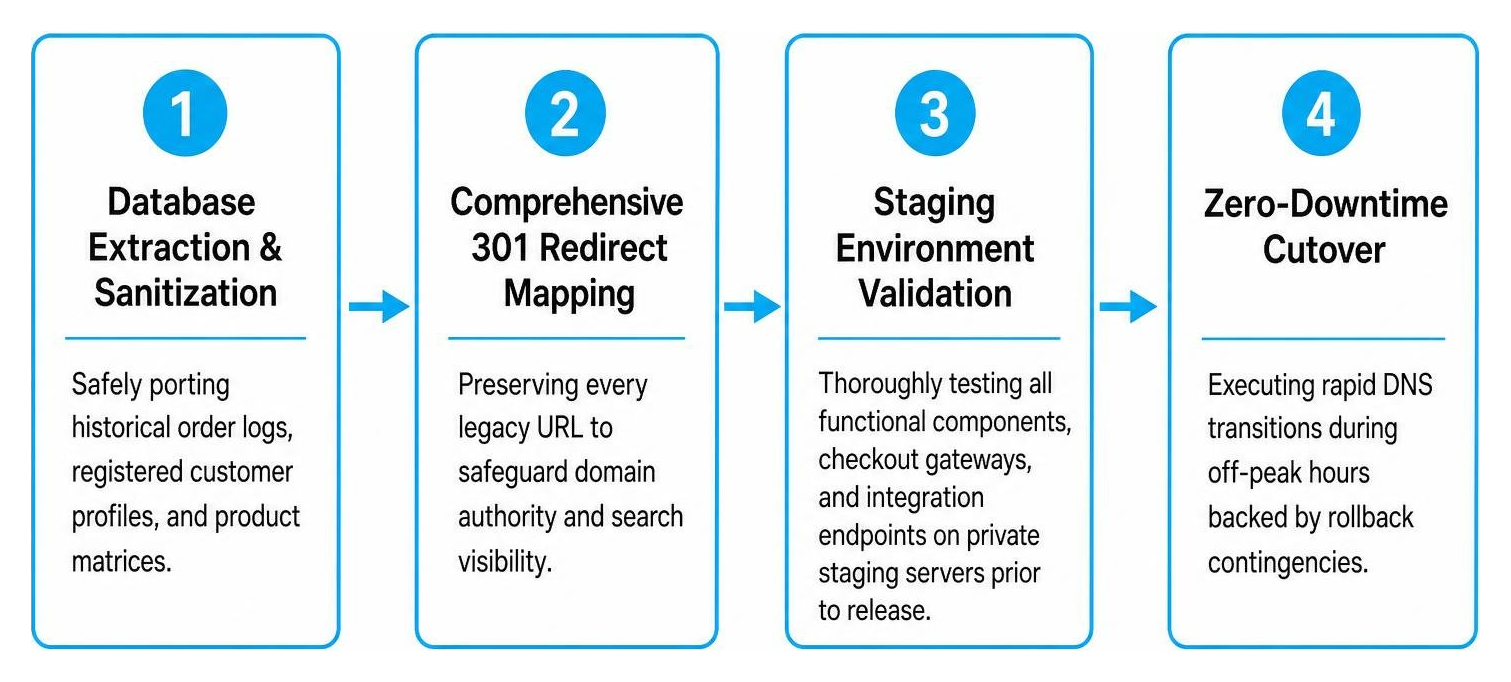
Migrating away from legacy platforms presents valid concerns about downtime, data corruption, and lost organic rankings. Our structured platform transition methodology eliminates these risks:
Investing in custom web development should be viewed through the lens of long-term business returns. A bespoke build provides an enduring digital asset that scales alongside your enterprise, avoiding the restrictive recurring fees and functional roadblocks of cookie-cutter software.
Reviewing a comprehensive web design portfolio of custom ecommerce platforms engineered for Michigan enterprises provides valuable insight into how bespoke architectural investments translate into measurable market authority and commercial performance. BMG Media Co. has built 1000+ websites since 2009, giving every project the benefit of that depth of experience. The portfolio includes completed Michigan ecommerce builds you can review directly to see how these principles play out in real client work.
Custom website development pricing is determined by functional complexity and technical scope:
Delivering enterprise-grade web properties demands an organized, transparent development roadmap from discovery through post-launch scaling:
Ready to discuss your project scope and timeline? Request a custom website quote and our team will map out the right plan for your business.
Project costs vary based on overall scope, design requirements, and back-office integration needs. Enterprise-grade custom WordPress builds with bespoke layouts, zero page-builder bloat, and tailored business integrations represent a serious investment that reflects the dedicated engineering, custom UI/UX design, and strategic technical planning required to drive long-term revenue.
A fully bespoke WordPress website generally requires between 8 to 16 weeks from initial technical discovery to final deployment. This timeline ensures sufficient room for thorough stakeholder reviews, comprehensive UX wireframing, custom frontend/backend coding, deep integration testing, and rigorous quality assurance across all modern mobile and desktop browsers.
Yes, provided the migration follows strict technical protocols. By auditing your historical data, mapping every legacy URL with granular 301 redirects, transferring complete customer and order databases, and retaining optimized metadata structures, we protect your existing organic search rankings and ensure a seamless transition for your customers.
Your digital presence is the cornerstone of your brand’s commercial success. Off-the-shelf templates and bloated page builders might offer quick fixes, but sustainable market leadership requires tailored digital craftsmanship, uncompromising security, and exceptional performance.
Headquartered in Birmingham, Michigan, BMG Media Co. brings unmatched scale, technical craft, and strategic insight to every build. Having developed 1000+ websites since 2009, our team builds 100% custom web properties engineered to convert casual visitors into loyal brand advocates.
Whether you operate in Detroit, Bloomfield Hills, Southfield, Troy, or anywhere nationwide, we are ready to build an online engine designed for sustained growth.
Ready to elevate your online presence? Take the first step today: request a custom website quote or explore our full suite of custom web design services to see what bespoke digital development can do for your business.
