March 2026

A web design contractor is a freelance or independent professional you hire to plan, design, and build your website — without the overhead of a full-time employee or agency retainer.
Here’s a quick overview of your options:
| Option | Best For | Typical Cost |
|---|---|---|
| Freelance contractor | Small to mid-size projects | $15–$30/hr |
| Part-time contractor | Ongoing updates or builds | $300–$600/week |
| Full-time contractor | Large or complex sites | $600–$1,200/week |
| Web design agency | Enterprise or multi-platform | Custom pricing |
The fastest way to hire a web design contractor:
Your website is often the first thing a potential customer sees. In fact, visitors form an impression of your site in as little as 0.05 seconds — before they’ve read a single word. If your site looks outdated, loads slowly, or isn’t built for mobile, you’re losing business before the conversation even starts.
That’s why choosing the right web design contractor matters so much. The wrong hire can cost you time, money, and customers. The right one can transform your online presence into a lead-generating machine.
I’m Blake George, founder of BMG Media Co, a nationally recognized web design and development agency based in Birmingham, Michigan. Since 2009, I’ve worked as both a web design contractor and agency leader, building over 1,000 custom websites for businesses ranging from local startups to multi-billion-dollar enterprises. In this guide, I’ll walk you through everything you need to know to find, evaluate, and hire the right contractor for your project.
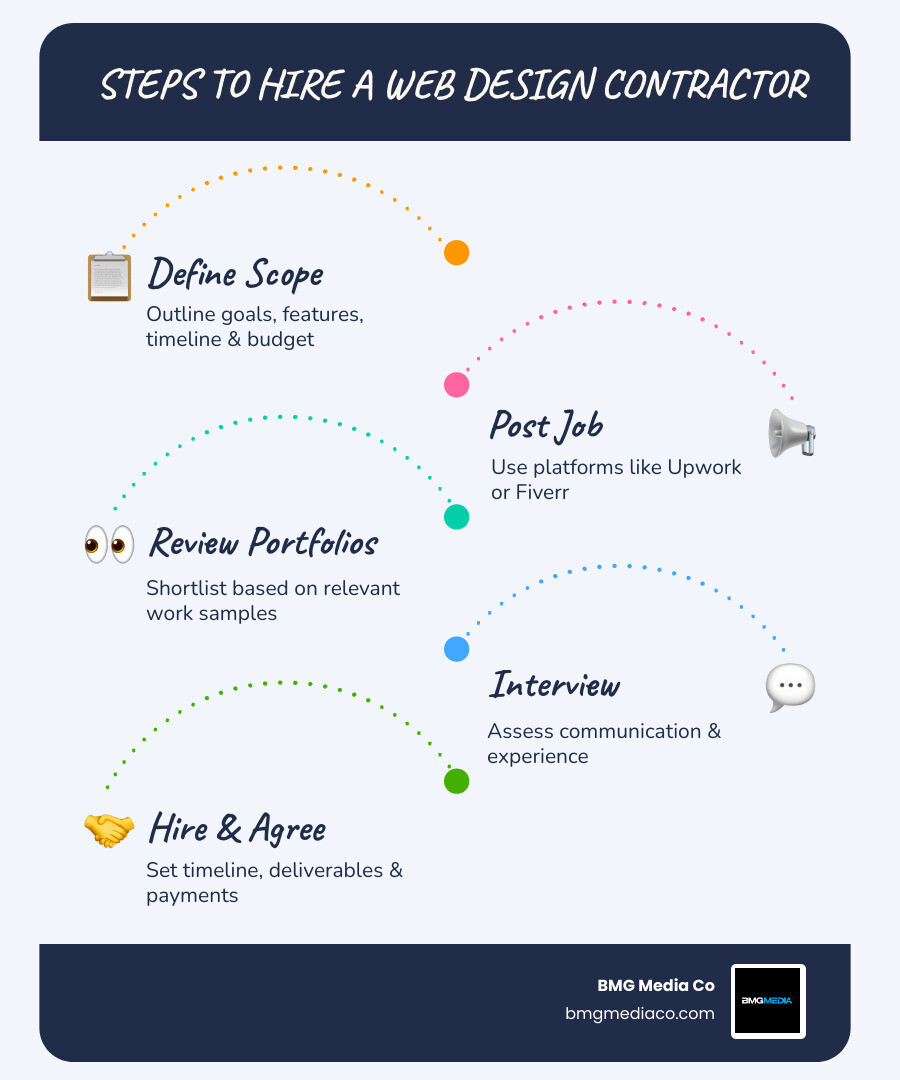
Simple web design contractor word guide:
When you set out to hire a web design contractor, it is helpful to understand that the role has evolved. It is no longer just about making things look “pretty.” Today’s top contractors are a hybrid of artists, engineers, and psychologists. They need to understand how a user’s eye moves across a screen and how to turn that movement into a click, a call, or a sale.
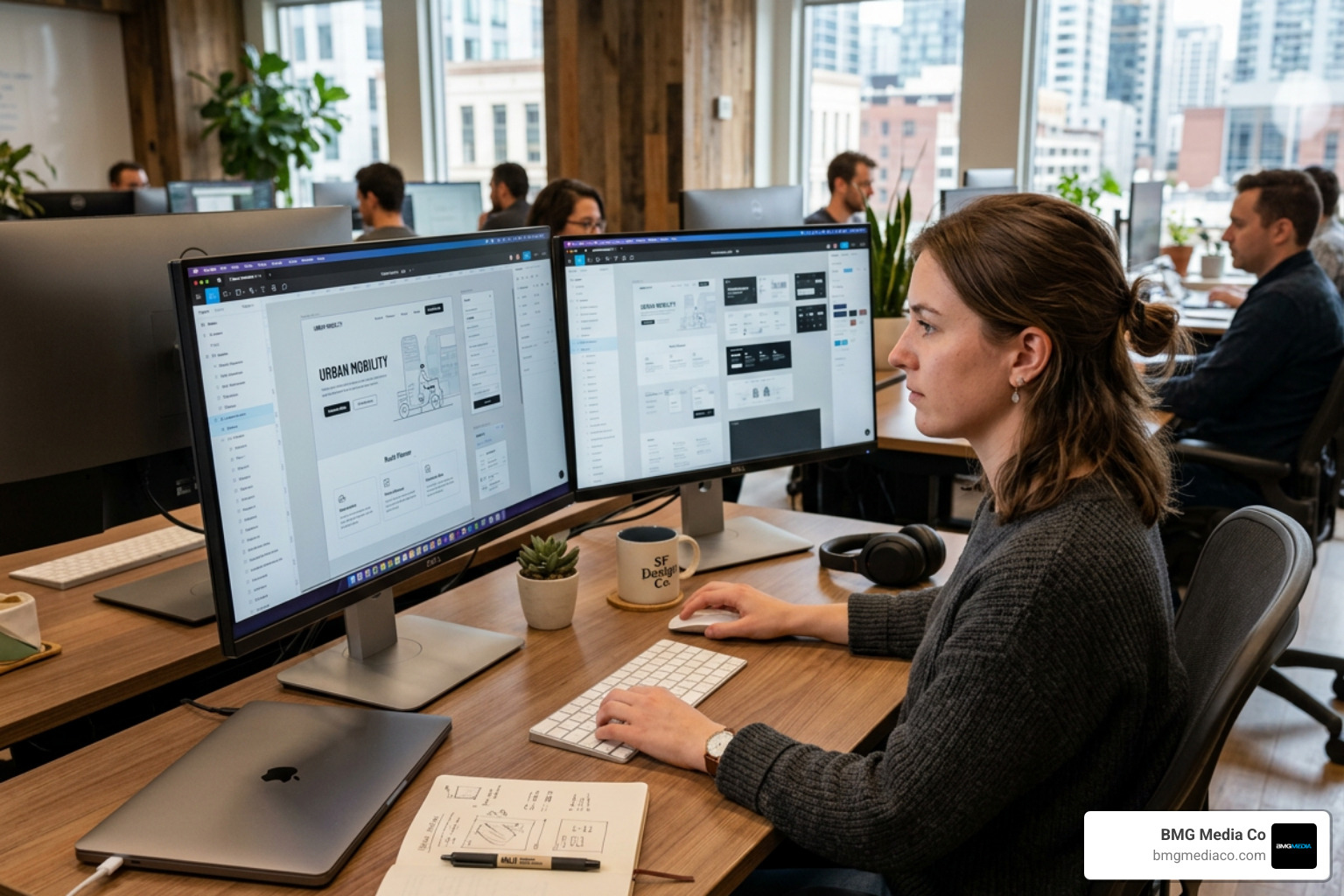
The hiring demand for web designers is rapidly increasing. As more businesses in Michigan and across the country move their primary storefronts online, the need for professionals who can bridge the gap between aesthetics and functionality has never been higher. A contractor typically handles the visual layout, the user interface (UI), and the user experience (UX). They create prototypes—interactive “blueprints” of your site—before a single line of final code is written.
Furthermore, a great contractor doesn’t just hand over a static design. They often delve into front-end development, ensuring that the buttons actually work and the layout shifts perfectly when viewed on an iPhone versus a desktop monitor. They follow core Web Design Principles to ensure your site isn’t just a digital brochure, but a high-performance business tool.
What exactly should your web design contractor know how to do? If you are looking at resumes or Upwork profiles, you’ll see a lot of alphabet soup. Here is the breakdown of the essential skills:
One of the biggest decisions you will face is whether to use a template or go for Custom Web Design. Many contractors will try to sell you on a pre-made theme because it is faster for them. At BMG Media Co, we’ve completed over 1,000 sites, and we’ve learned that templates are often a trap.
Custom development offers:
Talking about money can be awkward, but let’s be real: you need to know what this is going to cost. The most in-demand work skills in 2024 include UX/UI design and e-commerce development, and prices reflect that demand.
On platforms like Upwork, clients rate web designers an average of 4.8 out of 5 stars across over 100,000 reviews. This high satisfaction usually comes when the budget aligns with the project scope. If you try to build a “mini-Amazon” on a “lemonade stand” budget, everyone ends up unhappy. To get a clear picture of what your specific vision might cost, you can always request a Free Quote to see how your goals translate into a professional project plan.
Not all websites are created equal. A five-page informational site for a local law firm is a world away from a 500-product e-commerce store. Here are the “price drivers”:
To help you budget, we’ve put together a comparison based on current 2024 market data for the Michigan area and national freelance platforms.
| Project Type | Freelance Contractor (Mid-Level) | Full-Service Agency (Custom) |
|---|---|---|
| Simple Informational Site | $1,500 – $5,000 | $5,000 – $15,000 |
| E-commerce Store | $3,000 – $10,000 | $15,000 – $50,000+ |
| Complex Web Application | $10,000 – $30,000 | $50,000 – $150,000+ |
| Hourly Rate | $15 – $60/hr | $125 – $250/hr |
A part-time web design contractor working 20 hours a week might cost you $15,600 to $31,200 per year, while a full-time freelancer could be double that. Agencies cost more because you aren’t just getting a designer; you’re getting a project manager, a developer, an SEO specialist, and a creative director all working in sync. This is often necessary to stay ahead of Top Web Design Trends 2024.
Hiring is a skill in itself. You aren’t just looking for the best artist; you’re looking for the best partner. The first step is always the Portfolio. When reviewing a contractor’s past work, don’t just look at the screenshots. Visit the actual websites they’ve built on your phone. Do they load fast? Is the navigation intuitive?
If you are using a specific technology, like WordPress, ask them about their process. Do they use “child themes”? Do they document their custom code? A contractor who “hacks” a theme without documentation is leaving you a ticking time bomb that will break the next time the software updates.
We’ve seen it all. Here are the warning signs that you should keep looking:
Checking rankings on platforms that list Top Web Design Companies can also help you see who is consistently delivering high-quality work in the industry.
To attract the best web design contractor, you need to speak their language. Don’t just say “I need a website.” Be specific.
We get a lot of questions from business owners in Birmingham and beyond. Here are the most common ones we hear at BMG Media Co.
Most professional web design projects take between 3 to 8 weeks. A simple landing page might be done in two, but a full custom build requires a discovery phase, design rounds, development, and testing. The biggest “bottleneck” is usually content and feedback. If you take two weeks to review a design, the timeline shifts. We always recommend following a Website Redesign Checklist to keep things moving.
This is the “Goldilocks” question.
SEO isn’t something you “add” at the end; it’s built into the foundation.
Finding the right web design contractor is one of the most important investments you will make for your business. Whether you are looking for a solo freelancer to handle a few updates or a full-service partner to build a custom enterprise solution, the keys are the same: check the portfolio, verify the technical skills, and ensure they have a clear process for SEO and mobile optimization.
At BMG Media Co, we pride ourselves on being more than just contractors. We are a Birmingham, Michigan-based team dedicated to building custom, high-performance websites that drive real results. We don’t use templates, and we don’t cut corners. With over 1,000 sites completed, we have the experience to turn your vision into a digital reality.
Ready to start your project? Explore our Web Design Services or Contact us today to see how we can help your business grow.
Quick Links for Your Project:
