April 2026

Product rendering services let businesses create photorealistic digital images of their products — without a single photoshoot.
Here’s a quick breakdown of what they are and how they work:
| What it is | Computer-generated imagery (CGI) that makes digital products look like real photos |
| How it differs from photography | No physical product, studio, or camera needed — everything is built in 3D software |
| What you get | Lifestyle scenes, white background shots, 360° spins, animations, and more |
| Who it’s for | E-commerce brands, manufacturers, product designers, and marketers |
| Key benefit | Up to 40% higher conversions and 90% cheaper than traditional photoshoots |
Traditional product photography is expensive, slow, and inflexible. Need a different color? Reshoot. New background? Reshoot. Launching 50 SKUs? Good luck.
3D product rendering solves all of that. You get pixel-perfect visuals you can update, scale, and repurpose — at a fraction of the cost.
I’m Blake George, founder of BMG Media Co, where I’ve spent over a decade helping brands across manufacturing, healthcare, and consumer goods build high-performance digital experiences — including integrating product rendering services into product launches and e-commerce strategies. In the sections below, we’ll walk through everything you need to know to get photorealistic results for your brand.
In the modern digital landscape, “good enough” imagery doesn’t cut it anymore. When customers can’t touch a product, they rely entirely on what they see. This is where professional product rendering services become a game-changer for your bottom line.
The statistics are hard to ignore. Research shows that products featuring 3D imagery see up to a 40% conversion lift across e-commerce platforms and paid media. Why? Because high-quality CGI builds a 54% increase in consumer trust. When a customer can explore every texture, seam, and angle of a product through 3D Renderings, they feel more confident in their purchase decision. For a broader overview of the technology behind this process, the Computer-generated imagery article is a useful external reference.
One of the most staggering advantages is the cost-efficiency. Utilizing CGI visuals is often 90% cheaper than traditional photoshoots, especially when you factor in the logistics of shipping physical prototypes, renting studios, and hiring photographers. Furthermore, photorealistic CGI visuals are automated and scalable. Instead of a one-off photo, you are creating a digital asset that can be used indefinitely.
| Feature | Traditional Photography | 3D Product Rendering |
|---|---|---|
| Cost | High (Shipping, Studio, Talent) | Low (No physical logistics) |
| Flexibility | Rigid (Requires new shoot for changes) | Infinite (Change colors/textures instantly) |
| Speed | Slow (Setup and post-processing) | Fast (Drafts often in 48 hours) |
| Quality | Dependent on physical sample | Flawless (No dust, scratches, or glares) |
| Prototyping | Requires physical product | Can render from a sketch or CAD file |
Beyond just saving money, these services offer incredible marketing agility. If you’re a manufacturer in Michigan looking to test a new product design, you don’t need to wait for a factory prototype. You can use rapid prototyping via 3D visualization to gauge interest or secure investor funding before a single unit is manufactured. This also brings significant sustainability benefits, as you’re reducing the carbon footprint associated with shipping samples around the globe for marketing content.
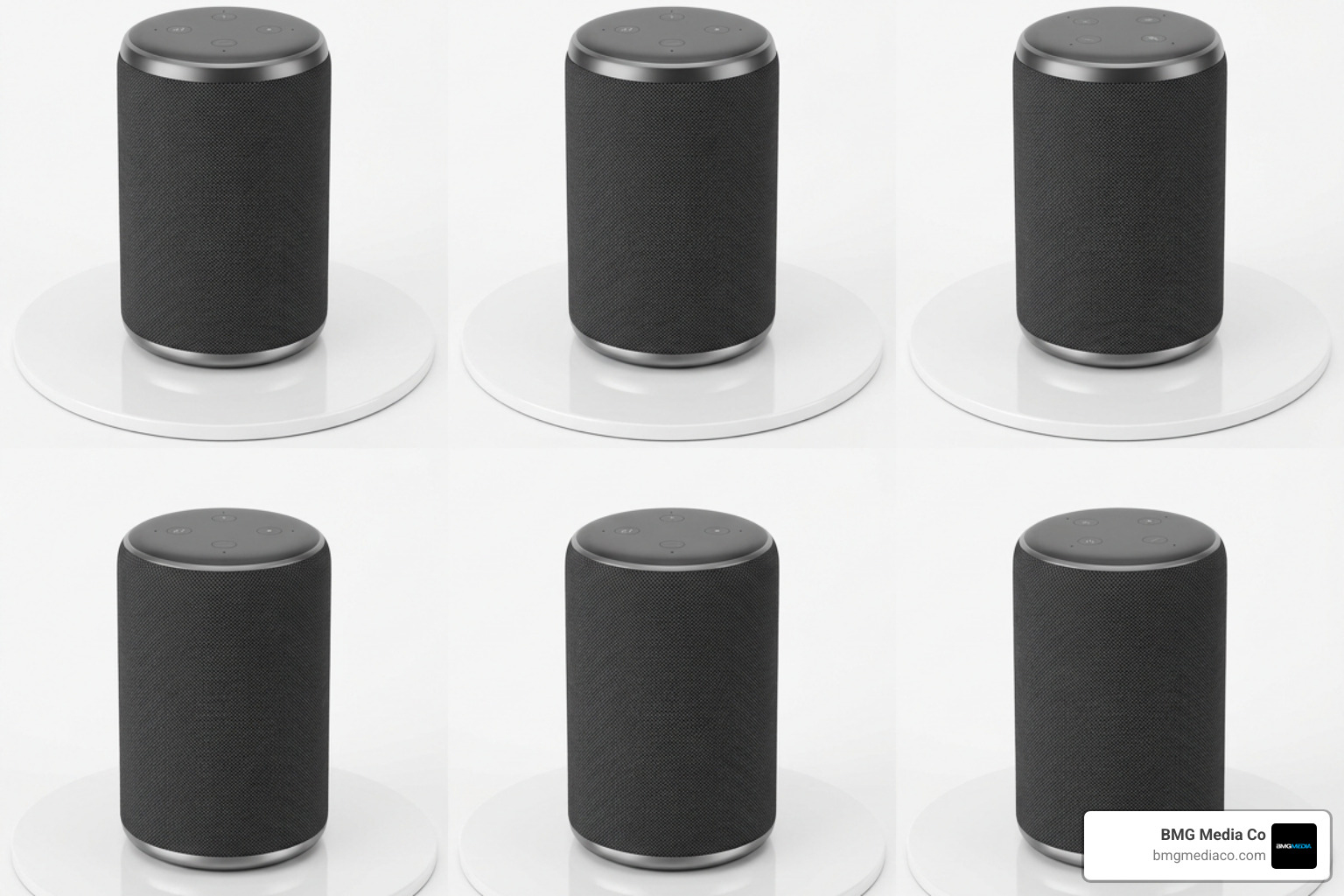
Not all renders are created equal. Depending on where your customer is in the buying journey, you might need different types of visuals. High-quality product rendering services offer a suite of options:
For brands looking to stay ahead of the curve, Illustrations & Animations can take these static models and turn them into cinematic stories. We also see a massive rise in AR-ready models and Virtual Reality applications. Imagine a customer being able to use their phone to “place” your furniture in their actual living room using Augmented Reality. This level of interaction is powered by the same 3D models used for your standard renders.
Additionally, product configurators allow for real-time customization. A user can visit your site and change the leather color, stitching, and hardware of a bag, seeing the changes update instantly in photorealistic detail.
The “digital shelf” is more competitive than ever. For Amazon sellers, using high-quality photorealistic 3D product rendering services is often the secret to ranking #1. Amazon A+ content that utilizes 3D assets sees a significant boost in engagement.
These services ensure your visuals are photorealistic, automated, and scalable, so that as your catalog grows, your brand remains consistent. Whether a customer is viewing on a 30-inch monitor or a 5-inch smartphone, 3D renders are optimized for mobile responsiveness and high-resolution zoom functionality. This level of detail isn’t just about looking pretty; it’s about providing the information necessary to reduce returns and increase the “Add to Cart” rate.
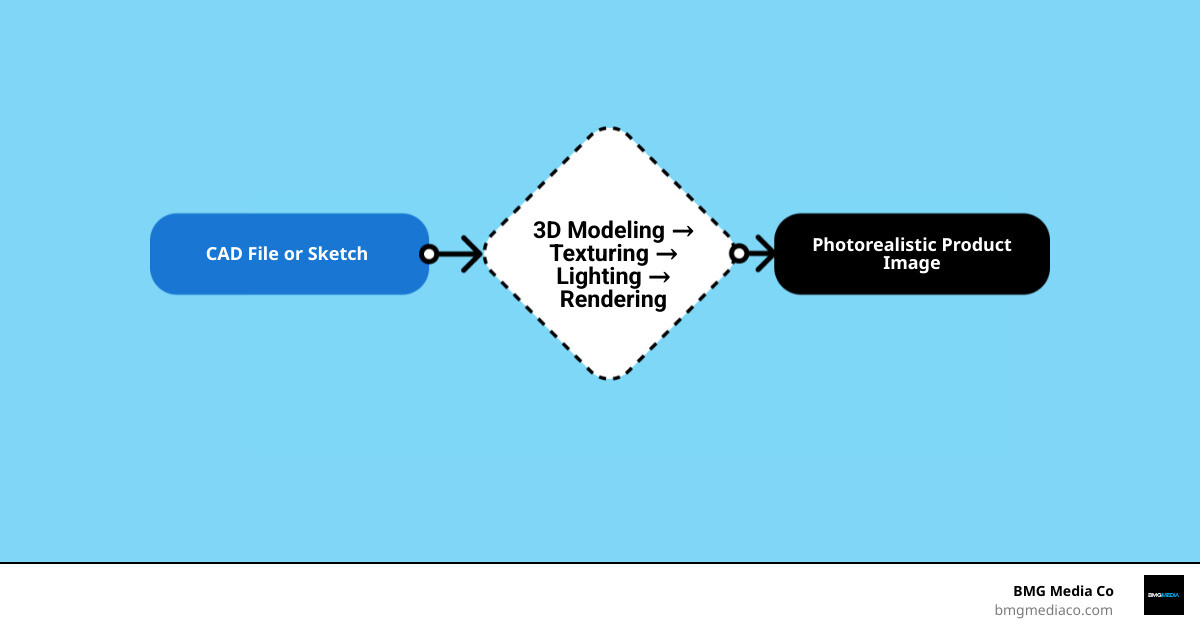
How do we go from an idea to a pixel-perfect image? It’s a blend of technical precision and Creative Design.
One of the biggest headaches in product marketing is managing variations. If you have one chair that comes in 50 different fabric and leg combinations, a traditional photoshoot is a nightmare. With product rendering services, we create a “digital twin” of the product.
Using tools like Illustrator for label layouts and advanced rendering pipelines, we can produce high-volume output of every single SKU variation. This ensures global consistency across your entire brand. If you decide to change the shade of “Navy Blue” next year, we don’t need a new photoshoot—we simply update the digital material and run a batch process to update every image in your catalog.
This scalability is why firms often look for professional 3D rendering and visualization services in Michigan to support their manufacturing pipelines. Local expertise combined with global-reaching technology allows for a seamless workflow.
You don’t need to be a tech expert to get started. Most professional product rendering services can work with a variety of inputs. The gold standard is CAD data (STEP, IGES, or OBJ files) because it provides the exact geometry of your product. However, if you don’t have those, we can work from:
When you work with a reputable provider like BMG Media Co, the intellectual property generally belongs to you. Once the project is fully paid for, you own the usage rights to the final images and, in many cases, the 3D models themselves. We always recommend ensuring NDA protection is in place before sharing sensitive product designs. This ownership allows you to repurpose the assets for years—turning a static render into a video ad or an AR experience later down the road.
Turnaround times vary based on complexity. A simple white-background render might have an initial draft ready in 48 hours. A full suite of lifestyle scenes and animations for a complex product launch typically takes 7-14 days. Most professional 3D visualization projects follow a structured timeline that includes a few rounds of revisions to ensure total satisfaction. If you’re in a pinch, many studios offer “rush” options to meet tight trade show or launch deadlines.
At BMG Media Co, we believe that your digital presence should be as high-quality as the products you build. We specialize in creating award-winning custom solutions that bridge the gap between engineering and marketing. Whether you need high-end sophistication or local Michigan-based expertise, we provide the tools to make your brand stand out.
From Branding Design that captures your essence to Custom Web Design that converts visitors into customers, our team is here to help you scale. Ready to transform your product presentation? Elevate your manufacturing brand with custom 3D visuals and see the difference photorealism makes.
