June 2026
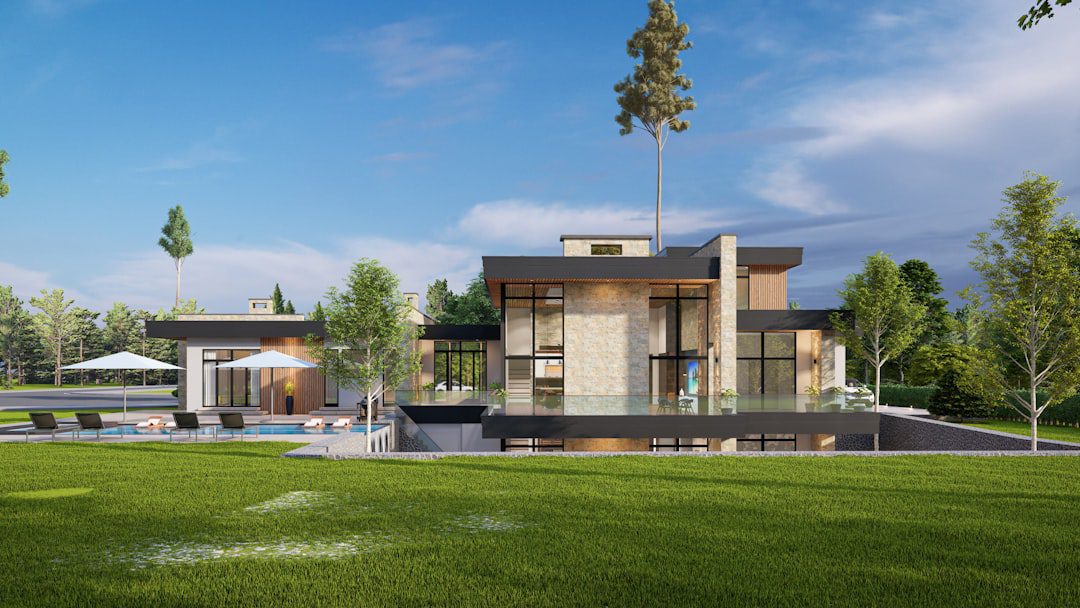
3D rendering services turn architectural plans and product designs into photorealistic images, animations, and interactive experiences — before anything is built.
Here’s a quick breakdown of what they are and who they’re for:
| What | Why It Matters |
|---|---|
| Photorealistic still images | Win client approvals and secure permits faster |
| 3D animations and walkthroughs | Engage investors and pre-sell properties |
| Virtual tours and VR experiences | Let buyers explore spaces before construction |
| Product and interior visualization | Drive e-commerce and marketing conversions |
Who uses them? Architects, real estate developers, interior designers, manufacturers, and consumer brands.
Key results reported across the industry:
In short: if you’re presenting something that doesn’t exist yet, 3D rendering makes it real enough to sell.
The market reflects this demand. There are over 34,000 service listings for 3D rendering on Fiverr alone — and that’s just freelancers. Full-service studios, AI tools, and cloud rendering farms have all expanded rapidly, giving buyers more options (and more complexity) than ever before.
I’m Blake George, founder of BMG Media Co — a digital agency with over a decade of experience helping brands in real estate, manufacturing, and consumer industries leverage high-performance visuals, including 3D rendering services, to drive growth online. In this guide, I’ll cut through the noise and compare the five best service models so you can choose the right fit for your project.
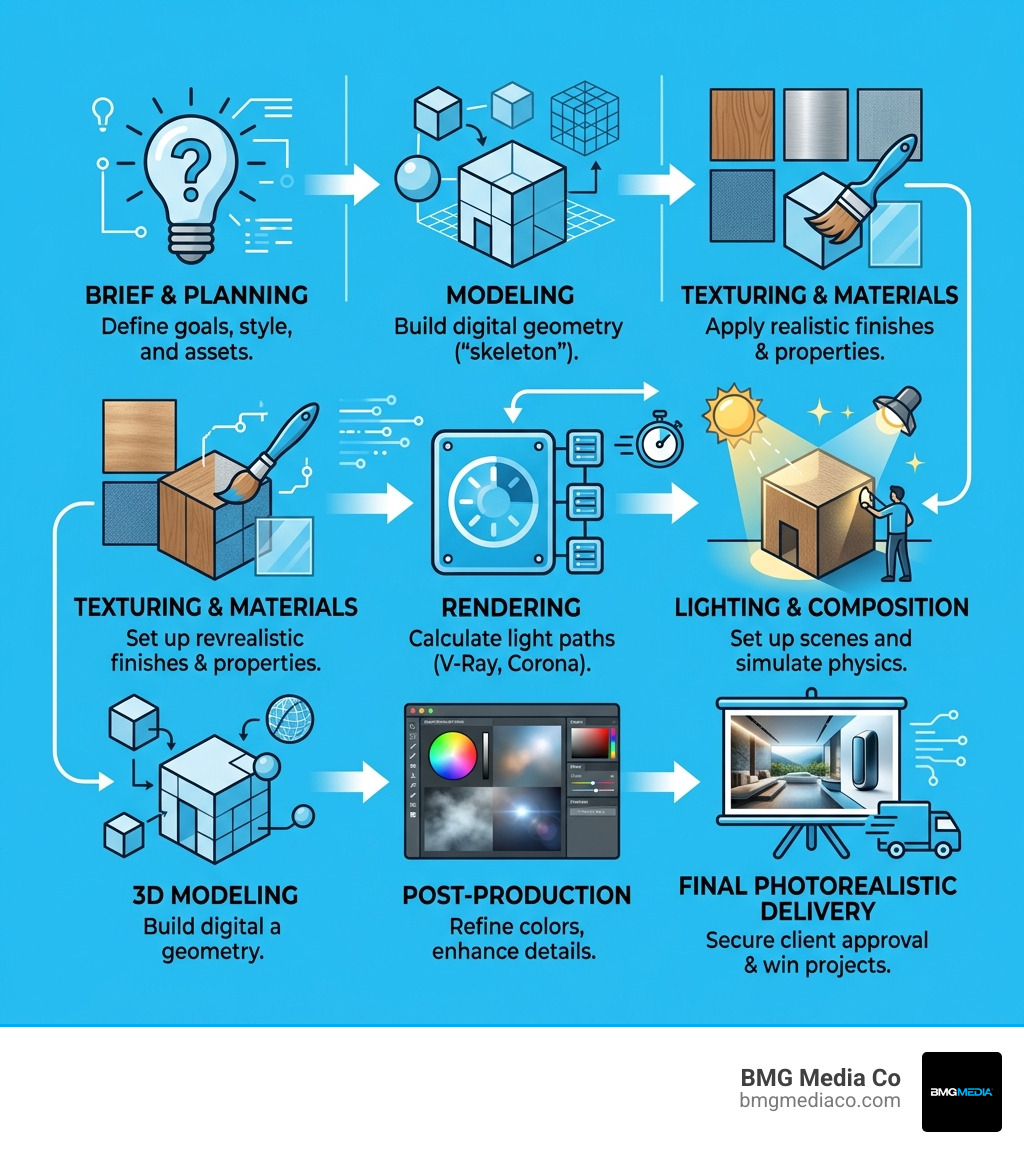
To the uninitiated, 3D rendering services might look like magic, but they are actually a highly structured technical and artistic process. It begins with 3D modeling, where we create the digital geometry of an object or building. Think of this as the “skeleton.” Once the structure is built, artists apply texturing and physically-based lighting to simulate how materials like marble, oak, or brushed steel react to light in the real world.
The “magic” happens during the rendering phase, where specialized software calculates millions of light paths to produce a 2D image from the 3D scene. Leading companies in 2026 utilize industry-standard engines like V-Ray, Corona, and 3ds Max for static imagery, while Unreal Engine is often the go-to for real-time interactive experiences. For massive projects, we utilize GPU clusters—essentially supercomputers for graphics—which allow for 3x faster delivery than traditional local hardware.
In terms of pricing and speed, the industry has become incredibly efficient. Many top-tier providers now offer 1-hour estimates and fixed pricing models to eliminate the “guessing game” of project costs. If you are on a tight deadline, 48-hour rush delivery options are now common for still renders, ensuring that a last-minute investor meeting doesn’t happen without high-quality visuals.
Not all 3D rendering services are created equal. When you are looking for a partner, the first thing you should evaluate is their project brief process. A professional studio will ask for detailed reference materials, including CAD files, mood boards, and material specifications. This ensures that the “atmospheric” quality of the render matches your design intent.
Quality benchmarks are non-negotiable. At our studio, we believe every project requires art director oversight and a dedicated project manager to ensure no detail is lost in translation. This level of care is why top agencies see an 80% client retention rate. When evaluating a portfolio, look for depth—has the company delivered thousands of visualizations across different countries? Experience matters because an artist trained in architecture can interpret BIM data much more effectively than a generalist.
As we move through 2026, AI is no longer a “future” tech; it is a core component of modern 3D rendering services. AI-powered tools allow for rapid prototyping, where we can generate dozens of conceptual iterations in minutes. This is particularly useful for Product Rendering Services For Photorealistic Results, where brands need to see how different colors or textures look under various lighting conditions before committing to a final high-end render.
AI also assists with automated material generation and AI-powered QA, catching technical glitches that the human eye might miss. However, the best results still come from a blend of traditional artistry and machine learning. AI provides the speed, but human creativity provides the “soul”—the subtle morning light or the “lived-in” feel that creates an emotional connection with the viewer.

Architectural visualization is a broad umbrella. Depending on your goals, you might need one or all of the following:
The benefits are measurable. Beyond the 70% higher pre-sales and 2x faster client approvals, professional renders help detect design flaws before construction begins. This “pre-construction flaw detection” can save developers thousands of dollars in real-world rework.
Choosing the right service model depends entirely on your budget, timeline, and the complexity of your project.
| Service Model | Best For | Pros | Cons |
|---|---|---|---|
| 1. Full-Service Studios | High-end, complex developments | Elite artistry, dedicated PMs | Higher cost, longer lead times |
| 2. Freelance Marketplaces | Small residential, tight budgets | Affordable, huge variety | Inconsistent quality, communication gaps |
| 3. Cloud Rendering Farms | Technical processing, VFX | Massive speed, 24/7 access | Requires you to have the 3D model ready |
| 4. AI-Powered Tools | Early conceptualization | Instant results, very cheap | Lacks fine detail and structural accuracy |
| 5. Custom Design Agencies | Integrated marketing & web | BMG Media Co; fully custom; award-winning | Premium investment for serious brands |
These are the boutique firms that live and breathe 3D. They often employ “architect-artists” who have formal training in design. They are the best choice for large-scale commercial projects where “emotional realism” is the goal.
Platforms like Fiverr host thousands of artists. This is a great route for a one-off house render or a quick floor plan. However, you often have to manage the project yourself, which can be time-consuming.
Services like RenderWow provide the raw computing power. If you have an architect on staff who can build the 3D models but doesn’t have the hardware to “cook” the final images, a render farm is a perfect, scalable solution.
These tools can turn a simple SketchUp model into a decent render in seconds. They are fantastic for internal meetings or rapid brainstorming, but they aren’t quite ready for high-end marketing brochures yet.
For businesses that need their 3D visuals to work in tandem with their website and brand identity, a custom agency is the gold standard. At BMG Media Co, we don’t just hand you a file and walk away. We integrate those 3d rendering services into high-performance, award-winning websites.
Based in Birmingham, Michigan, we specialize in fully custom solutions—meaning no templates. With over 1,000 sites completed, we understand how to use 3D assets to drive SEO, user engagement, and sales. We treat your 3D assets as part of a larger digital ecosystem designed to grow your business.
A single high-quality interior or exterior image usually takes about 3 to 7 days for the first set of previews. A full architectural animation or a complex 360-degree virtual tour can take 2 to 3 weeks. Factors that affect this include the complexity of the geometry, the number of revisions, and the hardware being used. Many studios (ourselves included) offer 48-hour rush options for urgent needs.
Think of 3D modeling as building a physical model out of clay or LEGOs—it’s the creation of the shape and geometry. 3D rendering is like taking a professional photograph of that model. Rendering involves setting up the “camera,” the “sunlight,” and the “materials” (like making the clay look like glass or wood) to produce the final 2D image.
Pricing varies based on detail. In the current market:
In 2026, 3D rendering services are no longer a luxury; they are a fundamental requirement for anyone in the business of building or selling physical products. Whether you are an architect trying to win a design competition in Michigan or a developer looking to pre-sell a residential community, the ROI of high-quality visualization is undeniable.
By choosing the right model—whether it’s a quick freelance task or a fully integrated custom solution with BMG Media Co—you can secure permits faster, win client trust, and move your project from the “drawing board” to the “sold” list with confidence.
Ready to bring your vision to life with world-class visuals? Start your project with BMG Media Co today and let’s build something incredible together.
