May 2026

Custom software is software built specifically for your business — designed around your workflows, your goals, and your unique processes, rather than forcing you to adapt to a generic tool.
Here’s a quick breakdown:
| Custom Software | Off-the-Shelf Software | |
|---|---|---|
| Built for | Your specific business | The average business |
| Cost | Higher upfront, lower long-term | Lower upfront, higher long-term |
| Flexibility | Fully adaptable | Limited to vendor features |
| Ownership | You own the code | Vendor controls the product |
| Security | Unique codebase, harder to target | Shared platform, broader attack surface |
| Scalability | Scales with your business | Constrained by vendor roadmap |
If your current software is slowing you down, forcing workarounds, or just doesn’t fit how your team actually works — a custom-built solution may be exactly what you need.
Many businesses start with off-the-shelf tools like Salesforce, QuickBooks, or a generic CMS. These work fine early on. But as your operations grow more complex, generic platforms start creating bottlenecks instead of solving them.
That’s the core problem custom software solves.
I’m Blake George, founder of BMG MEDIA Co, a web design and development agency based in Birmingham, Michigan — with over 15 years of experience building custom software solutions for businesses across real estate, healthcare, manufacturing, and consumer brands. Over that time, I’ve helped more than 1,000 organizations move beyond cookie-cutter platforms and into technology that actually fits the way they work.
In this guide, we’ll walk through everything you need to know — from how custom software is built, to what it costs, to how you choose the right development partner.
When we talk about Custom software, we are referring to applications designed to solve a specific set of problems for a specific user base. According to the custom software definition, these are systems specifically developed for some specific organization or user. It’s the difference between buying a suit off the rack at a department store and visiting a tailor. The department store suit might “fit,” but the tailored suit is cut to your exact measurements, allowing you to move freely and look your best.
Commercial Off-the-Shelf (COTS) software is designed for the “average” company. While these products are often packed with features, they frequently include “bloat”—buttons and functions you’ll never use—while missing the one or two critical features your team needs to be truly efficient. This often leads to “workarounds,” where your employees spend hours every week moving data between spreadsheets because your software won’t talk to your database.
By choosing why your business needs a custom cms or ecommerce build, you eliminate these friction points. You aren’t just buying a tool; you are building a digital reflection of your operational logic.
In some cases, businesses don’t need to build everything from scratch. A common industry approach, especially for large enterprises, is the hybrid model. This involves purchasing a COTS product for core functions (like basic accounting) and building custom extensions or APIs to handle the unique parts of the business. However, as we move into 2026, many organizations find that the cost of heavily customizing a rigid COTS product can actually exceed the cost of building a bespoke solution from the ground up.
In a competitive market like Michigan, standing out is everything. If you and your competitors are all using the same generic SaaS (Software as a Service) platform, you are essentially playing by the same rules. Custom software creates a “competitive moat.” It allows you to execute processes faster, cheaper, or with a better customer experience than anyone else in your field.
One of the biggest advantages is Intellectual Property (IP) ownership. When you use a subscription service, you are essentially renting your business infrastructure. If the vendor raises prices or goes out of business, you’re in trouble. With custom builds, you own the source code. It is an asset on your balance sheet that adds real value to your company’s valuation.
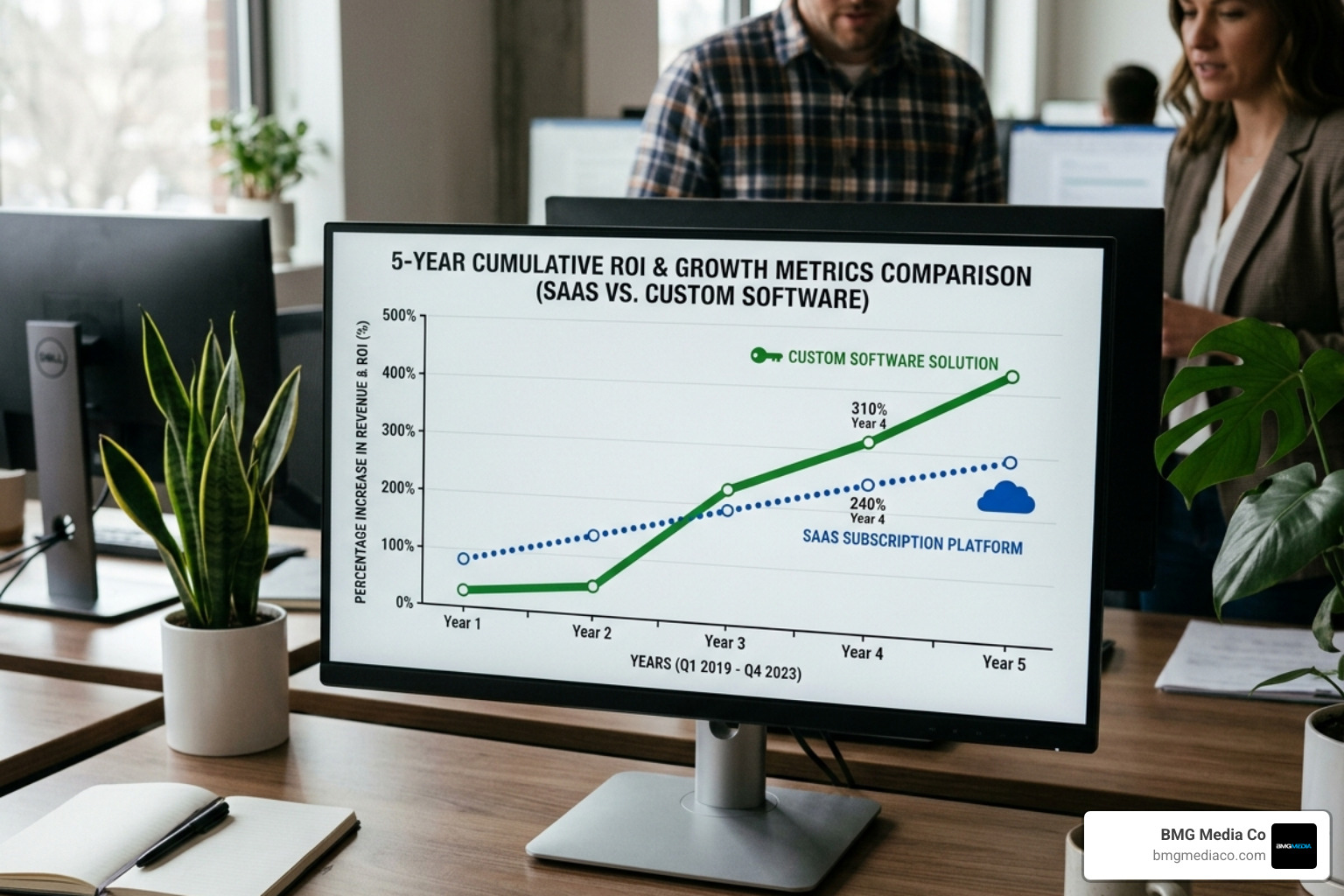
Furthermore, custom web design and development services ensure that your software scales with your ambition. You won’t be hit with “per-user” licensing penalties that grow linearly as your team expands. Research suggests that for organizations with over 500 users, the break-even point for custom software versus SaaS typically occurs within 18 to 24 months.
Security is a major concern for any business in 2026. Generic software platforms are massive targets for hackers because one successful breach can grant access to thousands of different companies’ data. Custom software provides a layer of “security through obscurity.” Because your codebase is unique and not shared publicly, it is a much less common target for mass hacking attempts.
When we build custom site development for complex manufacturing needs, we prioritize:
Different industries face different bottlenecks. Here is how bespoke technology is transforming key sectors in 2026:
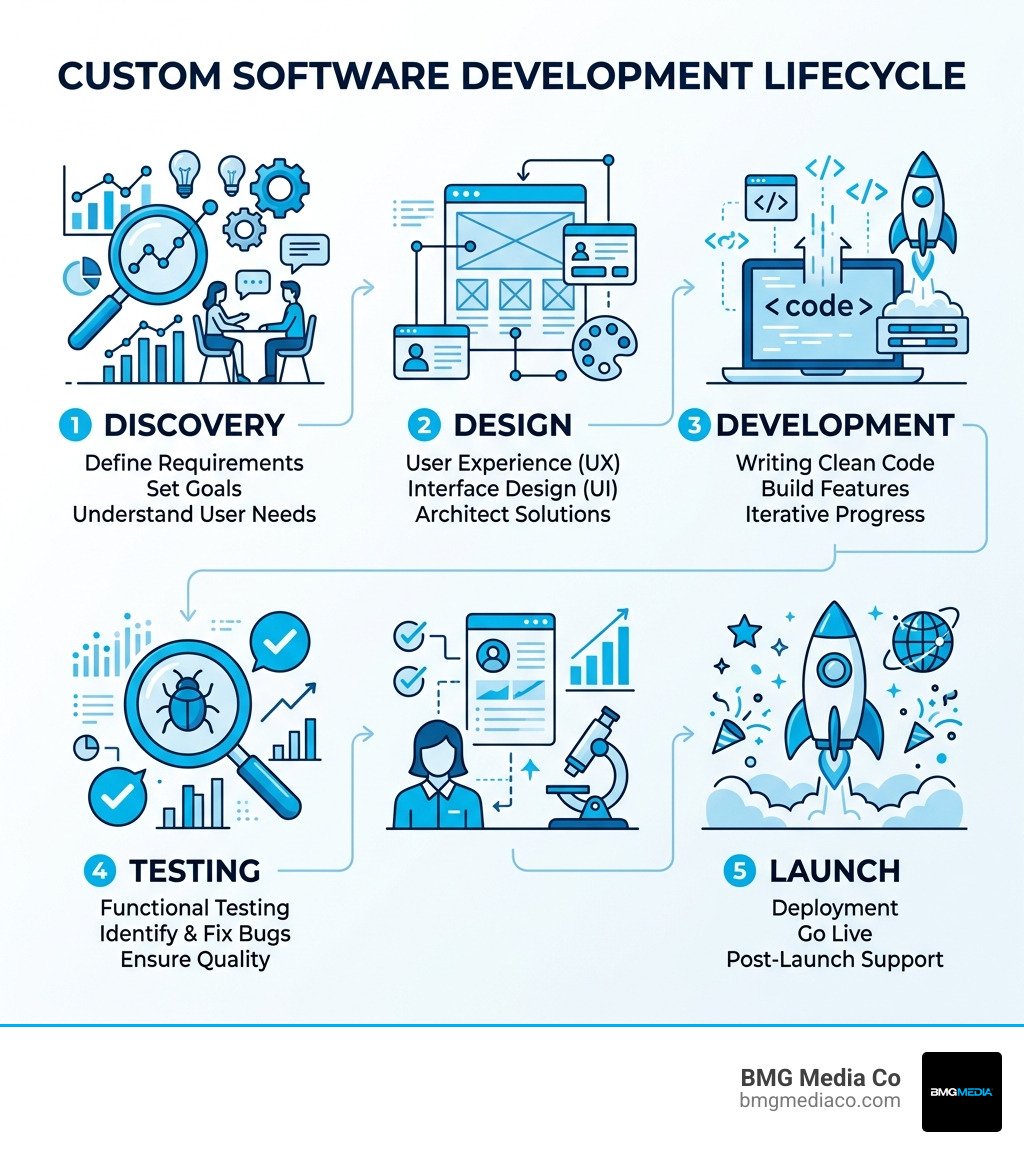
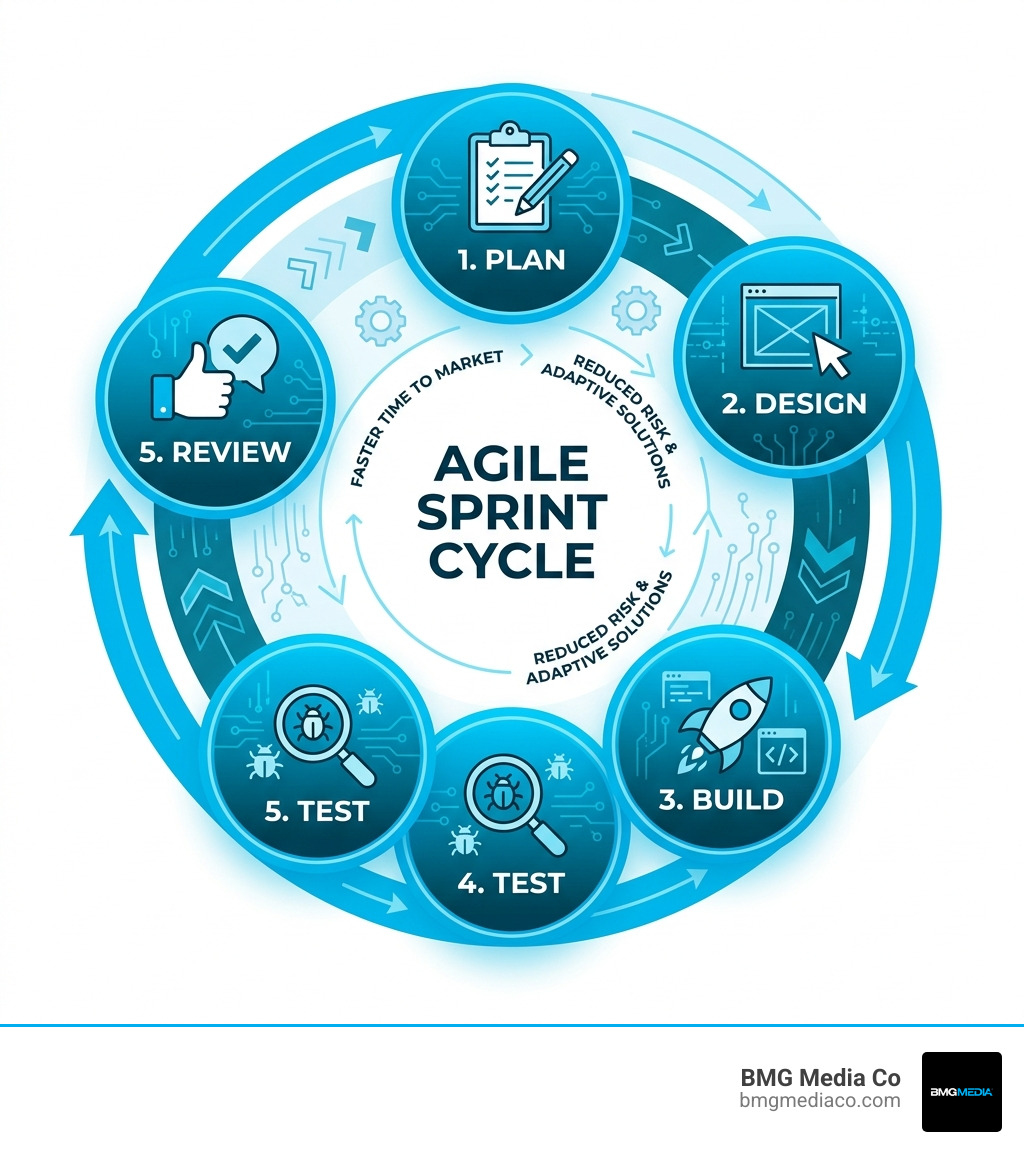
Building custom software isn’t just about writing code; it’s about solving a puzzle. We utilize an Agile mindset to ensure the project remains flexible and aligned with your goals. Unlike the old “Waterfall” method—where you plan everything for six months and then build for six months—Agile allows us to show you progress every two weeks.
The process typically follows these stages:
Our focus on custom web design ensures that the user interface is intuitive. Even the most powerful software is useless if your employees find it too difficult to use.
As we look toward the remainder of 2026, several key technologies are shifting the landscape of custom software:
One of the most common questions we hear is: “Is it worth it?” To answer that, you have to look at the Total Cost of Ownership (TCO). While the upfront cost of custom software is higher than a monthly SaaS subscription, the lack of per-user fees and the massive gains in operational efficiency (often cited around 35% for bespoke transitions) mean the software usually pays for itself within a few years.

It is vital to have a clear Master Service Agreement (MSA) and Statement of Work (SOW) in place. These documents should clearly state that you own the intellectual property and the source code upon final payment.
While we are based in Michigan, we keep a close eye on national trends. For instance, businesses should be aware of shifting tax landscapes, such as the recent reclassifications in Washington state where custom software was moved from a service-based tax to a retail sale classification. While Michigan law has its own specifics, these trends show that the legal definition of software is evolving from a “professional service” to a “tangible asset.”
Pricing varies based on complexity, but here are some 2026 benchmarks:
A typical timeline for an MVP (Minimum Viable Product) is 3 to 4 months. More complex enterprise systems can take 6 to 12 months for a full rollout. We use agile sprints to ensure you see functional parts of the software much earlier than the final launch date.
When you work with BMG Media Co, you own 100% of the code. This is a critical point. Many “low-cost” agencies try to keep the rights to the code so they can charge you licensing fees forever. We believe your software should be your asset, not a leash.
In the modern business world, your technology shouldn’t just be a tool—it should be your greatest advantage. Whether you are looking to consolidate a dozen legacy applications into one unified portal or you need a specialized system to manage complex manufacturing workflows, custom software is the key to scaling without the friction of generic platforms.
At BMG Media Co, we take pride in being a Birmingham, Michigan-based team that delivers award-winning, fully custom solutions. We don’t use templates, and we don’t do “average.” With over 1,000 sites and applications completed, we have the expertise to turn your operational logic into a high-performance digital asset.
Ready to stop fighting your software and start growing your business? Let’s talk about your next custom software project today.
