May 2026

Thousand sites web experts are professionals and platforms equipped to build, monitor, secure, and optimize web environments at massive scale — managing hundreds to thousands of websites simultaneously.
Here is a quick overview of what they do and why it matters:
Managing websites at this scale is not simple. A single misconfigured API key or a missed compliance update can expose an entire organization to serious risk. The internet has become the new enterprise backbone — and the stakes for getting it wrong have never been higher.
I’m Blake George, Founder of BMG Media Co, and over the past 15+ years I’ve worked hands-on with thousand sites web experts approaches, leading the development of over 1,000 custom websites across healthcare, real estate, manufacturing, and more. That experience shapes everything covered in this analysis.
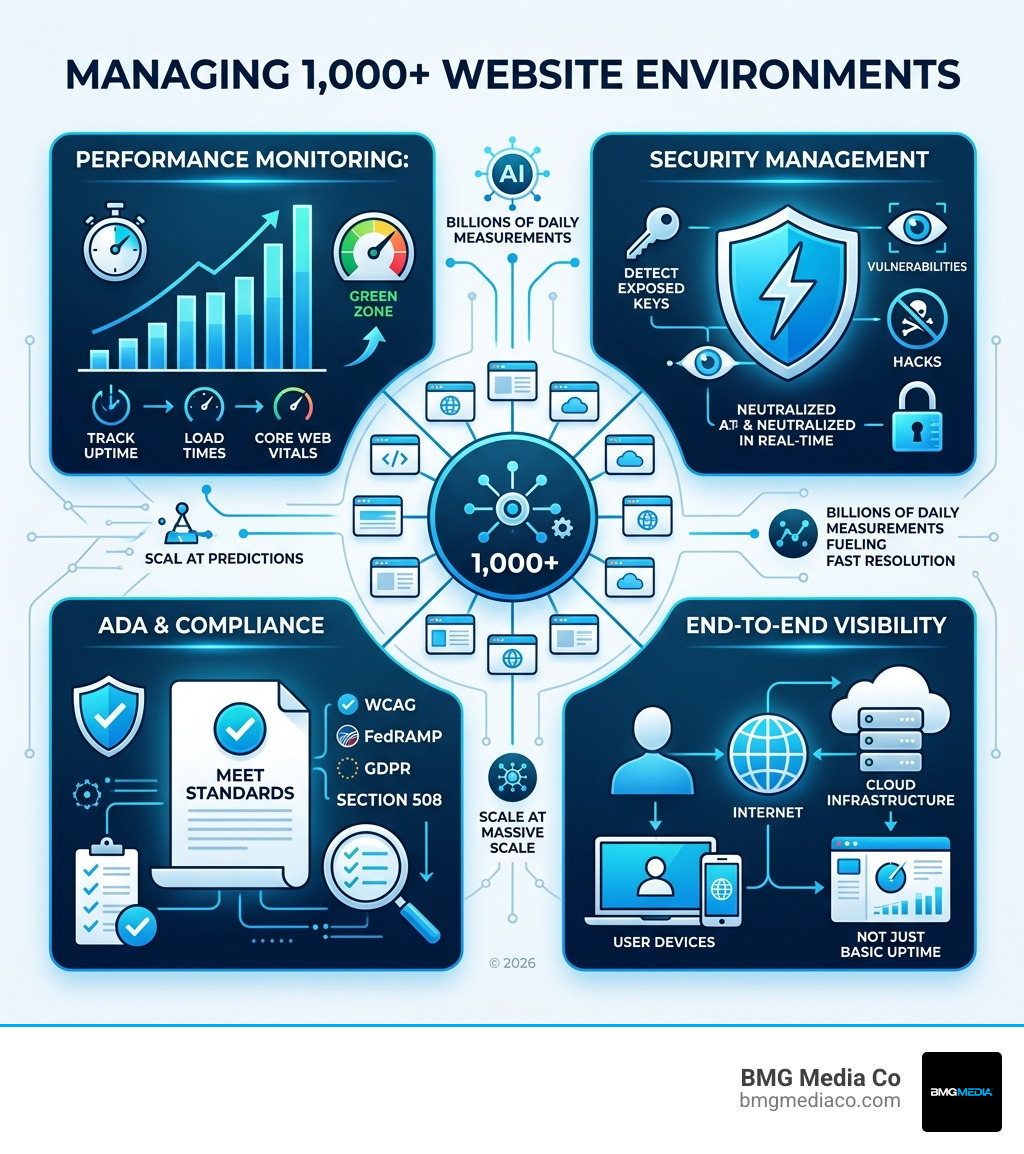
Easy thousand sites web experts glossary:
When you are responsible for the digital experience of thousands of users across a massive network of sites, traditional “ping” tests just don’t cut it anymore. Modern thousand sites web experts utilize AI-driven assurance platforms that do more than just check if a site is “up.” They sense, reason, and act based on billions of daily network measurements.
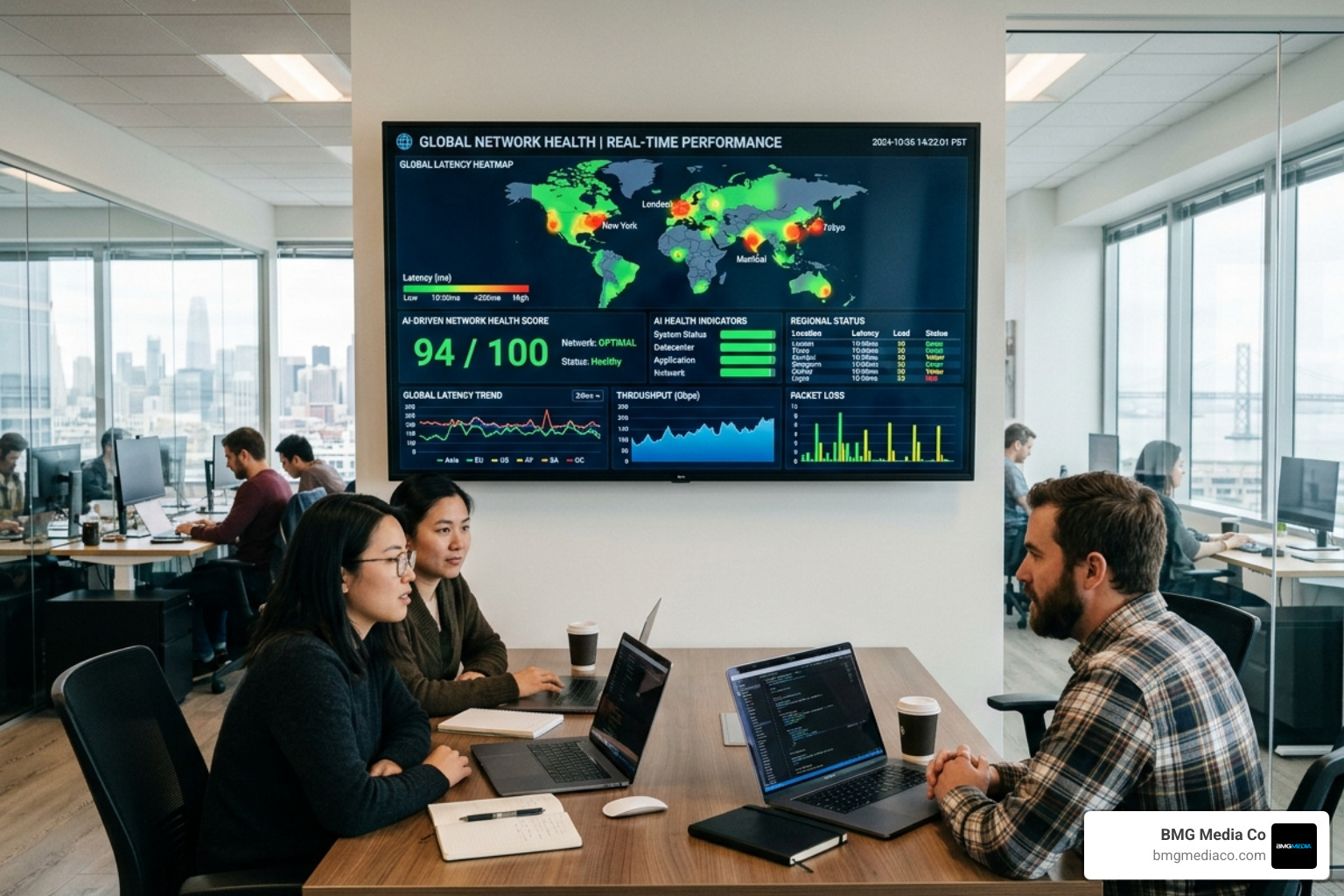
The shift in the industry is clear: the internet is the new enterprise network, and the cloud is the new data center. This means your monitoring must extend beyond your own servers. We look at the “last mile”—the actual connection between the user’s home or office and the application. By leveraging collective intelligence from ISPs, edge providers, and cloud nodes, experts can identify if a slowdown is happening because of a local outage, a CDN failure, or a backend database bottleneck.
Tracking global outages requires more than just a reactive approach; it requires an “Internet Insights” mindset. By aggregating telemetry data from across the globe, experts can map out massive disruptions in real-time. Whether it’s a BGP (Border Gateway Protocol) routing leak or a major ISP backbone failure, having a visual map of the internet’s health allows businesses to pivot quickly.
Statistical models and forecast-based recommendations now help IT teams predict performance dips before they impact the end user. This level of comprehensive web development expertise ensures that even when the “best-effort” public internet fails, your business has the resilience to stay online.
A website might be technically “online,” but if it takes ten seconds to load a hero image, the user has already left. This is why we focus heavily on Core Web Vitals—specifically Largest Contentful Paint (LCP), First Input Delay (FID), and Cumulative Layout Shift (CLS).
Using synthetic testing, thousand sites web experts simulate browser transactions to see exactly what a user sees. We look at “waterfall” analyses that break down every single object on a page. If a third-party ad script or a tracking pixel is dragging down your LCP, these tools provide object-level alerts so you can snipe the problem without rebuilding the whole page. You can check our press reviews to see how prioritizing these performance metrics translates into real-world success for our clients.
Security is the biggest “elephant in the room” when managing a large volume of sites. Recent research involving the scanning of 10 million websites uncovered a terrifying reality: thousands of exposed API keys are quietly granting unauthorized access to critical infrastructure and cloud systems. These keys are often left in public-facing code by accident, but they act as “master keys” for hackers.
To protect a fleet of websites, you need more than just a firewall. You need automated vulnerability scanning and real-time hack detection. For platforms like Joomla and WordPress, which power a massive portion of the web, signature updates must happen daily.
We advocate for deep file audits rather than simple snapshots. A snapshot might tell you a file changed, but a deep audit tells you why and if that change matches a known malware signature. This is especially vital when dealing with WordPress technology, where plugin vulnerabilities can affect hundreds of thousands of sites simultaneously. Effective management means reacting to emerging threats in hours, not weeks.
Government web projects carry a unique set of burdens. They aren’t just looking for a “pretty” site; they require strict adherence to data sovereignty and security standards. This includes FedRAMP (for cloud security), GDPR (for privacy), and ISO 27001.
Furthermore, accessibility is a legal mandate. Under Title II and Title III of the ADA, as well as Section 508, government and public-facing sites must be navigable by everyone. This is where custom web design becomes a necessity. Templates rarely meet the rigorous WCAG (Web Content Accessibility Guidelines) requirements out of the box. Experts ensure that every heading, image alt-tag, and navigation element is built for compliance from day one.
If you’ve ever managed a portal with thousands of pages, you know that accessibility isn’t a “one and done” task. New content is added daily, and each new page is a potential liability. Thousand sites web experts use a combination of automated tools and manual human auditing to maintain a “Compliance Shield.”
While AI can catch broken links or missing alt-text, it often fails to understand the “context” of a page. Is the navigation logical? Does the screen reader experience make sense? Human expert auditing is unrivaled here. By combining technology with real-world testing, we help businesses avoid the “demand letter” cycle that plagues so many unprotected sites.
Beyond just avoiding lawsuits, accessibility is about conversion optimization. If 20% of your potential audience has a disability and can’t use your site, you are leaving 20% of your revenue on the table. Our team at BMG Media focuses on making sure that “inclusive” also means “high-performing.”
Choosing a partner to manage a large-scale web presence is a high-stakes decision. You aren’t just hiring a “web designer”; you are hiring a digital steward. Traditional monitoring tools often only tell you if the “lights are on.” End-to-end digital experience assurance tells you if the “customers are happy.”
| Feature | Traditional Monitoring | End-to-End Digital Experience |
|---|---|---|
| Visibility | Internal Server Only | User to Cloud (Owned & Unowned) |
| Insight Type | Reactive Alerts | AI-Driven Proactive Recommendations |
| Network View | Basic Uptime | Full Path Visualization (BGP, ISP, CDN) |
| Performance | Page Load Time | Core Web Vitals (LCP, FID, CLS) |
| Security | Firewall/SSL | API Key Protection & Deep File Audits |
When you view our portfolio, you’ll see that we prioritize custom development over templates. Why? Because at the “thousand site” level, templates create “technical debt.” They are hard to update, easy to hack, and slow to load. Custom builds allow for a clean code base that can be managed efficiently at scale.
For large enterprises, your website doesn’t exist in a vacuum. It needs to integrate with your existing ecosystem—whether that’s Cisco networking tools, SD-WAN configurations for hybrid work, or multi-cloud environments like AWS and Azure.
Modern experts ensure that application performance is correlated with network health. If a user in Detroit is having a bad experience, we need to know if it’s because of a local Comcast outage or a configuration error in our Birmingham data center. Being recognized among the top web development companies in Detroit means we understand these local and global network nuances intimately.
Monitoring Core Web Vitals at scale requires automated browser synthetics. These tools “crawl” your site and simulate real user interactions, measuring metrics like LCP (loading performance), FID (interactivity), and CLS (visual stability). Experts set up object-level alerts so if a specific image or script causes a layout shift on 500 different pages, they are notified instantly to fix the root cause.
Exposed API keys are essentially “unlocked doors” to your cloud infrastructure. If a developer accidentally leaves a key in a public JavaScript file, a bot can find it in seconds. These keys can grant access to sensitive customer data, allow hackers to spin up expensive servers on your dime, or even take down your entire critical infrastructure. Thousand sites web experts use automated scanners to ensure no keys are ever exposed in public-facing code.
Traditional monitoring is binary: your site is either “up” or “down.” AI-powered assurance is more like a “health checkup.” It uses billions of network measurements to “sense” when a connection is getting jittery or when a CDN is starting to lag. It can then “reason” the cause—perhaps a BGP leak in a different country—and suggest an “action” to reroute traffic before your users even notice a problem.
Managing a massive web presence requires a blend of high-level strategy and granular technical expertise. Whether it’s protecting against the silent threat of exposed API keys, ensuring every page meets ADA compliance, or using AI to shave milliseconds off your load times, the role of thousand sites web experts is more critical than ever.
At BMG Media Co, based in Birmingham, Michigan, we’ve spent over 15 years perfecting the art of the custom, high-performance website. We don’t believe in templates because we know that at scale, only custom-built solutions provide the security, speed, and reliability that modern enterprises demand. With over 1,000 sites completed and an award-winning team, we are ready to help you navigate the complexities of the modern web.
Explore our Web Design Services to see how we can bring enterprise-level assurance to your digital portfolio.
