August 2026

Selecting the best LLC names requires balancing creative storytelling with structural strategy. The title you select today serves as the foundation for your customer acquisition campaigns, logo creation, domain architecture, and brand equity. A well-crafted business name projects immediate credibility, differentiates your venture from competitors, and streamlines your marketing trajectory from day one.
A high-performing company name needs to cross several practical thresholds before you file official formation papers with your state corporate filing office.
Founders often struggle with whether to use their personal surname or craft an abstract entity title. While naming a business after yourself creates immediate personal authenticity and builds direct trust, it introduces distinct long-term tradeoffs regarding privacy, growth, and exit strategy.
Using a personal name can complicate personal privacy. Public Secretary of State databases connect your personal identity directly to entity assets, which is a major concern for real estate holding companies and privacy-conscious founders seeking anonymity. Furthermore, personal names can penalize resale value down the line. Future buyers prefer acquiring an established entity with an abstract, independent brand presence over a firm tied entirely to the original founder’s personal identity and reputation.

Before falling in love with a potential name, you must ensure it satisfies state regulatory guidelines. Filing offices review applications against strict legal compliance filters.
State corporate laws mandate that your official legal business entity name clearly signals its corporate structure to the public.
That state filing fees vary significantly across the country — from as low as $35 in Kentucky to $500 in Massachusetts — making it wise to pass name screening checks on your very first submission to avoid unnecessary filing rejections.
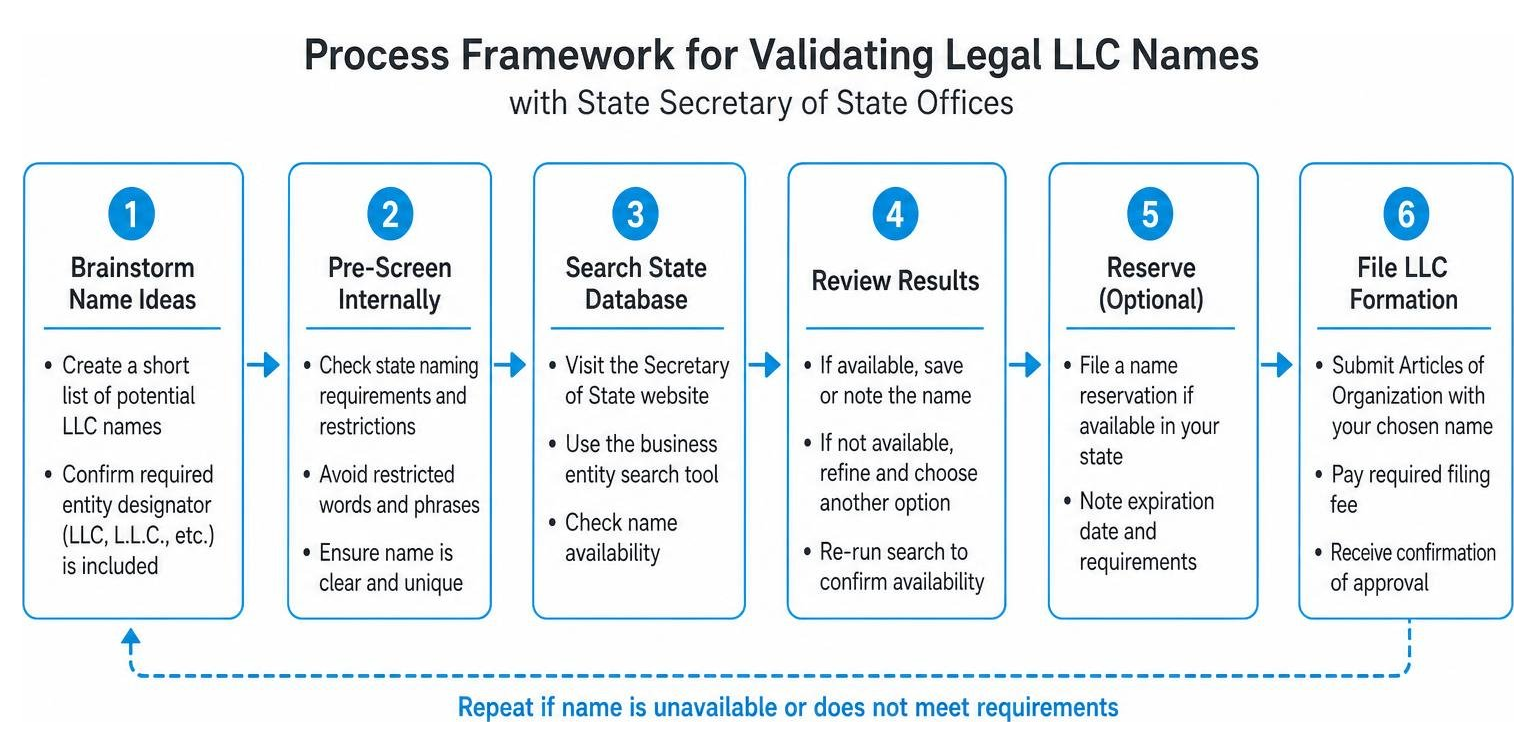
Understanding the distinction between your registered entity title and customer-facing trade names gives you immense operational flexibility.
| Feature | Official LLC Legal Name | Doing Business As (DBA) / Trade Name |
|---|---|---|
| Primary Purpose | Legal contracts, tax filings, banking | Marketing, public storefronts, domain branding |
| Required Designator | Mandatory (e.g., “LLC”, “L.L.C.”) | Omitted for clean visual presentation |
| Quantity Allowed | Exactly one legal entity name | Multiple DBAs under one single parent LLC |
| State Registration | Articles of Organization filing | Local/State trade name registration filings |
Using a DBA allows a parent holding company to manage distinct brand lines without incurring the legal overhead of setting up separate standalone corporate structures for every venture. A few states (including Kansas, New Mexico, and South Carolina) do not process traditional DBA filings at the state level, so always check local statutes.
Generating a dynamic business title requires looking past obvious industry clichés and tired buzzwords. Combining linguistic structures with strategic brainstorming tools opens up broad creative potential, helping you establish a distinctive identity in saturated markets.
When generating ideas, consider exploring creative ways to generate company name ideas to ensure your brand stands out, resonates with your target audience, and maintains long-term market authority.
Founders can use AI-driven tools and classic linguistic techniques to rapidly iterate unique ideas. Modern platforms like the AI LLC Name Generator or the TRUiC LLC Naming Tool combine industry parameters with real-time domain checking and state registry filters.
When using generator tools and brainstorming frameworks, focus on these proven techniques:
In crowded verticals, focus on emotional resonance and abstract brand appeal rather than purely literal descriptive titles. Purely descriptive titles limit future product pivot potential and face heavier trademark hurdles, whereas abstract names scale effortlessly as your enterprise grows across new industries and international borders.

Confirming name availability requires systematic verification across legal, state, and digital registries to protect your business against expensive legal disputes and administrative delays down the road.
Start by executing an entity search through your state’s Secretary of State portal. Your proposed title must be legally “distinguishable” from all existing registered entities in that jurisdiction. If you plan to delay formal corporate creation while finalizing brand assets and website builds, file a state name reservation, which holds exclusive rights to your chosen title for 60 to 120 days depending on local statutes.
Next, perform a comprehensive federal trademark audit using the United States Patent and Trademark Office (USPTO) trademark database. State entity approval does not protect you against federal trademark infringement lawsuits. Operating under an entity name that infringes on an existing federal trademark can result in forced rebrands, loss of domain rights, and severe legal monetary penalties.
Secure your primary digital assets as soon as legal checks clear. Aim for the exact-match .com domain extension whenever possible to project authority and maximize organic direct traffic. If the exact .com is unavailable, consider adding strategic, high-value modifiers or working with specialized web design professionals to structure your web presence.
Maintaining strict consistency across primary social channels (LinkedIn, X, Instagram, YouTube) strengthens your digital authority and prevents confusion among customers. For guidance on partnering with expert agencies to navigate branding decisions, read our guide on how to pick the best naming companies for your next big idea.
Avoiding frequent naming pitfalls saves substantial legal fees, administrative rework, customer confusion, and rebranding headaches down the road:
The primary reason state authorities reject initial LLC applications is the simple omission of required statutory entity indicators, such as “LLC”, “L.L.C.”, or “Limited Liability Company” from the legal entity name line.
Using your personal surname in an LLC name leaves a direct public trail in Secretary of State databases and county property registers. For maximum asset privacy and lawsuit insulation, select an abstract or anonymized company name.
Most state name reservations protect your preferred business title for 60 to 120 days, giving you ample time to prepare tax registrations, execute operating agreements, or process foreign qualification filings in secondary states.
Securing a legal entity title is a foundational milestone in your entrepreneurship journey. By balancing legal distinguishability with concise brand appeal, you protect personal assets while setting up your brand for scalable growth.
At BMG Media Co., we believe that an exceptional brand identity deserves an equally exceptional digital presence. Based in Birmingham, Michigan, our team crafts 100% custom websites and digital platforms built strictly from scratch — completely free of pre-made templates or bloated page builders. From custom WordPress builds to complete visual design systems, we craft every digital touchpoint to match your strategic vision.
Once you’ve selected your ideal business name, partner with us to transform your brand identity into an enterprise-grade digital experience. Explore our comprehensive breakdown of all about business naming companies or contact BMG Media Co. today to start building your custom brand assets.
