August 2026
When building seo optimized custom sites, architectural integrity comes before visual aesthetics. A site can feature stunning visual graphics, but if its foundation relies on bloated frameworks, unoptimized database queries, and messy rendering pathways, search engine bots will struggle to index it efficiently.
At BMG Media Co., we engineer every build from scratch without relying on heavy off-the-shelf templates or drag-and-drop page builders. Custom code allows us to sculpt the database routing and DOM hierarchy to serve both human visitors and web crawlers seamlessly. For foundational insights on bridging design and technical search mechanics, review our Beginner’s Guide to SEO Web Design.
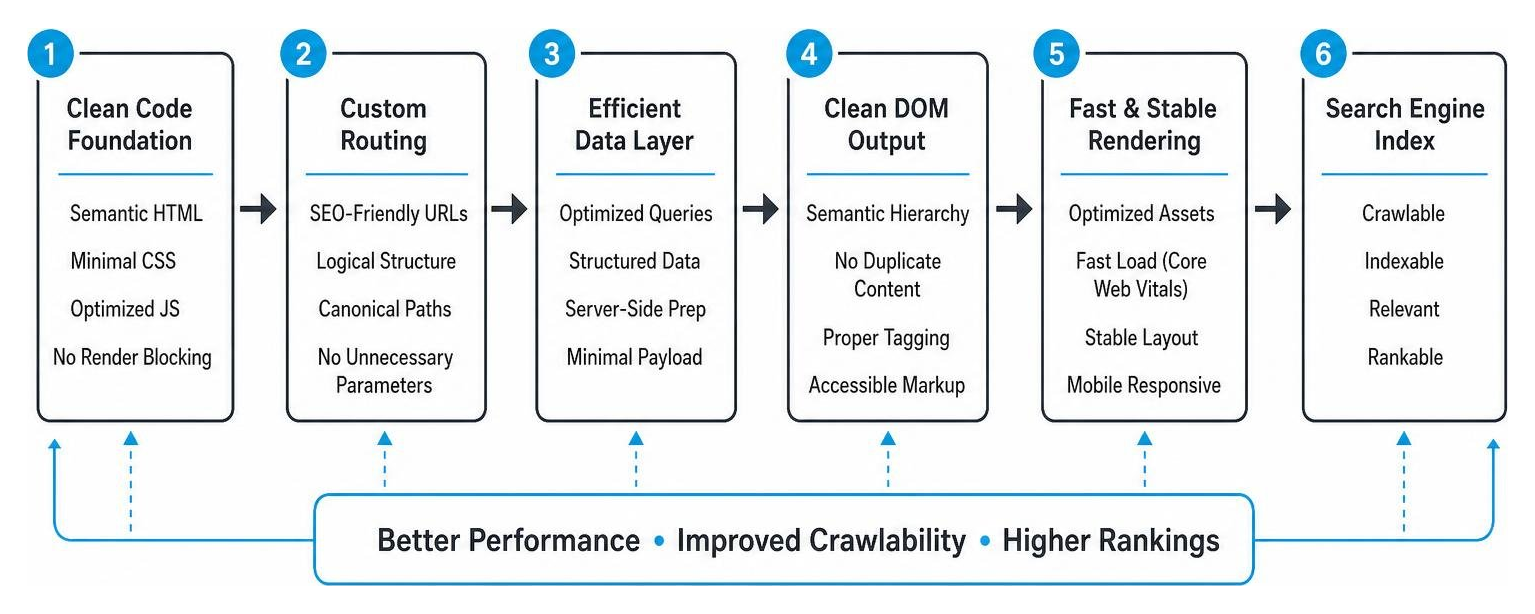
Google’s Core Web Vitals evaluate real-world user experience across three main pillars: Largest Contentful Paint (LCP), Interaction to Next Paint (INP), and Cumulative Layout Shift (CLS). While hosted builders often bundle dozens of unused scripts, dynamic custom setups maintain strict control over asset execution. Optimized custom performance configurations can reduce total JavaScript bundle sizes to just 242KB—making them up to 60% smaller than standard commercial SaaS templates.
To maintain superior performance metrics, we enforce strict front-end guidelines:
For businesses aiming to expand their online presence, choosing enterprise-grade codebase engineering pays exponential dividends. You can discover how custom architecture scales alongside long-term search demands in our detailed guide on How to Scale with Advanced SEO Web Optimization and Custom WordPress Development.
A custom build must incorporate technical search directives into its codebase from the very first line written. Adding metadata or sitemaps as an afterthought often leaves structural gaps that harm initial indexing performance.
Every custom deployment should include:
lastmod timestamps derived directly from file source edits./services/custom-web-design instead of generic strings such as /page?id=102.Search engines are undergoing a rapid evolution. While traditional SEO focuses on ranking web links on traditional engine results pages, Generative Engine Optimization (GEO) focuses on optimizing content so large language models (LLMs) and conversational AI platforms can easily read, synthesize, and cite it. Research indicates that sites engineered specifically for GEO see between 30% and 115% higher visibility across generative AI responses.
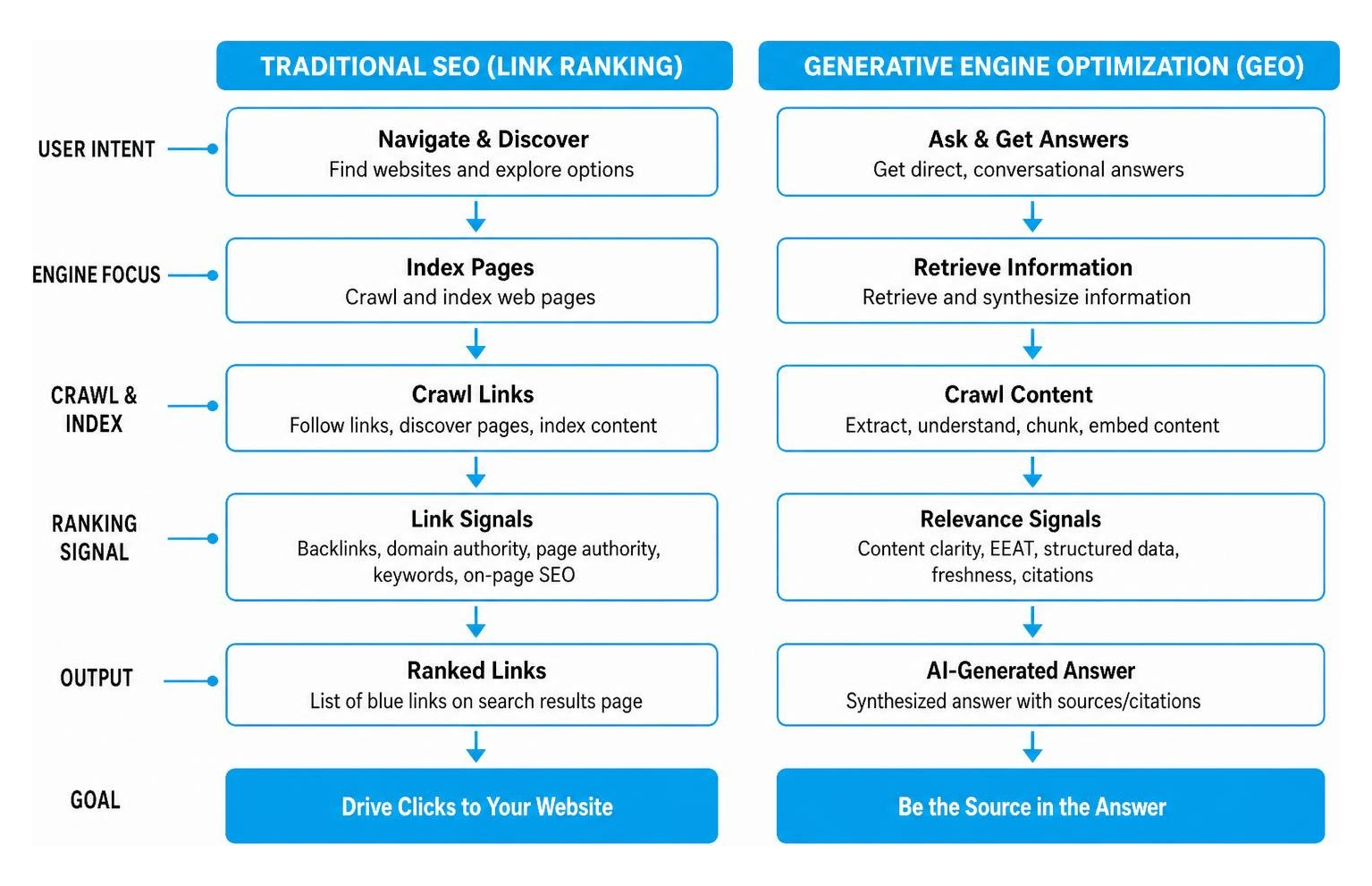
Whether users consult traditional engines or conversational AI assistants like ChatGPT and Perplexity, seo optimized custom sites bridge this gap by delivering structured, authoritative data. Dedicated engineering projects, such as the open-source repository Aryanpanwar10005/seo-geo-optimizer, highlight how standardizing both traditional meta tags and AI data schemas within modern software build pipelines ensures full visibility across both traditional and AI-driven platforms.
AI search engines retrieve information by scanning web pages for direct answers to user queries. If key insights are hidden beneath generic introductions or fluff, retrieval agents may skip the page entirely.
An answer-first structure organizes content logically for both readers and search bots:
Developers and digital creators frequently document how direct formatting choices impact indexation. For instance, developer Alexandre El Khoury shares how precise structural design and custom front-end architecture transformed machine discoverability in his case study I Built My Entire Portfolio With AI | Alexandre El Khoury.
Structured schema markup using JSON-LD is the universal language connecting custom websites with AI discovery engines. Rather than adding schema snippets manually across individual pages, custom sites automatically generate structured data directly from page metadata.
By programmatically tying JSON-LD schemas (Organization, Service, Article, FAQPage) to specific template route outputs, custom builds guarantee accurate data mapping without manual effort. In his engineering analysis on agent-based optimization, How I Optimized This Site for Agent Engine… | David Dacruz demonstrates how embedding contextual schema into page component logic gives LLM retrieval agents immediate, clear understanding of site content.
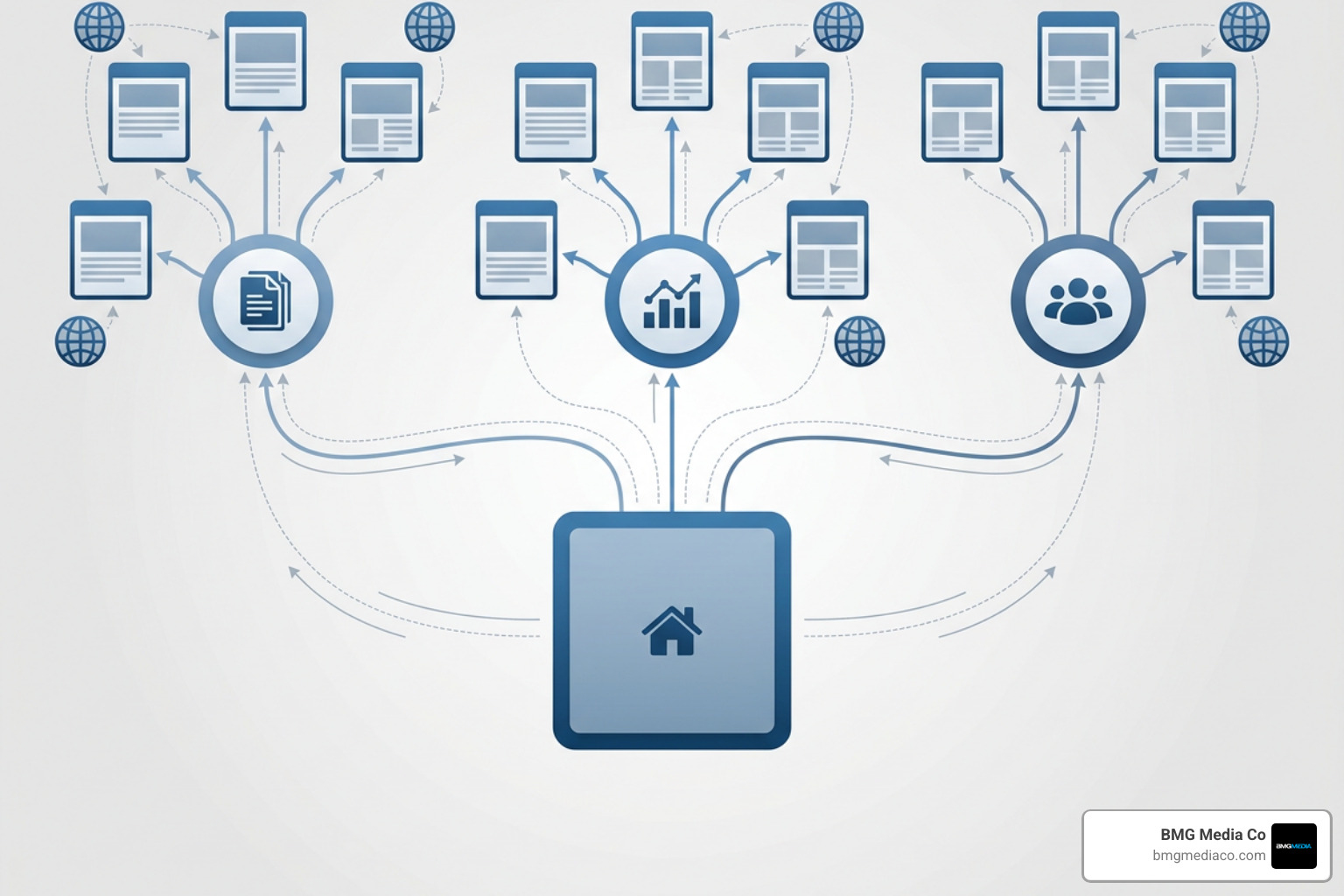
How pages link to one another dictates how search engines distribute page authority across a custom site. A disorganized link structure confuses search bots and dilutes ranking potential. Conversely, a structured link architecture establishes clear topical authority while providing a logical user journey.
| Structural Metric | Flat Site Architecture | Custom Siloed Architecture |
|---|---|---|
| Link Equity Flow | Random distribution across unrelated pages | Concentrated flow within specific topic categories |
| Crawling Efficiency | High crawl budget waste on orphan links | Direct crawl paths from top-level pillars to subtopics |
| Topical Relevance | Low context alignment between linked pages | High semantic grouping around parent categories |
| AI Interpretability | Difficult for LLMs to map entity relationships | Clear, machine-readable category hierarchies |
Topical authority is established when a website thoroughly covers a subject area through logically connected content. Custom content silos organize pages into focused clusters featuring one comprehensive parent page supported by detailed subtopic pages.
To maximize the impact of internal link silos:
Expanding custom sites into international markets requires precise technical localization to avoid duplicate content penalties and ensure visitors reach the correct language version.
Key requirements for international SEO targeting include:
/fr/ or /es/) instead of ambiguous URL parameters.hreflang tags across all language variations to explicitly define geographic and language targets for search engines.
Publishing high-quality content is only half the battle—search engines and AI agents must index that content quickly to generate organic traffic. Relying solely on passive search engine crawling can leave new pages unindexed for weeks.
Modern web starters like the shipday.one | Ship on Day One – Next.js Boilerplate show how integrated build processes—including immediate API indexing calls, instant image optimizations, and clean bundle setups—help new digital platforms gain search engine indexation right from launch day.
Similarly, automated frameworks like ShipSite — Marketing websites that update themselves demonstrate the advantages of using structured content models (such as MDX) alongside automated Git deployments to validate search requirements and deploy edge-optimized content in seconds.
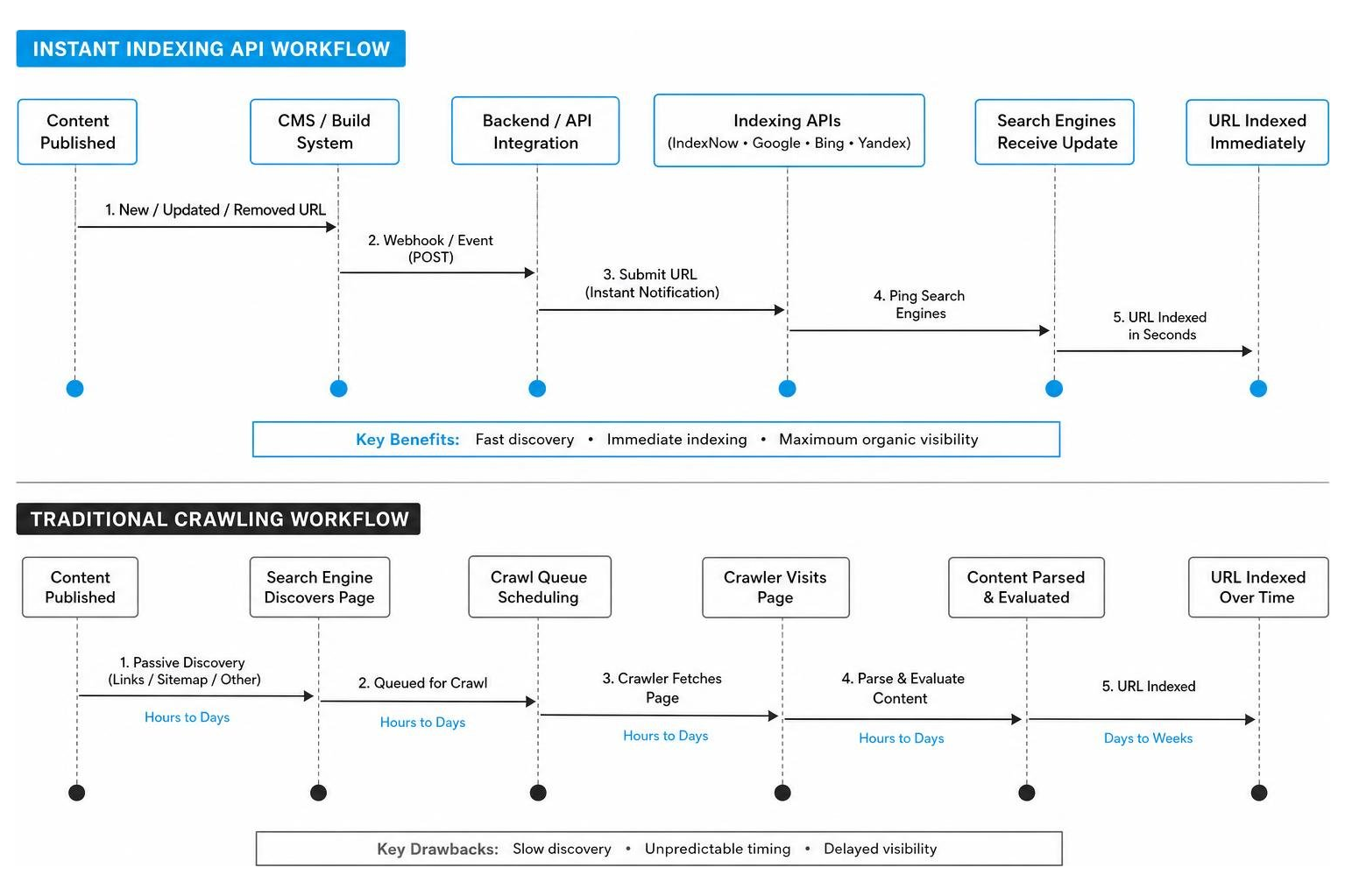
To maintain top-tier indexability, custom platforms use proactive technical infrastructure:
llms.txt): Including an llms.txt file in the root directory acts as a concise directory for AI agents, outlining key site sections, product definitions, and primary content relationships.GPTBot, PerplexityBot, and ClaudeBot) within robots.txt files to control crawling permissions while protecting internal administrative paths.Custom sites outperform pre-packaged template builders because they eliminate unused CSS code, heavy third-party plugins, and unnecessary rendering overhead. While off-the-shelf page builders frequently struggle with slow Core Web Vitals performance, custom web development gives you total control over the DOM layout, asset loading scripts, schema implementations, and server configurations.
An llms.txt file serves as a standardized, machine-readable summary file stored at a domain’s root. It provides AI agents and LLM search crawlers with a clear overview of key web pages, business models, and core documentation, making it easier for AI retrieval models to parse and cite web content accurately.
By combining automated dynamic XML sitemaps with proactive indexing workflows like the Google Indexing API and IndexNow protocols, newly deployed custom pages can be indexed within minutes or hours, compared to the weeks required by traditional passive crawling methods.
Building a successful digital presence requires moving beyond temporary shortcuts and bloat-heavy page builders. Modern search engines and AI discovery engines favor websites built on clean code architectures, rapid loading speeds, logical site structures, and robust structured data.
At BMG Media Co., we have built every project 100% custom from scratch since 2009. From our headquarters in Birmingham, Michigan, our expert developers engineer high-performance platforms designed to achieve organic search visibility and scale effortlessly over time.
Ready to replace slow, template-bound limitations with an enterprise-grade custom web build optimized for search visibility? Explore how our tailored agency processes drive long-term business growth:
