September 2026
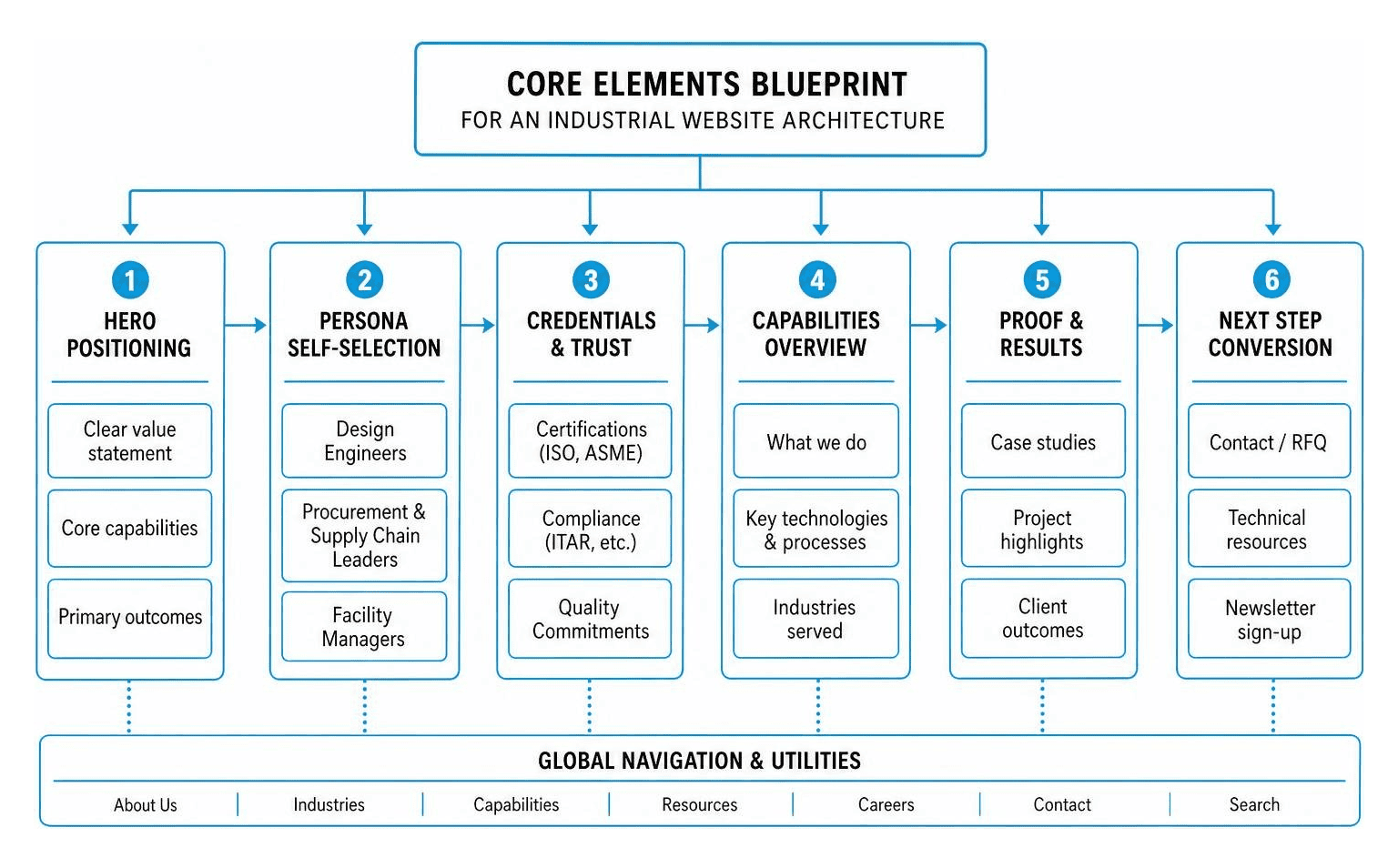
An effective industrial website serves as a 24/7 sales representative, technical catalog, and brand ambassador. B2B buyers in heavy manufacturing, machinery, and industrial supply have unique expectations. When they land on your home page, they need immediate clarity on your core capabilities and engineering authority.
A high-converting homepage hinges on several vital design elements:
Discovering new Industrial Website Design Ideas That Drive Leads helps bridge the gap between initial prospect curiosity and a formal RFQ submission.
B2B buyers, engineers, and procurement specialists are naturally visual. When evaluating heavy machinery, raw materials, or complex automated production lines, standard flat photos rarely capture the full engineering precision of your process.
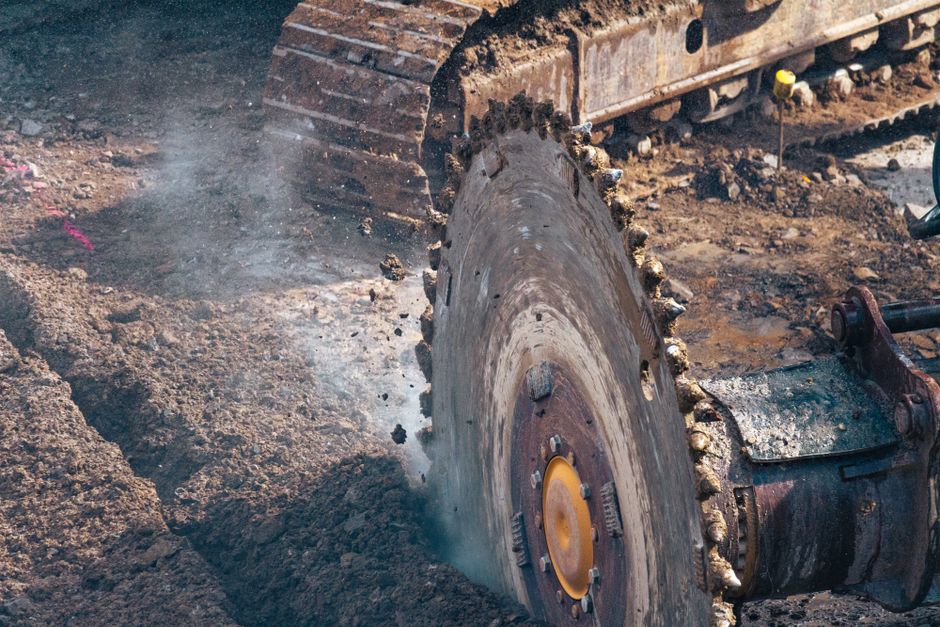
Integrating custom 3D rendering and motion graphics lets you demonstrate internal workflows, complex product mechanics, or hidden technical assemblies. Authentic factory floor footage and high-definition video loops replace dull stock imagery, revealing the real scale and quality of your operations. Interactive milestone timelines on your “About Us” page demonstrate long-term stability and deep-rooted heritage—qualities that reassure C-level decision-makers evaluating supply chain risk.
By utilizing micro-animations on interactive hover buttons or technical diagrams, you keep visitors engaged without cluttering the screen or slowing down performance.
One of the greatest challenges of building an industrial website is balancing the needs of two distinct audiences: technical engineers and executive buyers.
Engineers want fast access to raw technical data. They need un-gated spec sheets, downloadable CAD models, wiring handbooks, and precise material tolerances. If you force an engineer to complete a five-field lead form just to view a PDF data sheet, they will often leave your site to find a competitor who provides open documentation.
Conversely, C-suite executives and procurement managers evaluate business value, vendor longevity, total cost of ownership (TCO), regulatory compliance, and risk mitigation. They want case studies, client success stories, ESG reports, and project return-on-investment highlights.
To satisfy both groups, structure your product and service pages with a clean, tiered architecture. Place high-level business benefits, application overviews, and client results at the top of the page, followed by expandable tabbed modules containing deep technical data and downloadable CAD files further down.
Exploring Custom Site Development for Complex Manufacturing Needs enables your team to craft custom interfaces that cater to engineers and executives simultaneously.
Modern enterprise industrial websites are moving away from passive static catalog pages and evolving into interactive digital portals. Industry leaders like Siemens show how digital innovation streamlines complex industrial buying choices.
Key modern features include:
Artificial intelligence and interactive digital tools are changing how industrial manufacturers display complex product lines online. Advanced enterprise websites now feature digital twin simulations that showcase real-time equipment operations inside a browser. Interactive anatomical product maps let users click directly on visual machine components—such as a pump housing or motor casing—to open detailed spec overlays and replacement part numbers.
Furthermore, custom online equipment configurators empower prospects to build tailored systems step-by-step. By selecting motor horsepower, intake sizes, custom coatings, and integrated control panels, buyers create custom build sheets that route directly into your sales team’s CRM. AI-driven chat tools can answer technical inquiries, search your knowledge base for part numbers, and suggest compatible accessories in real time.
A well-architected product catalog forms the backbone of any successful industrial website. When managing hundreds or thousands of technical SKUs, clear taxonomy and intuitive categorization are critical.
Integrating interactive, web-based 3D CAD viewers directly into individual SKU pages allows engineers to rotate, zoom, section, and inspect component geometry without needing desktop CAD software.
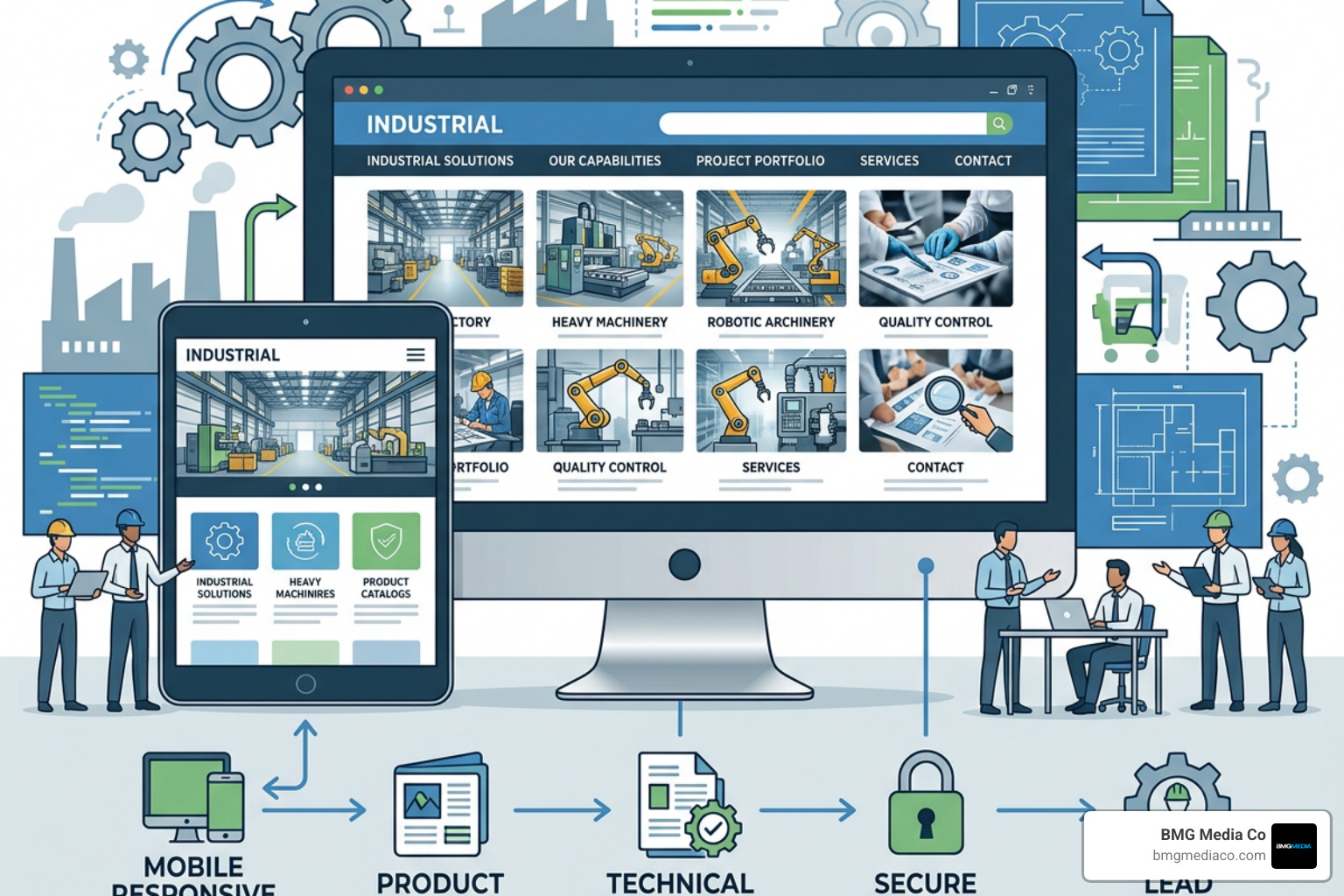
Pair these 3D models with un-gated technical documentation, interactive wiring guides, and structured schema markup. Proper technical schema tells search engines exactly what part numbers, operating tolerances, and specifications live on each page, driving organic search visibility among technical buyers.
Reviewing Custom Industrial Website Architecture for Heavy-Duty Results provides strategic guidance on structuring complex technical resources for maximum search visibility and usability.
As B2B industrial e-commerce continues to grow, serving an effortless mobile and desktop experience is essential. Distributors like OTC Industrial Technologies demonstrate how blending e-commerce ordering with field service requests drives repeat digital sales. However, deciding between responsive design and adaptive design for massive industrial catalogs requires careful consideration.
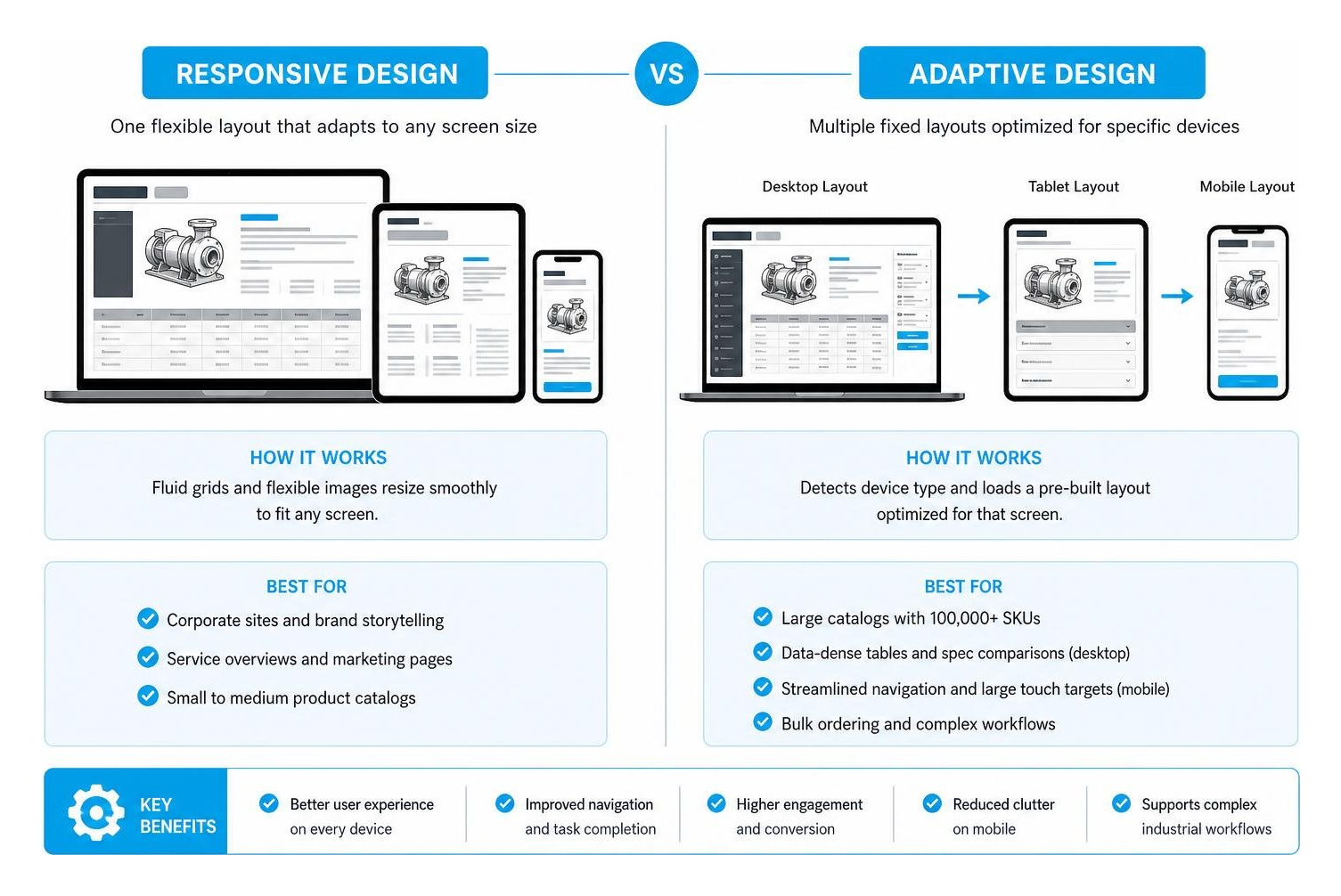
Responsive web design uses fluid grids that adjust content smoothly to fit any screen size. It works brilliantly for corporate brand pages, manufacturing service overviews, and medium-sized product catalogs.
Adaptive design, on the other hand, detects the specific device type (desktop, tablet, mobile) and loads an entirely tailored, pre-built layout optimized for that screen. For enterprise industrial sites hosting massive catalogs with over 100,000 SKUs, adaptive layouts are often preferred. Desktop users receive data-dense tables, side-by-side spec comparisons, and bulk spreadsheet upload pads. Mobile users receive streamlined navigation, larger touch targets, and simplified order tracking, preventing visual clutter on smaller screens.
To optimize high-SKU mobile experiences:
To dive deeper into digital shopfront architecture, read our breakdown on E-commerce Website Development for the Industrial Sector.
Running an enterprise industrial site or e-commerce portal demands tight synchronization between your front-end digital platform and back-end business systems. Enterprise sites like Grainger highlight the power of high-volume digital ordering paired with local branch support.
Custom API integrations sync live inventory levels, custom contract pricing tiers, real-time order tracking, and dynamic shipping options directly into the web interface. Dedicated customer procurement portals allow B2B clients to view account order histories, track shipments, re-order frequent items with one click, and manage user purchasing permissions. This seamless backend connectivity turns a simple marketing site into an operational hub that lowers administrative costs.
Building an industrial website requires avoiding several widespread mistakes that hamper conversion rates, compromise usability, and hurt search rankings.
One major issue is relying on off-the-shelf page builders or bloated, pre-built templates. These generic systems come packed with unnecessary code libraries, slow down load speeds, and lack the flexibility needed for complex technical software integrations.
| Performance Criteria | Custom Web Development | Pre-Built Theme Templates |
|---|---|---|
| Page Load Speed | Optimized hand-crafted code; fast load times | Heavy code bloat; slow load times |
| Security & Stability | Minimal plugin exposure; highly secure | Vulnerable to frequent plugin exploits |
| CAD & API Integration | Fully tailored API hooks to ERP/CRM | Rigid, limited third-party integrations |
| Scalability & Growth | Unlimited custom feature expansion | Restricted by template theme boundaries |
| User Experience (UX) | Tailored specifically to industrial buyers | Generic, unoptimized user navigation |
Other common errors include:
For additional insight into custom manufacturing site development, check out our guide on Manufacturing Web Design.
Nearly 70% of the modern B2B buyer’s journey takes place online before a prospect ever reaches out to a sales representative. B2B buyers, engineers, and procurement managers conduct extensive independent research—reviewing product specs, certifications, application guides, and vendor reputation online before submitting an RFQ or calling sales.
Industrial sites maintain fast Core Web Vitals by avoiding heavy page builders, lazy-loading off-screen assets, and utilizing cloud hosting setups like AWS or Cloudflare CDN. CAD models and heavy PDF documentation are hosted on fast cloud servers and rendered using lightweight JavaScript frameworks, preventing page speed slowdowns.
Static PDF catalogs are difficult to navigate on mobile screens, hidden from search engine indexing, and hard to update when specs or part numbers change. Dynamic online product data allows search engines to index every SKU, lets buyers filter products instantly by exact attributes, and seamlessly syncs inventory and spec updates directly from your internal ERP database.
A modern industrial website is no longer just a digital brochure; it is an essential tool for driving lead generation, streamlining procurement, and building technical trust with modern B2B buyers. By balancing technical depth for engineers with business value for executives, showcasing authentic factory imagery, organizing dynamic product catalogs, and integrating your website with back-end enterprise tools, you position your brand as an industry leader.
At BMG Media Co., we specialize in building custom, high-performance web platforms tailored specifically to the unique needs of industrial manufacturers and B2B distributors. Headquartered in Birmingham, Michigan, our expert team designs and builds every site completely from scratch—with zero template bloat—ensuring your platform is fast, secure, and built to scale.
Ready to transform your industrial website into your most effective sales tool? Build your custom manufacturing platform with our experts today.
