April 2026

E-commerce website development is the process of designing, building, and optimizing an online store that sells products or services — and for industrial and B2B companies, it’s quickly becoming one of the most important investments you can make.
If you’re looking to build a B2B e-commerce site for your industrial business, here’s what you need to know upfront:
Key steps to develop a B2B industrial e-commerce site:
The numbers back up the urgency. There are now over 27 million online stores worldwide, and the global web development market is projected to nearly double from $65.35 billion in 2023 to $130.9 billion by 2032. Meanwhile, 75% of consumers say they’ve abandoned a purchase because a website looked outdated or unprofessional.
For industrial businesses — manufacturers, distributors, healthcare suppliers — the stakes are even higher. Your buyers are sophisticated. They expect a seamless, fast, and reliable purchasing experience. If your site doesn’t deliver that, they’ll find a competitor who does.
I’m Blake George, founder of BMG Media Co, and over the past 15+ years I’ve led e-commerce website development projects for companies across manufacturing, healthcare, real estate, and beyond — helping them turn underperforming websites into high-converting digital storefronts. In the sections below, I’ll walk you through exactly what it takes to build a B2B industrial e-commerce site that drives real growth.
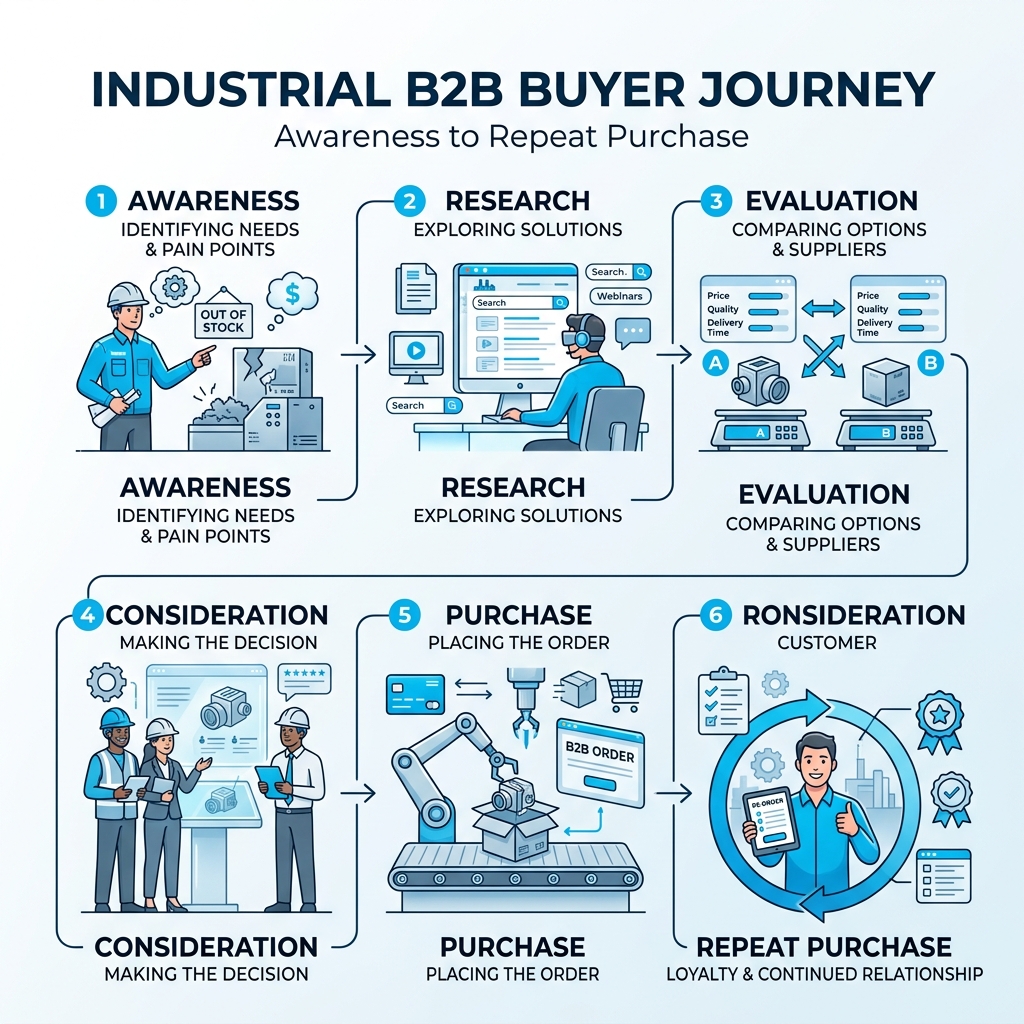
E-commerce website development terms explained:
When we talk about e-commerce website development in the industrial sector, we aren’t just talking about putting a “Buy Now” button on a page. We are talking about building a complex, high-performance engine that handles massive catalogs, intricate pricing tiers, and heavy-duty logistics. Modern industrial sites require a strategic approach to architecture to ensure they can scale as your business grows.
In the past, many businesses were stuck with “monolithic” platforms—where the front-end (what the user sees) and the back-end (the data and logic) were glued together. Today, we lean toward more flexible options.
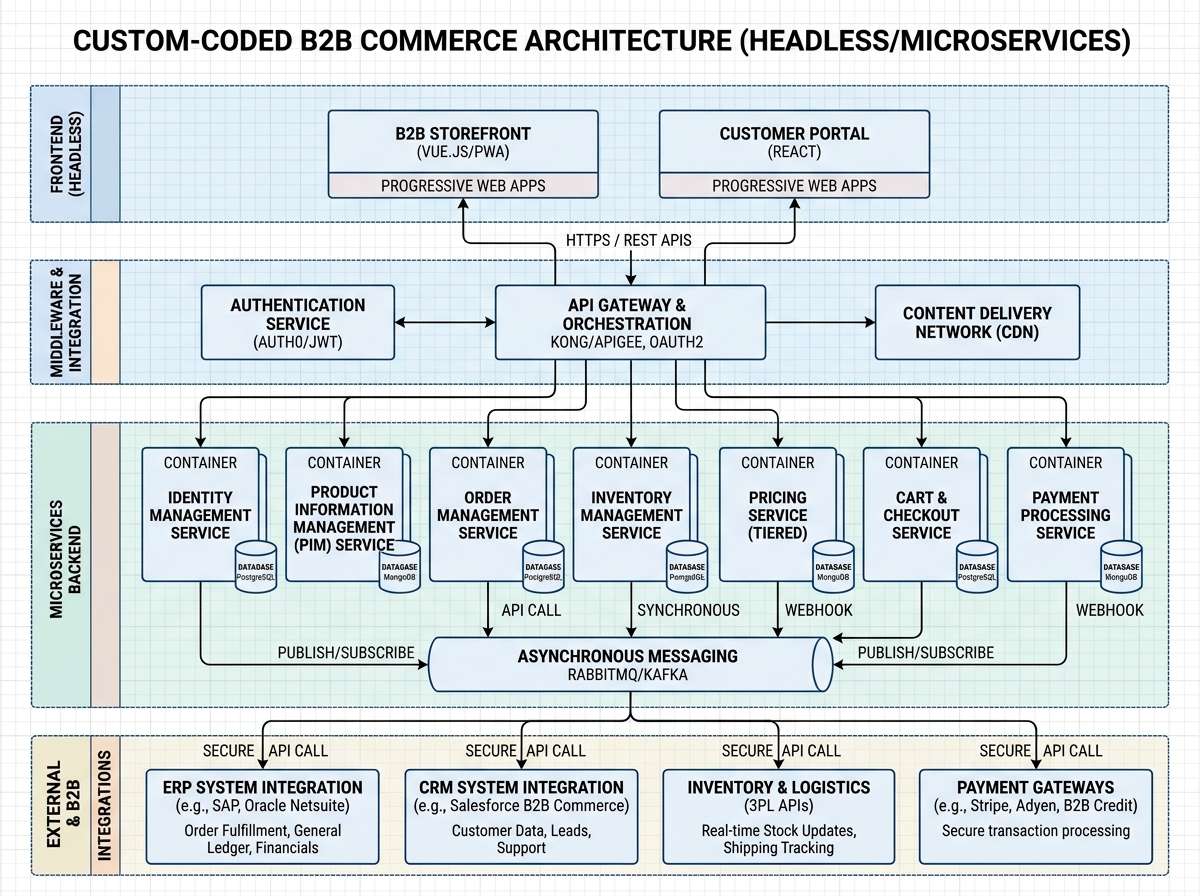
One of the most significant shifts in e-commerce website development is the move toward MACH architecture (Microservices, API-first, Cloud-native, and Headless).
For businesses that need total control, Custom Web Design and Development Services are often the best route. Custom builds allow for unique integrations that off-the-shelf templates simply can’t handle.
| Feature | SaaS (Shopify/BigCommerce) | Open-Source (WooCommerce) | Custom Headless Build |
|---|---|---|---|
| Speed to Market | Very Fast | Fast | Moderate |
| Customization | Limited by platform | High | Unlimited |
| Maintenance | Handled by provider | User-managed | Professional-managed |
| B2B Complexity | Moderate | High (with plugins) | Built-to-suit |
| Scalability | Good | Moderate | Exceptional |
Choosing a platform is like choosing the foundation for a factory. If you build on sand, the whole structure will eventually crack. Your choice depends on your business model, technical expertise, and total cost of ownership.
Industrial B2B buyers don’t shop like B2C consumers. They aren’t usually making impulse buys; they are fulfilling procurement requirements. Therefore, your e-commerce website development must prioritize functionality over “fluff.”
To succeed in the industrial sector, your platform needs these core features:
Your website shouldn’t be an island. For true efficiency, it must integrate with your existing back-office systems.
You can see how we’ve implemented these complex features for our clients by browsing our Portfolio.
Building a custom B2B store is a disciplined technical journey. It’s not just about making things look pretty; it’s about “conversion engineering.”
Before a single line of code is written, we conduct a discovery phase. We look at your product catalog, customer personas, and competitive landscape. We then move into data modeling, defining how products relate to one another (e.g., “This pump requires these specific gaskets”).
In industrial e-commerce website development, clarity beats cleverness every time. We focus on “thumb-zone” navigation for mobile users—since over 60% of global web traffic is now mobile—and ensure that technical specifications are easy to read. Our Technology – ReactJS experts build interfaces that are lightning-fast and highly interactive.
Site speed is a ranking factor for SEO and a critical component of user trust. We optimize for Core Web Vitals, ensuring that your Largest Contentful Paint (LCP) and Cumulative Layout Shift (CLS) scores are in the green. This involves:
The development cycle is iterative. We don’t just build the whole thing and hope it works; we test as we go.
The timeline for e-commerce website development depends entirely on complexity.
Budgeting for a project varies based on your needs. A small business might spend $5,000 to $20,000 for a high-quality platform-based store. However, for a fully custom, industrial-grade B2B platform, costs can range from $50,000 to over $150,000.
When considering costs, don’t just look at the build price. Factor in hosting, SSL certificates, and ongoing maintenance. We are recognized among the Top Small Business Ecommerce Companies – BMG Media for providing high-value solutions that offer a strong return on investment.
Security is the foundation of trust in B2B commerce. To protect your business and your customers:
In 2025 and beyond, e-commerce website development must account for more than just traditional search engines. We are now optimizing for AI Discoverability.
The industrial sector is no longer “behind the curve” when it comes to digital sales. It is the new frontier. Investing in professional e-commerce website development isn’t just about keeping up; it’s about dominating your niche by providing a buying experience that is easier, faster, and more reliable than the competition.
At BMG Media Co, based in Birmingham, Michigan, we specialize in moving beyond cookie-cutter templates. We build fully custom, high-performance digital tools tailored specifically for the manufacturing and industrial world. With over 1,000 sites completed and a shelf full of awards, we have the expertise to handle your most complex integration challenges.
Whether you are looking to migrate an existing store or build a headless B2B powerhouse from scratch, we are here to help. Our team focuses on “conversion-driven design,” ensuring that every pixel on the screen serves a purpose: growing your bottom line.
Ready to transform your industrial business into a digital leader? Schedule a consultation for manufacturing web design with our team today, and let’s build something that lasts.
