August 2026
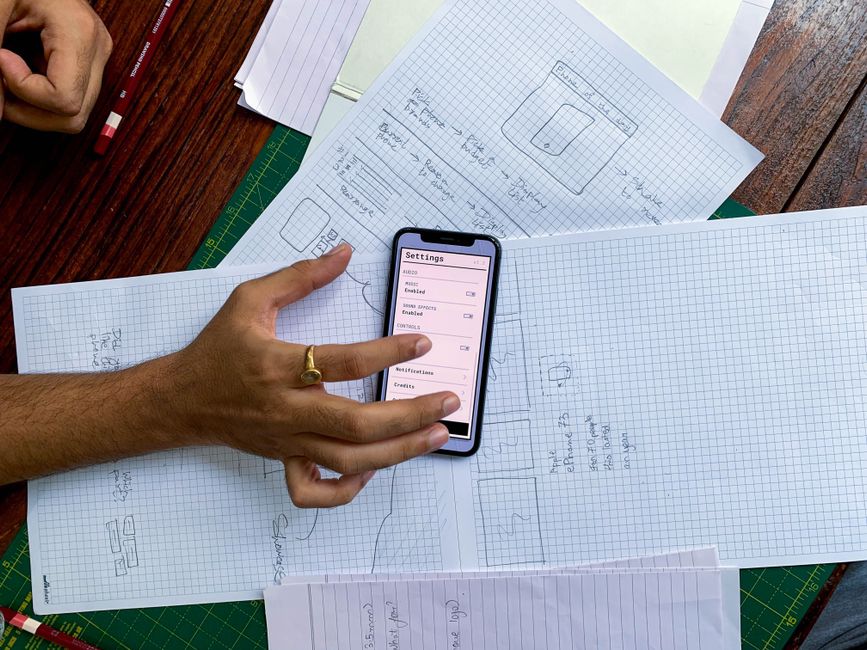
Digital transformation requires more than updating an outdated interface or installing modern features. It demands a structured approach to solving real problems for real people. Comprehensive ux design services evaluate every digital touchpoint to ensure your platforms serve your visitors clearly and efficiently.
When we approach user experience design, we look beyond static screen layouts. We analyze how data flows, how information is grouped, and how users feel as they progress from landing pages to completed transactions. This user-centered framework relies on several core service offerings working in harmony.
To visualize how these services fit together, consider the core framework of digital experience optimization:
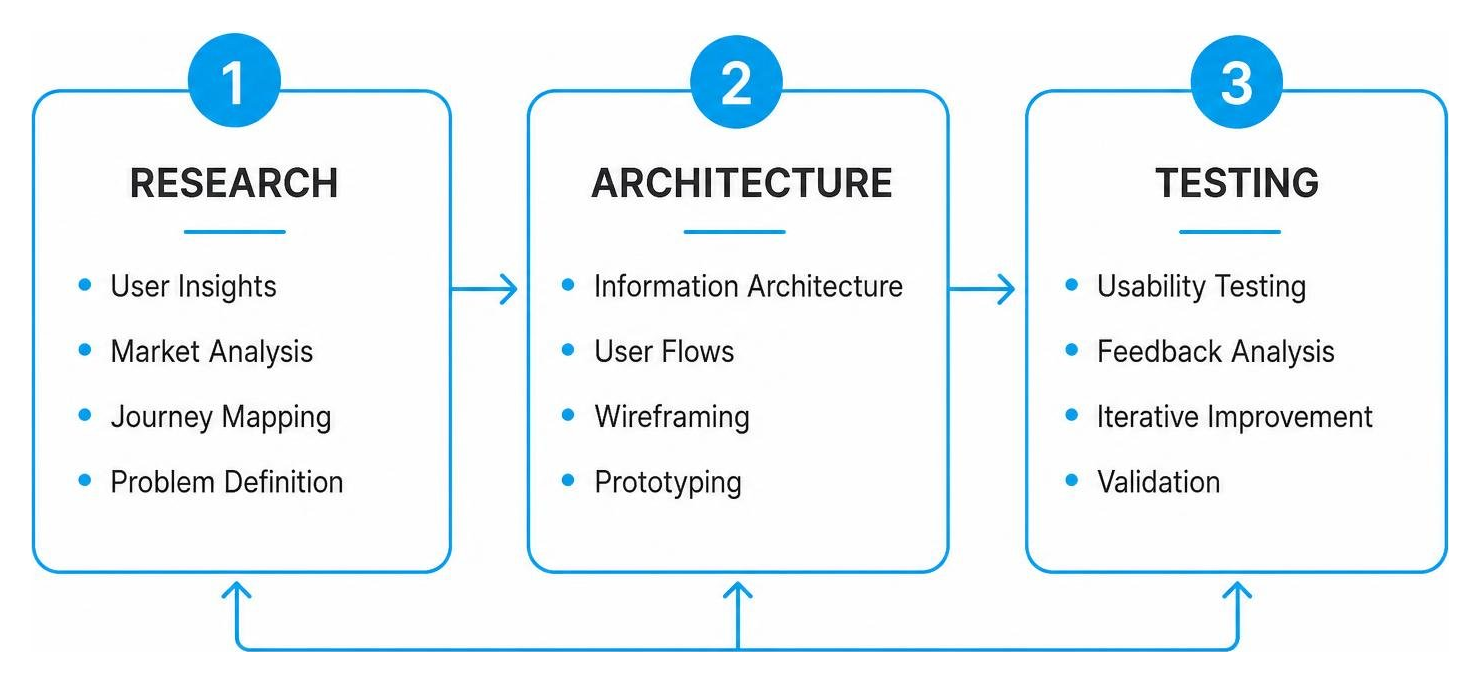
Every successful digital product starts with evidence, not guesswork. User research forms the foundation of modern design strategy. Through quantitative analytics reviews and qualitative customer discovery sessions, research reveals actual pain points, behavioral triggers, and expectations.
Key research and structural services include:
Understanding how user experience lays the groundwork for visual execution is critical. You can explore how visual styling builds upon this framework in our detailed breakdown of UX vs UI Design Understanding the Difference and Importance.
Modern UX design must be inclusive. Building accessible digital platforms ensures that people of all abilities—including those using assistive technologies—can navigate, understand, and interact with your site seamlessly. Accessible design improves the experience for everyone, creating cleaner layouts, sharper visual contrast, and more logical navigation structures.
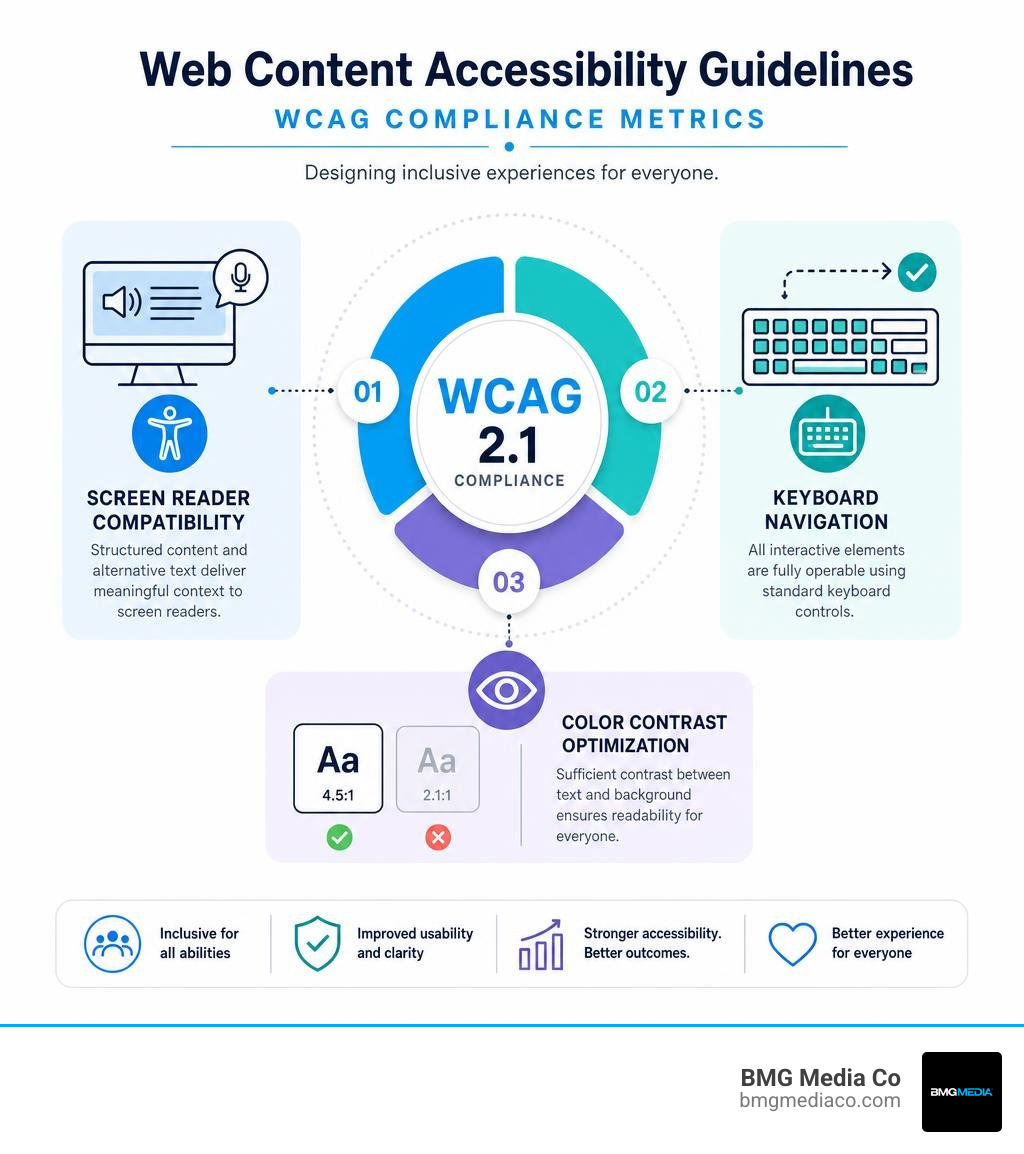
Advanced ux design services incorporate Web Content Accessibility Guidelines (WCAG 2.1) directly into the design process rather than treating compliance as an afterthought:
Aligning your digital footprint with universal usability standards relies heavily on timeless design fundamentals. Learn more about visual balance and clarity in our guide to Web Design Principles You Need to Know.
A common challenge in digital product development is focusing entirely on the screen while ignoring the business operations behind it. This is where user experience (UX) design meets service design.
UX design represents the front-stage experience—everything the customer directly sees, clicks, and interacts with on a digital screen. Service design focuses on back-stage operational orchestration—the internal employees, software tools, databases, and business rules required to fulfill that customer interaction.
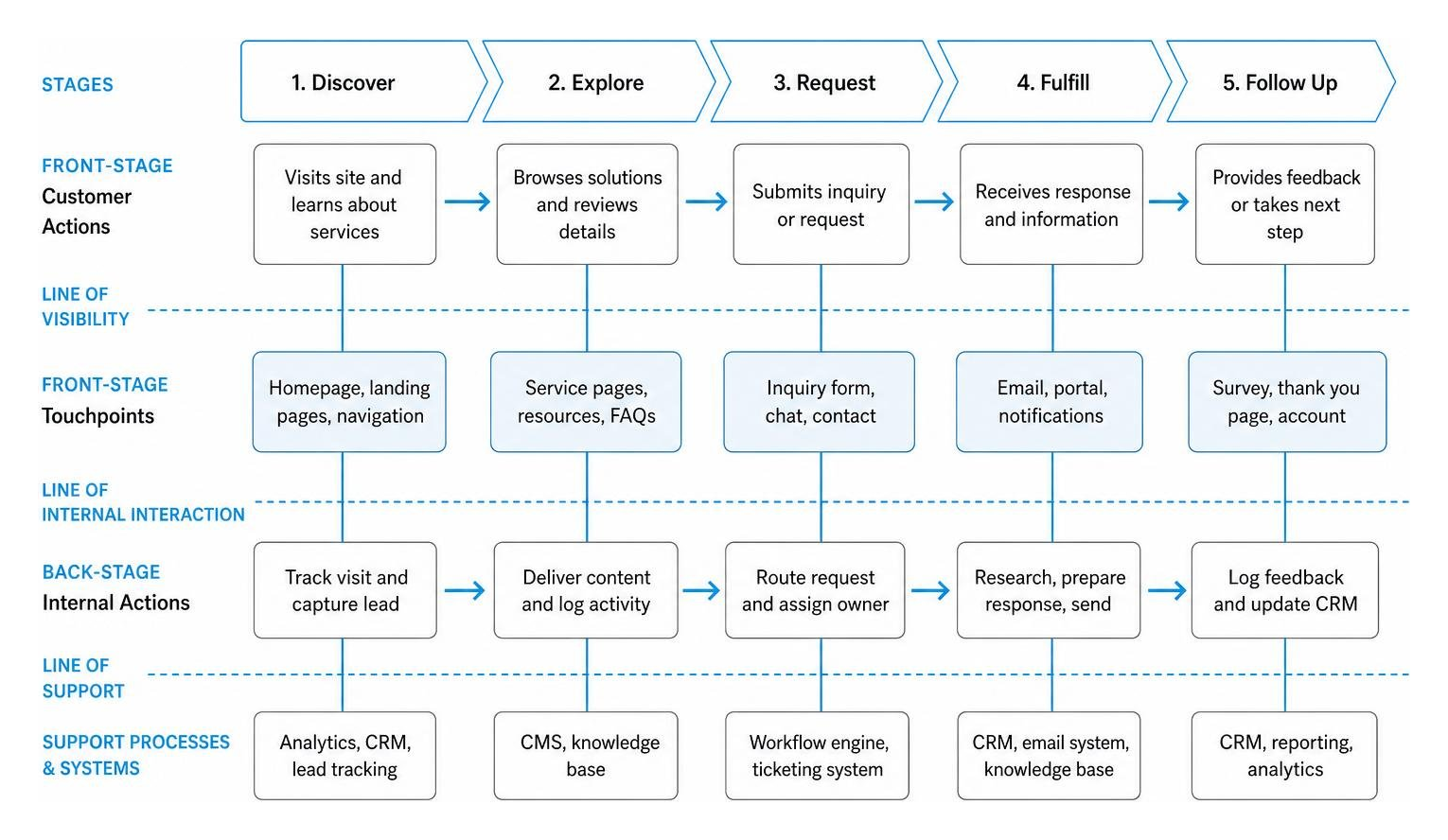
If a customer submits an inquiry on an intuitive, beautifully designed website, but the internal support team takes three days to respond because their backend software is disconnected, the overall experience fails. The front stage promised speed, but the back stage delivered friction. Undesirable customer experiences are frequently caused by internal operational bottlenecks rather than simple interface design flaws.
Service blueprinting bridges this gap by mapping user journeys right alongside internal operational workflows:
A polished interface cannot sustain long-term digital growth if backend workflows are fragmented. Aligning user flows with custom infrastructure is detailed in our strategic guide on Why Your Business Needs a Custom Website Design and Development Strategy.

Creating high-performing digital platforms is an iterative, cross-functional team effort. Exceptional user design requires active, ongoing collaboration between UX specialists, visual designers, software developers, product managers, and marketing teams.
The professional project lifecycle moves through four distinct phases:
When developers, designers, and business strategists collaborate from day one, projects stay on schedule, technical debt is minimized, and the finished product performs reliably.
Choosing the right structure for your UX team directly impacts your timelines, budget, and project flexibility. Organizations typically evaluate three primary engagement models: freelance UX designers, custom agency partnerships, or building an in-house UX team.
| Model | Pros | Cons | Best For |
|---|---|---|---|
| Freelance UX Designer | • Flexible short-term commitment • Lower direct overhead costs • Highly targeted tool expertise |
• Limited availability and scale • Less cross-functional alignment • Risk of single-point dependency |
• Focused, isolated UX audits • Small feature fixes • Early-stage MVP concepts |
| UX & Web Agency | • Multi-disciplinary team depth • Scalable, turnkey execution • Strong enterprise strategic perspective |
• Higher initial investment • Requires clear scope boundaries |
• Full platform redesigns • Custom enterprise builds • Accelerated launch schedules |
| In-House UX Team | • Deep ongoing domain mastery • Direct continuous internal access • Tightly integrated company culture |
• High fixed compensation and overhead • Long hiring and onboarding cycles • Risk of creative tunnel vision |
• Large enterprise products • Mature SaaS platforms needing daily updates |
When evaluating external partners or interviewing internal candidates, look beyond basic mastery of design software like Figma or Miro. Assess candidate soft skills, including emotional intelligence, active listening capabilities, user empathy, and clear cross-functional communication. A designer who can articulate why a design decision drives a specific business metric is far more valuable than one who simply focuses on visual trends.
For localized recruiting options across competitive tech hubs in Oakland County, browse specialized job listings like Ux Design Jobs, Employment in Troy, MI or explore tech opportunities through Ux Designer Jobs, Employment in Novi, MI. If you are weighing external partnerships, explore practical advice on Finding the Right Web Design Contractor for Your Project.
Investing in professional ux design services should deliver clear, measurable business returns. Modern UX design relies on data, tracking behavior before and after launch to confirm design changes deliver direct financial and operational value.
Key metrics for evaluating UX investments include:
To dive deeper into setting up data-backed design experiments, review our guide on The Importance of A B Testing in Web Design.
UX (User Experience) design focuses on the structural strategy, flow, usability, and overall efficiency of a digital interaction. It answers how the platform works and how easily a user accomplishes a goal.
UI (User Interface) design focuses on visual touchpoints—typography, visual hierarchy, color palettes, button styles, spacing, and brand personality. It answers how the platform looks and feels.
Both disciplines are vital for digital success: UX provides the logical structural blueprint, while UI delivers visual polish and engagement.
Poor internal service design creates friction across back-stage operational channels that directly degrades front-stage user experiences.
For instance, if your customer-facing mobile website features a clean direct support button, but backend support staff must manually search through three disconnected database software systems to pull up customer details, response times stall. The end user experiences frustrating delays, repeated questions, and broken handoffs—not because the web page button was broken, but because internal business processes failed to support it.
Project timelines vary based on scope, organizational size, and structural complexity:
Great user experiences do not happen by accident. They are built through disciplined user research, logical architecture, inclusive accessibility practices, and seamless alignment between front-end interfaces and backend operations.
At BMG Media Co., we have spent more than 15 years engineering custom digital products that combine modern visual craft with measurable performance. Founded in 2009 by Blake George during the Great Recession, our agency was forged on resourcefulness, technical excellence, and a commitment to action.
We do not use cookie-cutter templates, pre-built frameworks, or bloated page builders. Every line of code, every interface layout, and every user flow we build is handcrafted from scratch to align with your business goals, target audience, and long-term trajectory.
Whether you are launching a new digital initiative, updating an enterprise web application, or refining key customer journeys, our team delivers the craft, strategic depth, and founder-direct access your vision deserves.
Ready to elevate your digital product with customized, scalable UX strategy? Explore our full capabilities in Custom Web Design and Development Services and start building your next experience today.
