May 2026
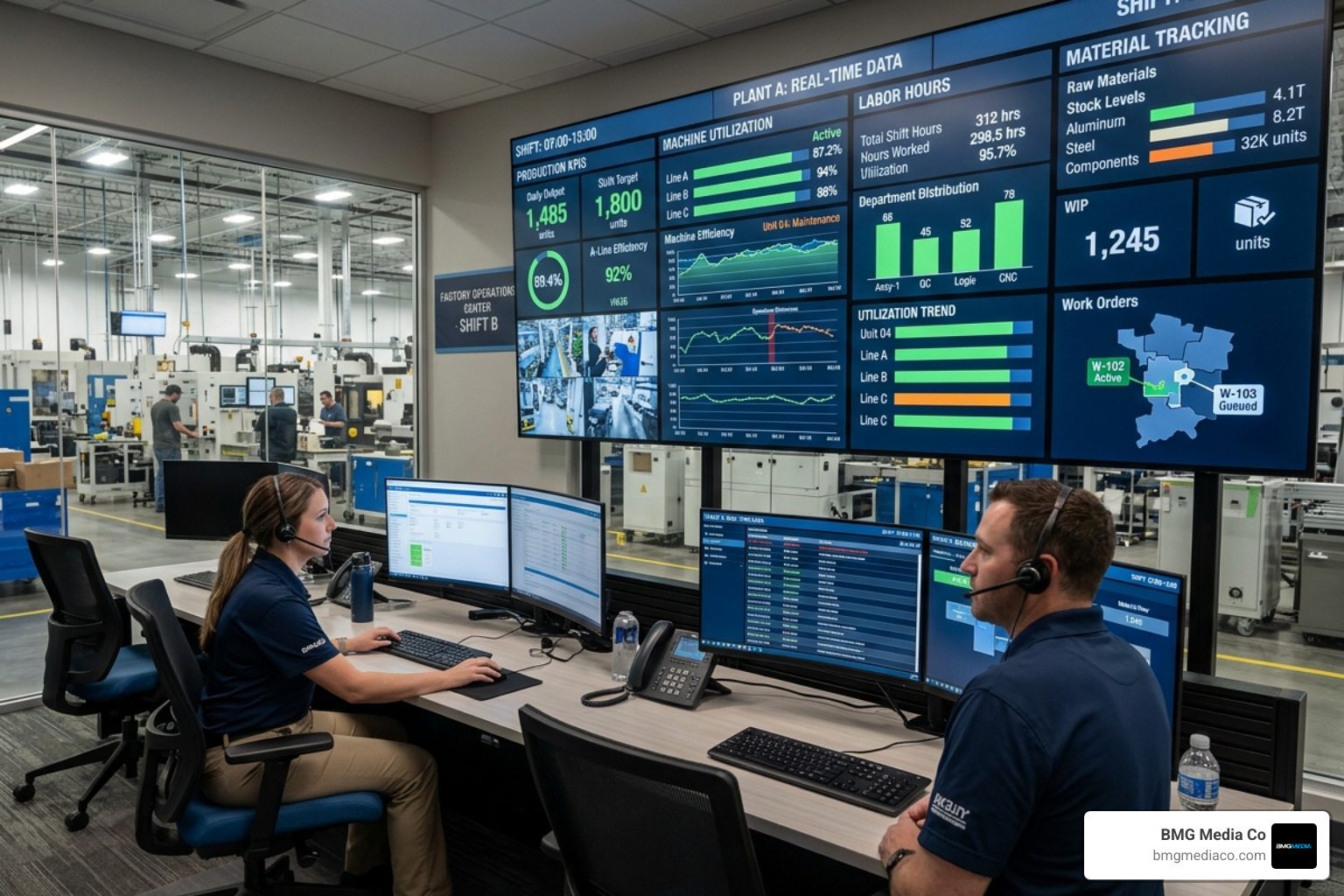
At its heart, custom manufacturing software is the digital nervous system of a modern factory. Unlike mass-market Enterprise Resource Planning (ERP) systems that try to be everything to everyone, custom solutions are architected to mirror the physical reality of your shop floor.
In bespoke manufacturing, where every order might have unique specifications, generic software often falls short. Custom software allows for high-level precision in tracking raw materials, labor hours, and machine utilization. For manufacturers in Michigan and beyond, this means moving away from “best guesses” and toward data-driven certainty.
The core advantage lies in the flexibility of Custom Site Development for Complex Manufacturing Needs. When your software is tailor-made, it supports your specific “secret sauce”—those unique processes that give you a competitive edge. Whether it’s a specific way you handle heat-treating or a proprietary method for calculating waste in aerospace components, Web Design Services: Custom Software ensures your digital tools enhance your expertise rather than stifling it.
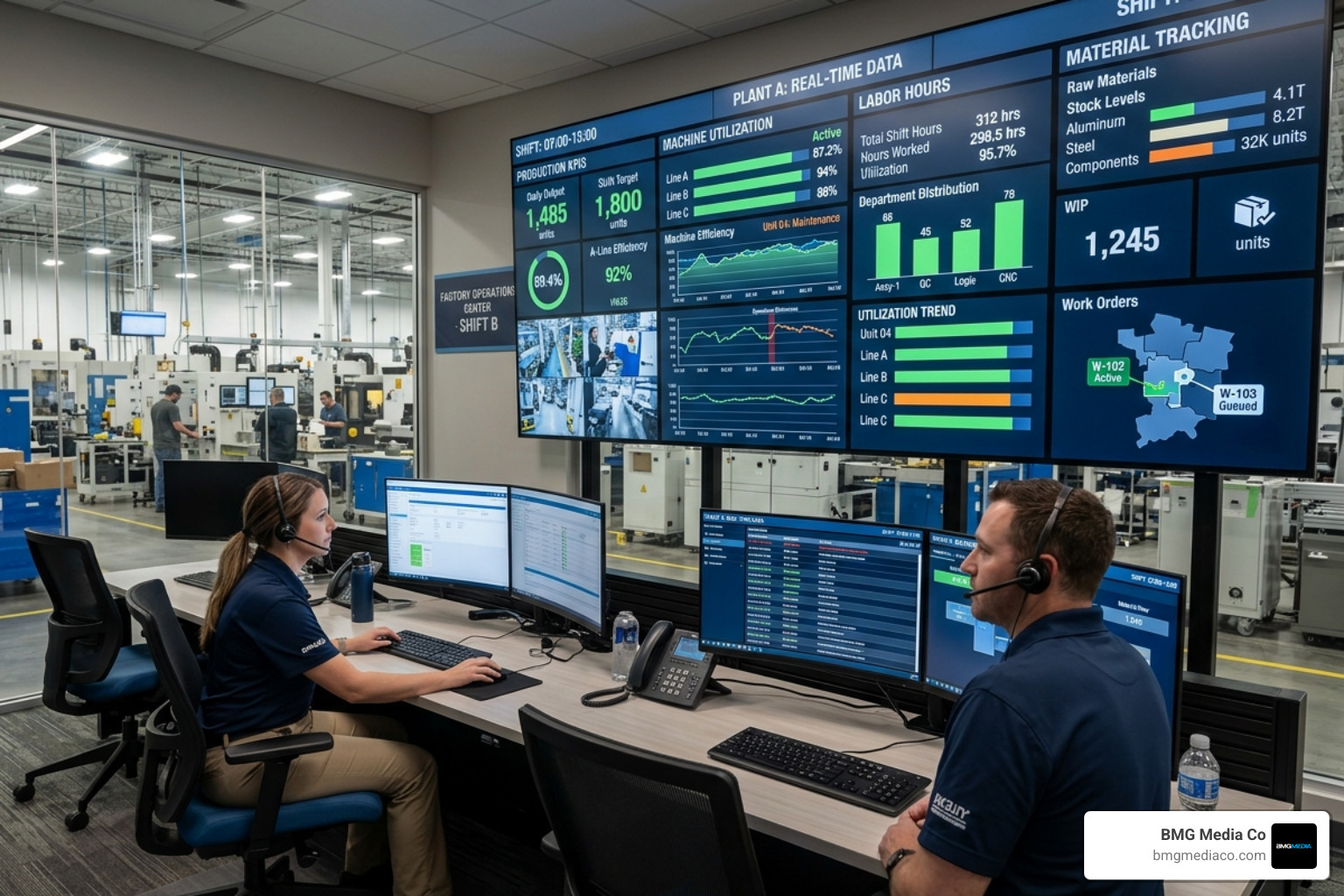
The most significant drain on a manufacturer’s efficiency isn’t usually a broken machine; it’s the “Custom Tax.” This is the hidden cost of manual workarounds. If your team has to enter data into an ERP and then copy that same data into an Excel spreadsheet just to get a usable report, you are paying the Custom Tax in lost labor and human error.
Off-the-shelf ERPs are often rigid. They force you to bend your workflow to match their logic. We’ve seen operators forced to “trick” their software to account for a multi-stage production process the system wasn’t designed to see. This leads to double-entry errors and a lack of trust in the data. By choosing a solution that fits your business, as discussed in Why Your Business Needs a Custom CMS or Ecommerce Build, you eliminate these friction points. Custom software flips the script: the software adapts to the human, not the other way around.
Who is the ideal user for custom manufacturing software? It ranges from the “ambitious maker” scaling a small-batch consumer product to mid-sized enterprises managing complex supply chains.
For these businesses, scalability is the goal. You want software that grows with you. A system that works for 10 employees should be able to handle 100 without a total overhaul. That’s the beauty of the Industry: Manufacturing sector’s move toward personalized tech; it creates a foundation for sustainable growth.
When we build or evaluate custom manufacturing software, we look for features that directly impact the bottom line: precision and profit. Modern systems must do more than just record data; they must provide guidance.
| Feature | Cloud-Based | On-Premise | Hybrid |
|---|---|---|---|
| Accessibility | Anywhere with internet | Local network only | High (Local + Cloud Sync) |
| Maintenance | Handled by provider | Internal IT team required | Shared responsibility |
| Data Security | High (Provider-led) | Complete physical control | Balanced |
| Initial Cost | Low (Subscription) | High (Hardware/Licenses) | Moderate |
Inventory management is a primary pillar. For a manufacturer, “inventory” isn’t just a list of parts; it’s tied-up capital. Custom software tracks rolling average costs and provides pricing guidance by testing how supplier price changes will affect your final margins. This is especially vital for E-Commerce Website Development for the Industrial Sector, where real-time cost updates can dictate online pricing strategies.
In industries like aerospace or medical devices, traceability isn’t a “nice-to-have”—it’s a legal requirement. Custom manufacturing software excels here by automating lot tracking. If a specific batch of raw material is found to be defective, a custom system can generate a recall report in seconds, identifying every single finished product that used that material.
This level of detail supports GMP (Good Manufacturing Practices) and CPSC requirements. Instead of spending seven days manually compiling a quality report, modern industrial solutions can reduce that time to a mere 15 seconds. This speed ensures that Custom Site Development for Complex Manufacturing Needs provides not just efficiency, but total peace of mind during audits.
Bespoke production requires a deep understanding of sub-assembly costs. If you are building a custom piece of furniture, you aren’t just tracking wood and nails; you’re tracking the labor for the frame, the cost of the custom upholstery sub-assembly, and the waste percentage of the fabric.
Custom manufacturing software allows you to build “recipes” for your products. These recipes can handle complex unit conversions (e.g., buying fabric by the bolt but using it by the square inch) and automatically deplete inventory as production steps are completed. This granular level of detail is a hallmark of Web Design Services: Custom Software, ensuring that your Cost of Goods Sold (COGS) is always GAAP-compliant and accurate to the penny.
Implementation is where the rubber meets the road. Many businesses fear that adopting new software will cause a massive production halt. The key to avoiding this is a phased building approach. Instead of a “big bang” launch, we recommend starting with the highest-friction area—perhaps scheduling or inventory—and expanding from there.
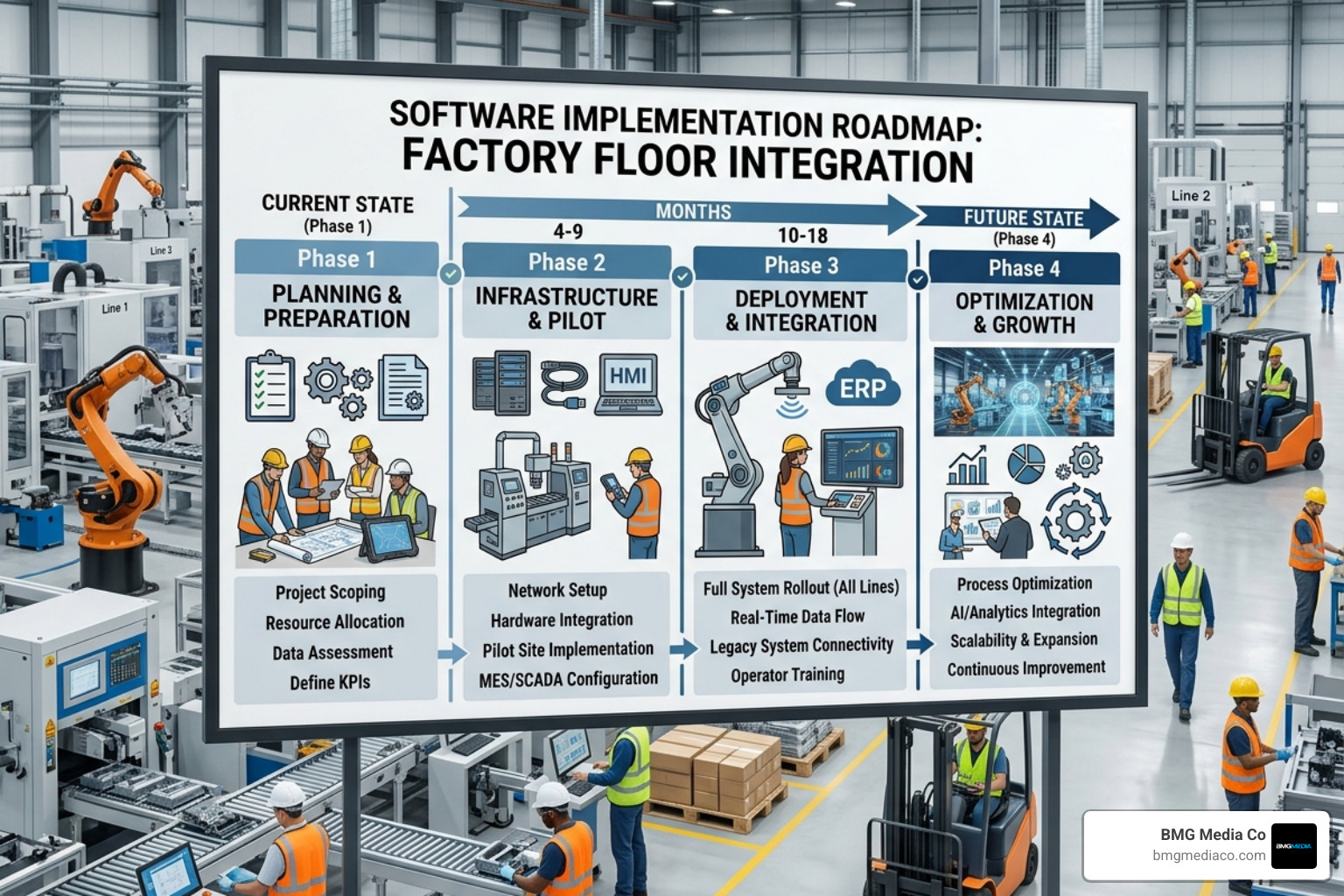
User adoption is the second major hurdle. If the people on the shop floor find the software difficult to use, they will go back to their paper notebooks. Custom software should be designed with the operator in mind, using simple interfaces or “kiosk modes” that require minimal typing. Training protocols must be robust, but the software itself should be intuitive enough that a new hire can understand the basics in a single shift. By focusing on the user, Web Design Services: Custom Software helps eliminate data silos and ensures that every piece of information entered is accurate and timely.
In 2026, software doesn’t live on an island. To be truly effective, your custom manufacturing software must talk to your other tools.
This level of connectivity is at the core of Custom Site Development for Complex Manufacturing Needs, turning your factory into a “smart” environment where data flows seamlessly from the design office to the shipping dock.
The numbers speak for themselves. When manufacturers move away from generic tools and toward custom-aligned software, the results are often dramatic.
You can see examples of this kind of transformation in our work with Portfolio: Brass Aluminum Forging, where precision in data leads directly to precision in production.
As we look toward the latter half of 2026, the integration of Artificial Intelligence (AI) into custom manufacturing software is no longer science fiction. AI is being used for predictive maintenance, analyzing machine vibrations to predict a failure weeks before it happens.
Generative design is another frontier. Engineers can input material constraints and strength requirements, and the software will “grow” the most efficient part design, often using less material than a human designer would. This data can then be fed directly into sustainability reports, helping manufacturers track their carbon footprint at the part level—a growing requirement in global supply chains.
These technologies aren’t just for the giants of industry. Because of the modular nature of modern software, even mid-sized shops can use Industrial Website Design Ideas That Drive Leads and custom back-end tools to compete on a global scale.

Selecting the right software depends heavily on your niche.
When choosing, look for a partner who understands these nuances. A generic web developer might build a pretty interface, but an expert in Industry: Manufacturing Web Design will understand why your “work-in-progress” (WIP) tracking needs to be handled differently than your finished goods.
Costs vary wildly based on scope. A modular ERP like Cetec might start at $40/user/month, while a fully custom, ground-up build for a mid-sized factory can exceed $100,000. However, most businesses see a full Return on Investment (ROI) within 12 to 18 months through labor savings, reduced material waste, and increased throughput.
Custom software uses a relational database structure. When a “Finished Good” is marked as complete, the system automatically “explodes” the BOM, looking through every sub-assembly level to subtract the exact amount of raw materials used. It can even account for “scrap factors”—the 5% of material usually lost during a specific cut.
Yes. Modern software uses APIs (Application Programming Interfaces) to act as a bridge. You might keep your legacy system for accounting but build a custom “layer” for the shop floor that provides the real-time visibility the old system lacks.
In the competitive landscape of 2026, precision is the only path to profit. Custom manufacturing software is no longer a luxury for the elite; it is a fundamental tool for any manufacturer that wants to scale without losing control. By eliminating the “Custom Tax” of manual workarounds and embracing a system that actually fits your workflow, you empower your team to focus on what they do best: building great products.
At BMG Media Co, we specialize in turning complex manufacturing challenges into streamlined digital solutions. From the initial blueprint to the final launch, we help Michigan manufacturers build the tools they need to lead their industries. If you’re ready to move beyond spreadsheets and generic ERPs, it’s time to explore the possibilities of Custom Manufacturing Software.
