August 2026
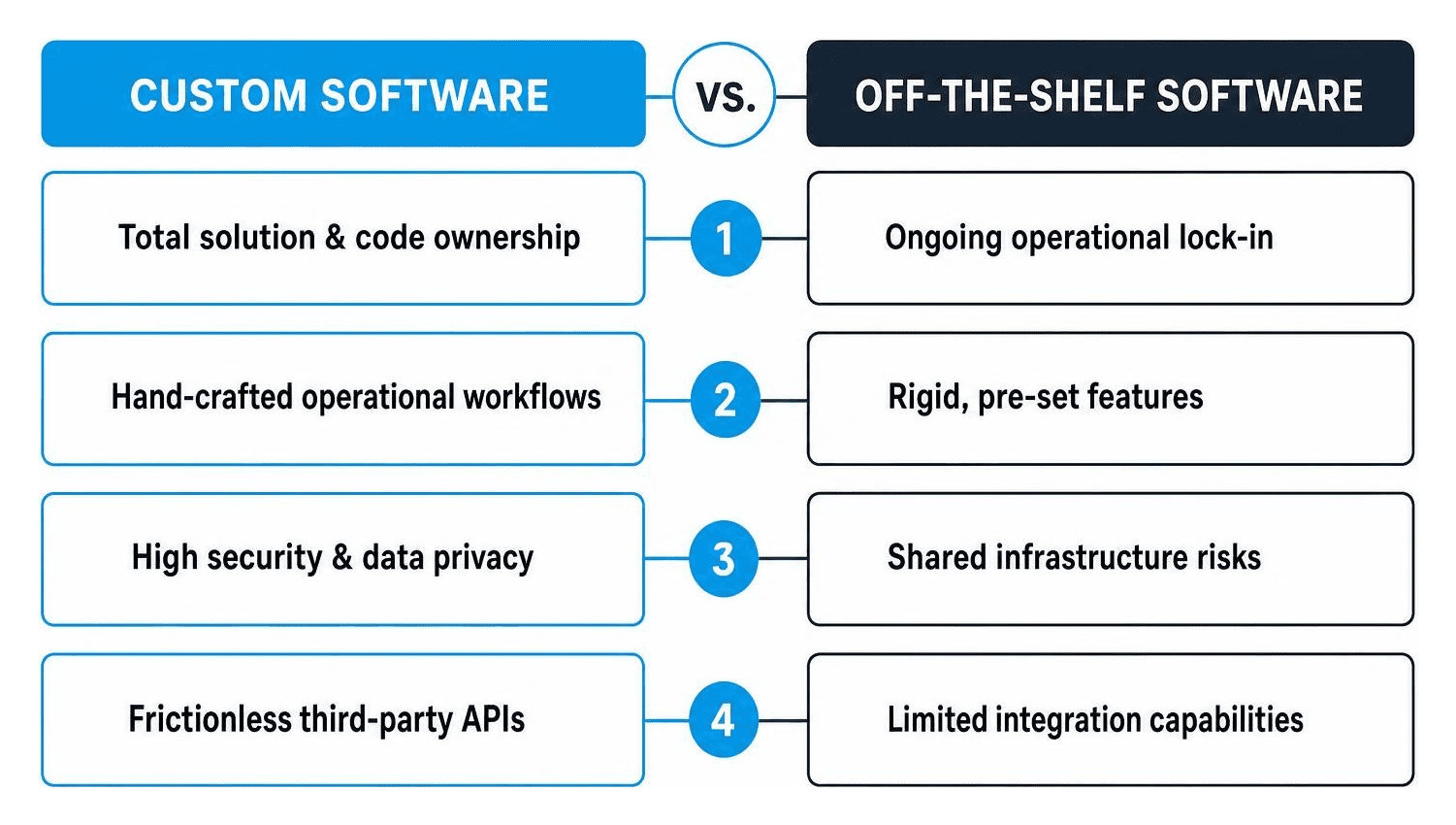
When growing businesses evaluate technology investments, they quickly run into a fork in the road: sign up for a commercial off-the-shelf platform or partner with a custom software designing company to build a solution from scratch.
Off-the-shelf platforms offer quick setups, but they come with severe long-term trade-offs. You pay perpetual, escalating monthly subscription fees for features you never use, while being forced to adapt your unique business processes to match the platform’s rigid structure. Worse, you share the exact same technology baseline as your direct competitors, creating zero strategic differentiation.
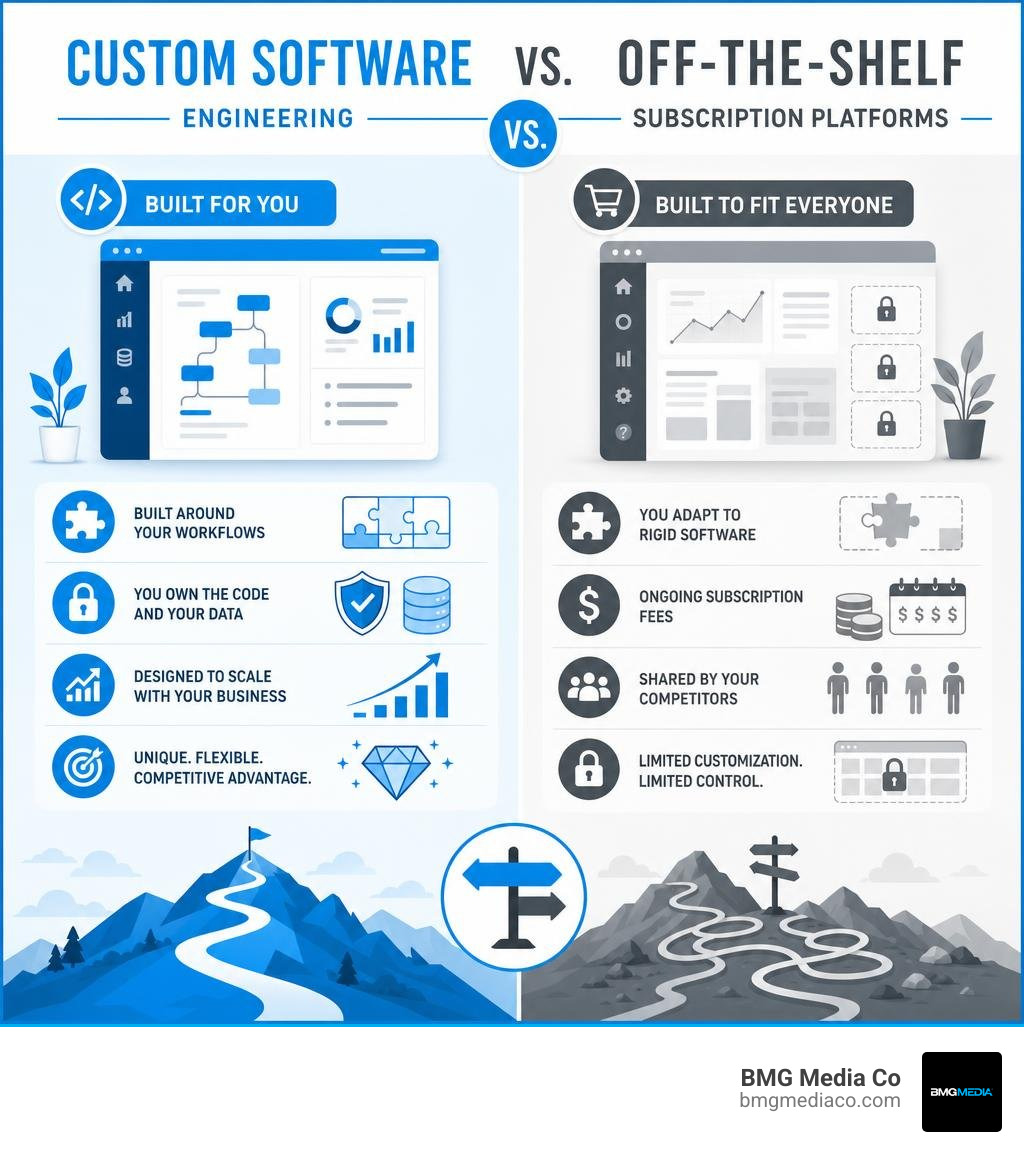
Custom solutions flip this dynamic entirely. When you invest in bespoke development, you gain total solution ownership. You own the code, the data pipelines, and the intellectual property outright. Every line of code, database schema, and interface layout is engineered specifically around your internal operational workflows, eliminating unnecessary manual workarounds.
Whether you are building complex B2B ecosystem management systems or intuitive customer-facing B2C applications, system adaptability remains paramount. Custom platforms scale seamlessly alongside your user volume without forcing you into expensive tier upgrades. To understand the terminology and frameworks behind these builds, read our detailed guide on Bespoke, Tailored, or Custom: Demystifying Custom Software Development Solutions.
Software development needs change dramatically depending on your organizational maturity and market position:
A modern software designing company operates fundamentally differently from a traditional IT services provider. While traditional IT firms manage legacy infrastructure, hardware, and routine network operations, a software product company engineers, launches, and scales proprietary digital products.
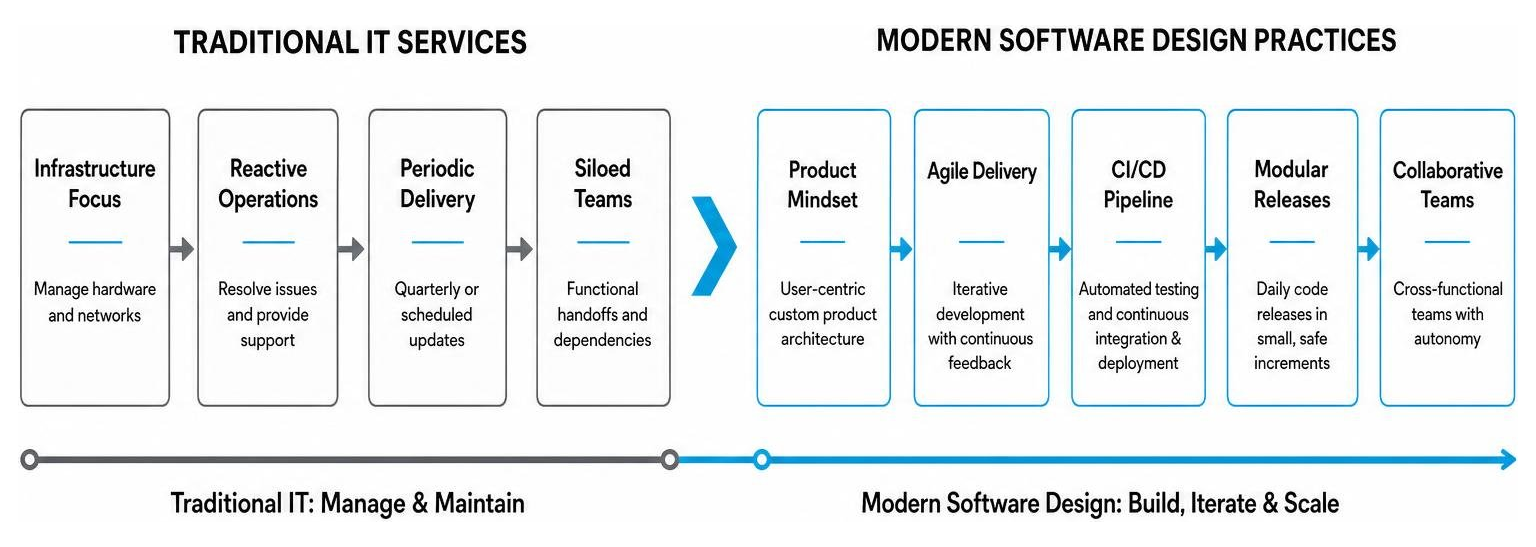
Modern software development relies on flat team hierarchies, developer autonomy, and agile workflows. Instead of locking projects into inflexible quarterly release schedules, engineering teams utilize automated testing and continuous integration/continuous deployment pipelines. This setup lets developers deploy dozens of modular code updates directly to production environments each week while maintaining system stability.
The engine driving modern software builds rests on a powerful engineering triad: cloud-native design, API integrations, and practical AI implementation.

By building on serverless cloud architectures (like AWS, Azure, or Google Cloud), software applications scale resources instantly during peak traffic without requiring manual hardware adjustments. Modern applications rely on API-first integrations and headless builds, decoupling the back-end logic from the front-end display. This modular architecture allows systems to share real-time data across platforms effortlessly.
Meanwhile, practical AI tools are transforming standard workflows. By pairing generative AI models, vector search databases, and automated workflows directly with custom business applications, modern agencies help businesses automate complex decision-making, predictive analytics, and customer support.
A top-tier software designing company produces tailor-made digital assets designed to yield measurable business metrics:
Explore our full spectrum of specialized capabilities on our dedicated page for Custom Software.
Selecting an engineering partner requires looking past sleek marketing pitch decks and scrutinizing an agency’s actual technical capabilities and working practices.
The best way to evaluate an agency before signing a massive contract is through a paid discovery sprint. A discovery sprint acts as a low-risk test run where the agency maps out your product scope, creates click-through UI/UX wireframes, defines acceptance criteria, and designs the underlying database architecture.
During this phase, confirm that the contract explicitly grants your business 100% code ownership and full administrative access to all GitHub or GitLab source code repositories from day one. You can learn more about finding the right development team by reading The Complete Guide to Custom Software Developers.
To verify that a potential engineering team can handle your technical requirements, ask these specific questions during your initial technical interviews:
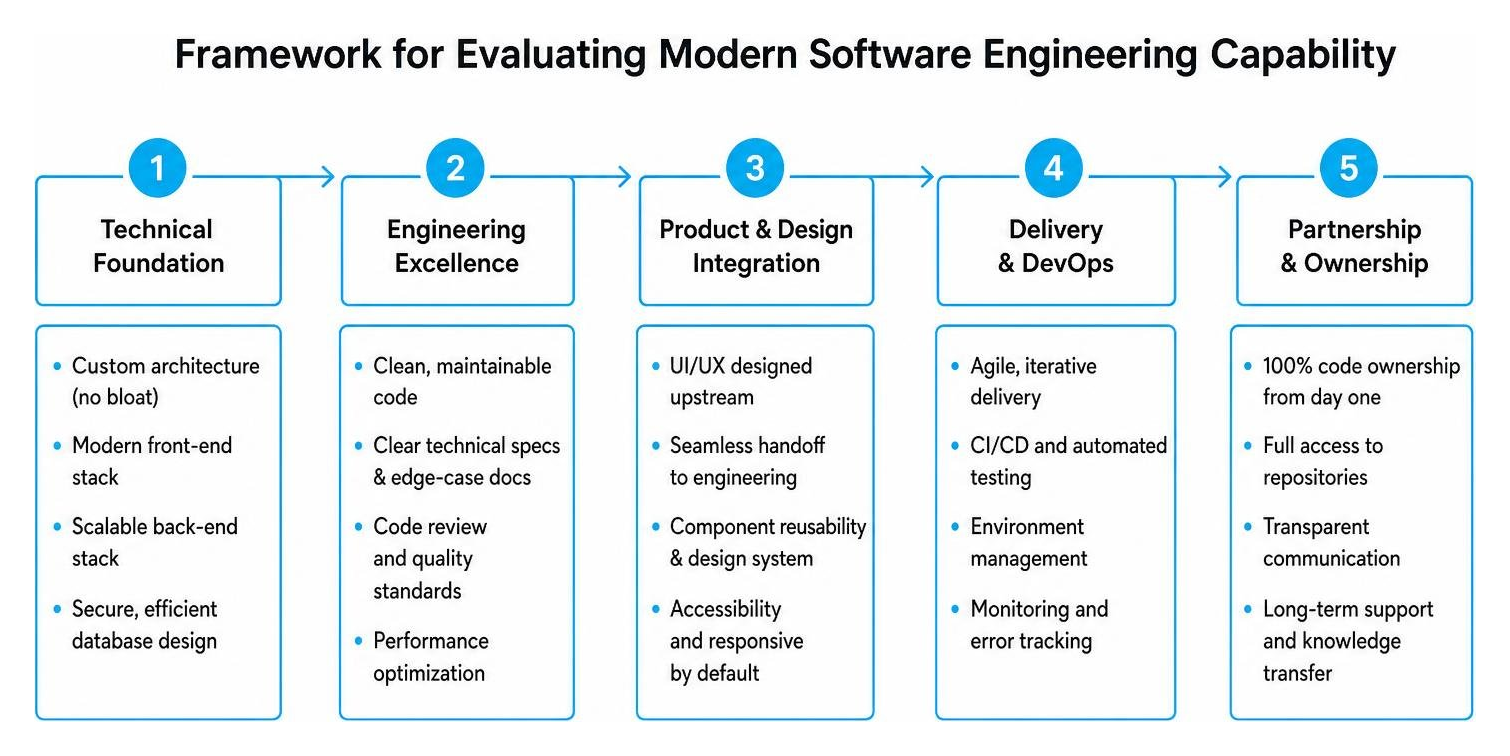
A credible agency should easily walk you through real-world case studies showing how they solved technical issues, optimized database performance, and maintained Core Web Vitals under heavy user loads.
Watch out for these common warning signs during vendor discovery:
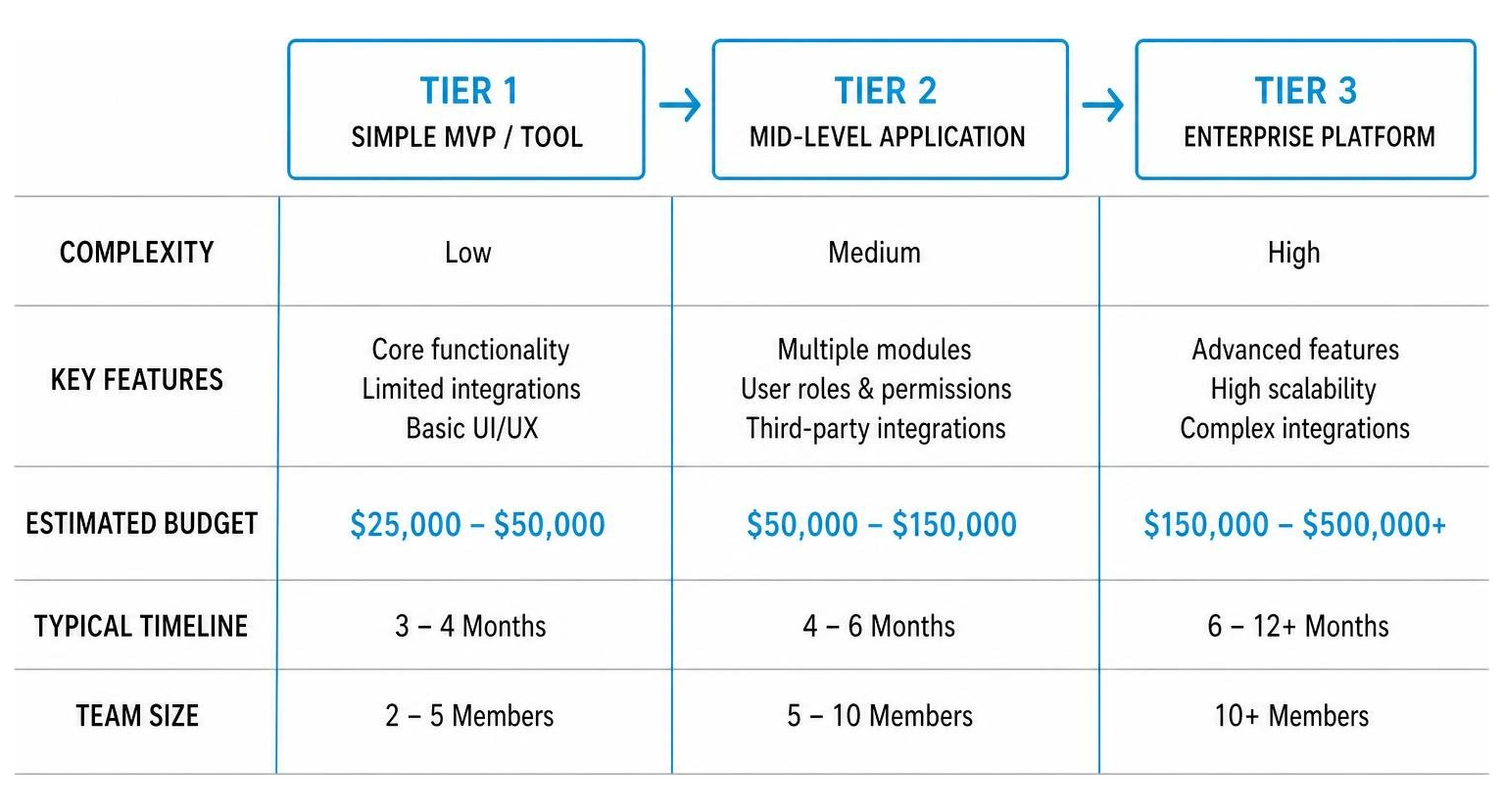
Custom software pricing depends directly on solution complexity, scope clarity, and team location. According to industry pricing research, custom software projects generally range from $25,000 for simple MVPs to over $500,000 for complex enterprise platforms.
Development team hourly rates fluctuate significantly depending on region and expertise:
In terms of project schedules, industry benchmarks show that 25.7% of custom software projects take 4–6 months to complete, while 29.6% take over a year due to complex enterprise integrations and testing.
Choosing the right engagement model ensures your project stays on budget while adapting to evolving requirements:
A bespoke software development firm builds proprietary solutions tailored specifically to your unique workflows, giving you 100% ownership of the source code with zero ongoing license fees. Off-the-shelf software providers rent standardized pre-built software on a subscription basis, forcing your business to conform to their fixed feature set and roadmap.
For a mid-sized business, custom software projects generally range between $50,000 and $150,000. This tier covers tailored database systems, automated enterprise workflows, third-party API integrations, and robust security protocols engineered specifically for your operation.
Standard mid-level custom software applications take between 4 to 6 months to complete from initial discovery through final deployment. Smaller MVPs can launch in 3 to 4 months, while complex multi-system enterprise platforms take 6 to 12+ months of continuous engineering sprints.
Selecting the right software designing company comes down to choosing between mass production and true craft.
At BMG Media Co., we build custom applications without relying on templates, visual page builders, or short-term fixes. Headquartered in Birmingham, Michigan, our agency brings over 15 years of engineering experience and a track record of more than 1,000 completed builds for businesses across Metro Detroit, Southeast Michigan, and nationwide.
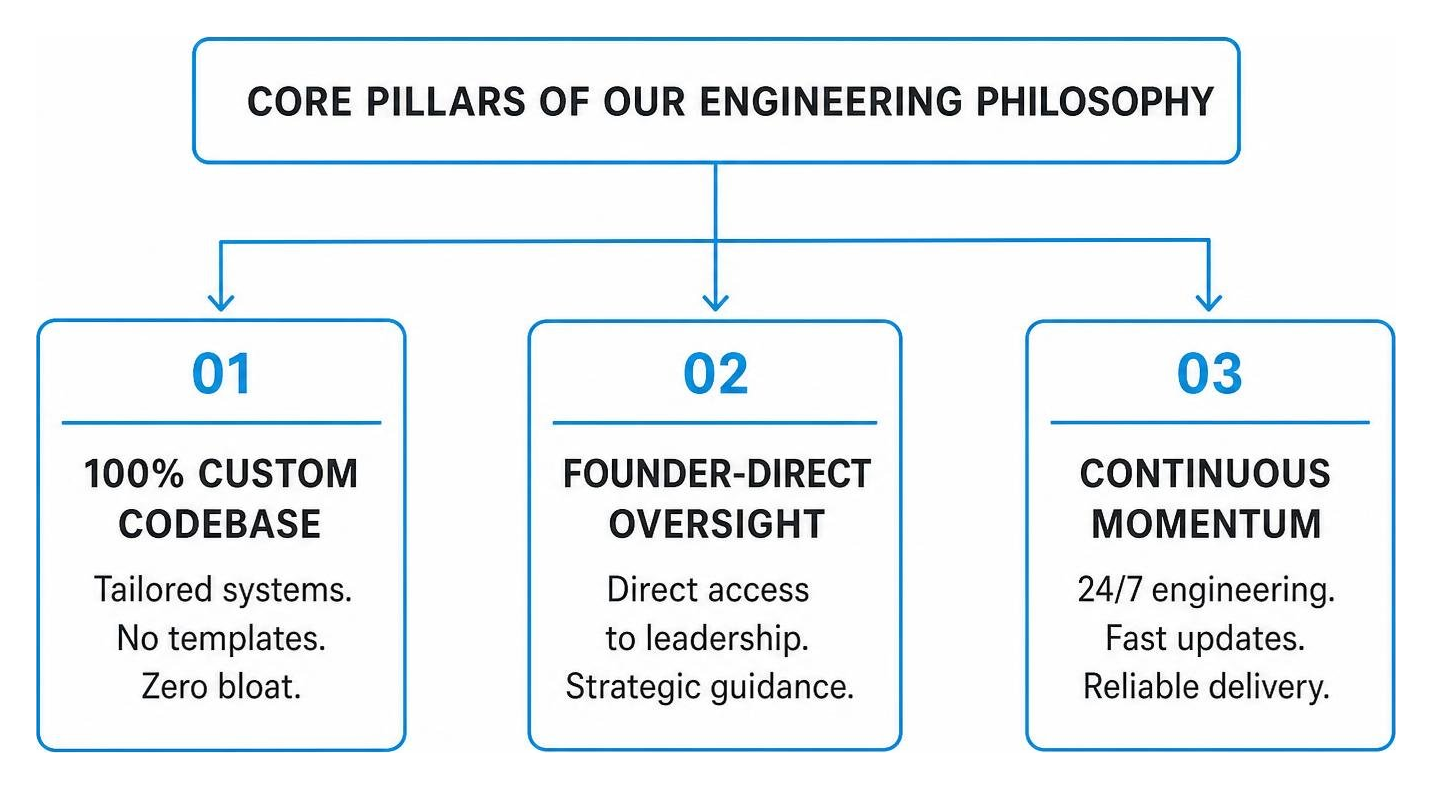
Our engineering standards are straightforward and strict:
To explore why tailored technology gives your business a long-term strategic advantage, read our guide on Why Your Business Deserves Custom Web Development Solutions.
Ready to transform your business workflows with tailored software built specifically for your long-term growth? Explore our Custom Software Development Solutions or contact BMG Media Co. today to schedule your technical consultation.

