March 2026

For a dental practice, growth isn’t just about having the latest 3D imaging technology; it’s about being visible where your patients are looking. In the modern digital landscape, that “where” is almost exclusively Google. When we talk about dentist service area pages, we are talking about the engine that drives local discovery.
Local SEO is the lifeblood of a thriving clinic. Research shows that 87% of consumers use Google to research local businesses, and for dentists, this is a game-changer. Unlike a global e-commerce brand, a dentist relies on proximity. Patients rarely want to drive three hours for a cleaning; they want the best provider within a 10-to-20-minute radius.
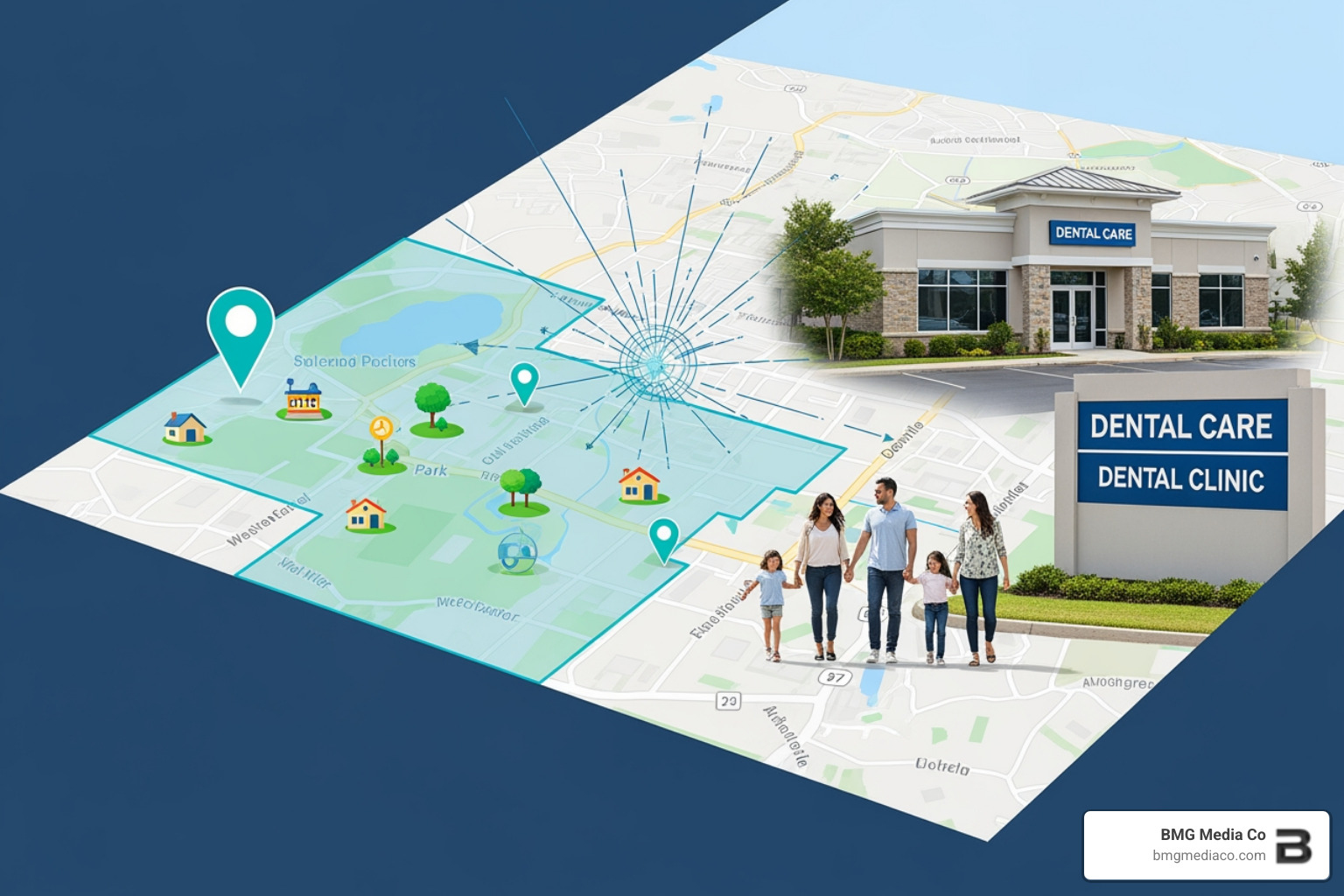
By creating dedicated pages for the specific areas you serve—whether that’s a specific suburb in Birmingham, Michigan, or a neighboring township—you signal to Google that your practice is the most relevant result for users in those spots. This improves your “prominence” and “proximity” scores, two of the three main pillars Google uses to rank local businesses.
Beyond just appearing in the standard organic results, these pages are essential for breaking into the “Map Pack”—that coveted box at the top of the search results that shows a map and three local business listings. Optimizing your Healthcare digital presence through these pages can drive up to 40-50% more website traffic and inquiries when executed correctly. It’s about building trust before the patient even picks up the phone.
A service area page shouldn’t just be a list of zip codes. To turn a “searcher” into a “patient,” the page needs to feel local, authoritative, and easy to use. At BMG Media Co, we specialize in Medical Healthcare Web design that prioritizes both aesthetics and conversion.
Here are the non-negotiable elements every page should have:
Many agencies use “cookie-cutter” templates where they just swap out the city name. We advise against this. Google rewards unique value.
| Feature | Templated Content | Custom Content (Recommended) |
|---|---|---|
| SEO Value | Low (Risk of duplicate content) | High (Rankings for local keywords) |
| User Trust | Medium (Feels generic) | High (Feels personal and local) |
| Conversion | Lower | Higher (Addresses local needs) |
| Effort | Low | Higher (Requires professional writing) |
Optimizing dentist service area pages requires a blend of technical SEO and local psychology. You aren’t just trying to rank for “dentist”; you’re trying to rank for “Invisalign in [Neighborhood Name]” or “emergency tooth repair near [Landmark].”
Start with deep keyword research. Look for high-intent terms that local patients use. For example, if you are targeting an area with many families, focusing on wisdom teeth removal recommendations or pediatric care might be your best bet.
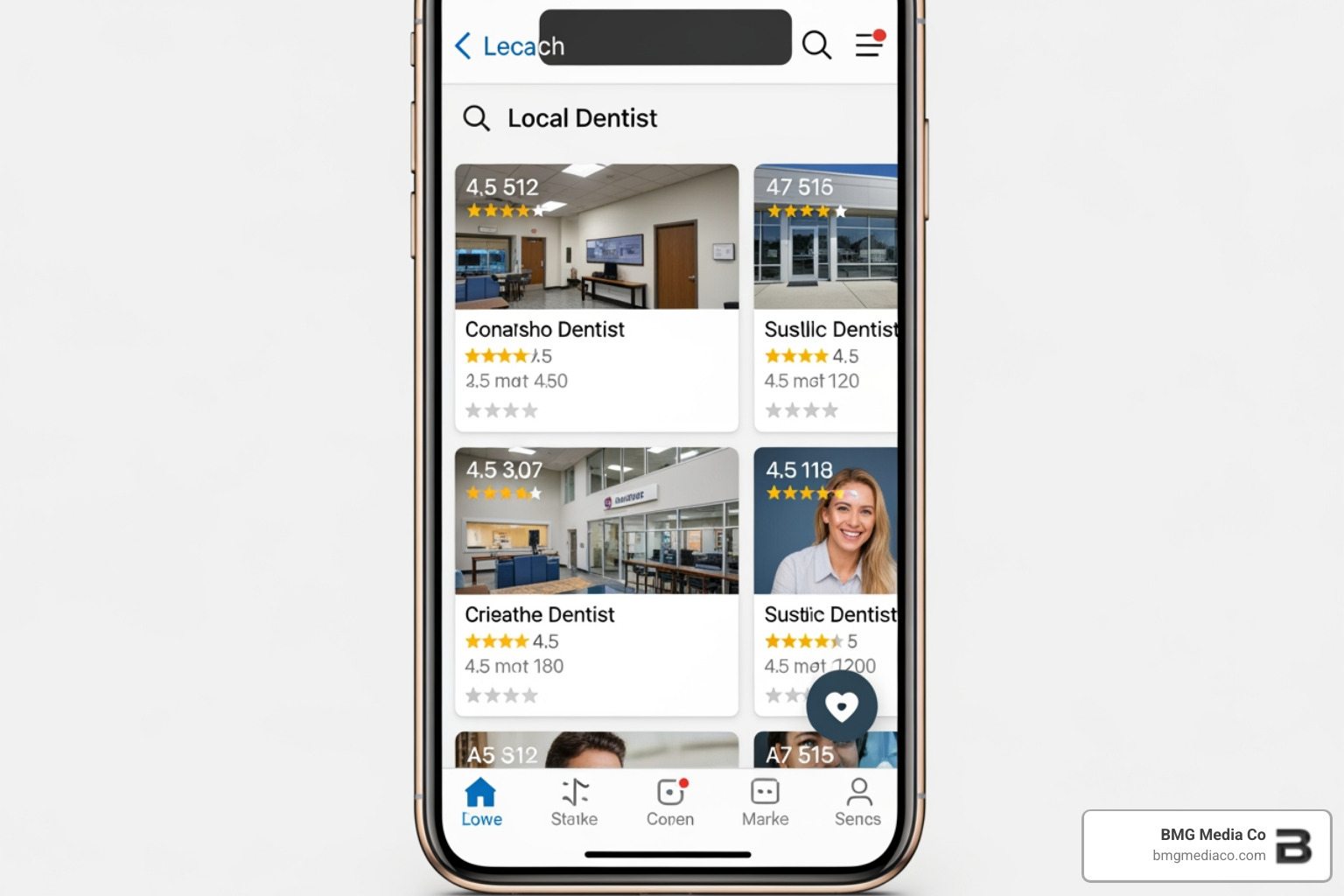
Key Optimization Tactics:
“Near me” searches have exploded in recent years. To capture these, your pages need to mention hyper-local details. We often look at projects like Motor City Orthopedics to see how geographic coordinates and landmark mentions help anchor a practice in a specific region. Mentioning that you are “just down the street from the local high school” or “across from the city library” helps Google’s algorithm connect your physical location to the user’s GPS coordinates.
Your website and your Google Business Profile (GBP) should work as a team. When we developed the digital strategy for Legacy Dermatology Group, we emphasized the importance of linking GBP listings directly to the relevant location or service area page rather than just the homepage.
This creates a seamless journey for the patient. They find you on the map, click the link, and land on a page that reaffirms they are in the right place. Consistently uploading photos of your office and staff to your GBP also boosts your visibility in the Map Pack, which can drive 50% more organic traffic.
If you run a practice with multiple offices across Michigan, your strategy needs to be scalable but localized. You shouldn’t have one giant “Locations” page with a list of addresses. Instead, each office needs its own “home base” page.
For multi-location practices, we recommend:
They absolutely should have unique content. Google’s algorithms are smart enough to recognize when you’ve simply copied and pasted the same 500 words across ten different pages and just swapped the city name. This is known as “doorway pages,” and Google can penalize you for it. Beyond SEO, unique content builds trust. A patient in West Bloomfield wants to feel like you understand their community, not like they are just another entry in a database.
Start with your existing patient data. Where do your current patients live? Look for clusters of zip codes. Next, look at a 10-15 mile radius around your office. Identify high-value neighborhoods or areas with high search volume but low competitor presence. You can also use tools like Google Search Console to see which “near me” or city-specific terms people are already using to find you.
NAP (Name, Address, Phone) consistency is one of the most important local ranking factors. Think of it as your digital thumbprint. If your website says you’re at “123 Main St” but your Yelp profile says “123 Main Street” and your Facebook says “123 Main St., Suite A,” search engines may become less confident in your location’s validity. This lack of trust can push you down in the search rankings. Always ensure your NAP is 100% consistent across your dentist service area pages, your GBP, and all healthcare directories.
Building effective dentist service area pages isn’t just a “set it and forget it” task. It requires a strategic approach to content, a deep understanding of local search behavior, and a website that is fast, mobile-friendly, and built to convert.
At BMG Media Co, we don’t believe in templates or shortcuts. We design and develop custom, high-performance websites that help dental practices dominate their local markets. From award-winning designs to technical SEO that gets results, we are here to ensure your practice is the first one patients see when they need care.
Ready to grow your practice? Transform your practice with a Medical Healthcare Web partner and let us help you build a digital presence that actually works.
