April 2026
Website design for medical doctors is one of the most important investments a practice can make to attract new patients and build lasting trust online. Here’s what a high-performing medical website needs:
Think about this: nearly 80% of all internet users have searched for medical and health information online, according to Pew Research Center. That means most patients will visit your website before they ever step into your office.
Your website is often the first impression you make. A poorly designed or outdated site can quietly turn away patients — not because your care isn’t excellent, but because your digital presence doesn’t reflect it.
I’m Blake George, founder of BMG Media Co, and over the past decade I’ve led the development of more than 1,000 custom websites across industries — including website design for medical doctors and healthcare organizations of all sizes. In this guide, I’ll walk you through exactly what it takes to build a medical practice website that earns trust, ranks well, and converts visitors into patients.
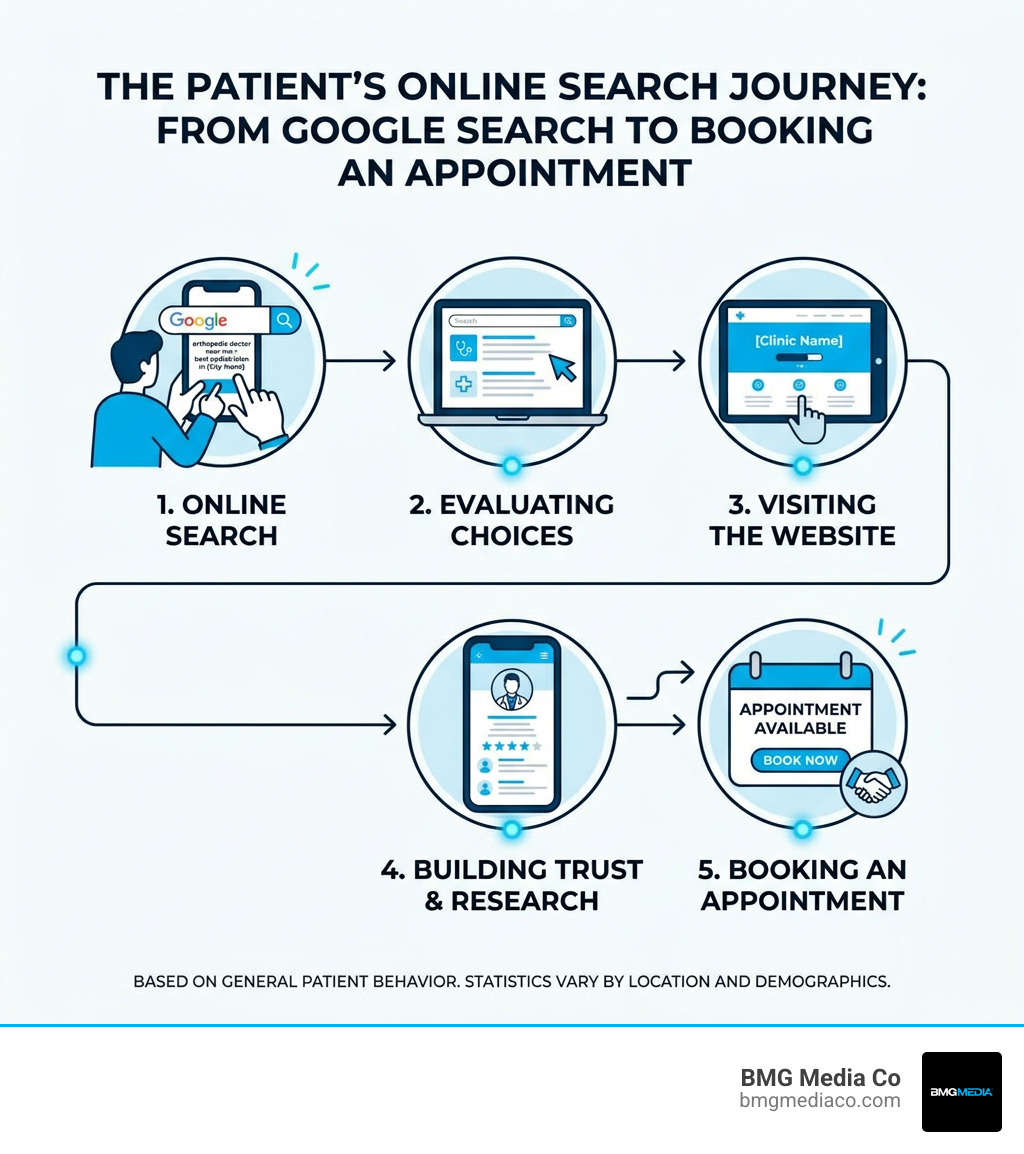
In today’s digital-first world, a website is no longer just a digital business card; it is the cornerstone of trust between a physician and their patients. According to a recent Pew Research Center study, nearly 80% of all internet users have searched for medical and health information online. This staggering statistic highlights a critical reality: your patients are looking for you, and they are looking for answers.
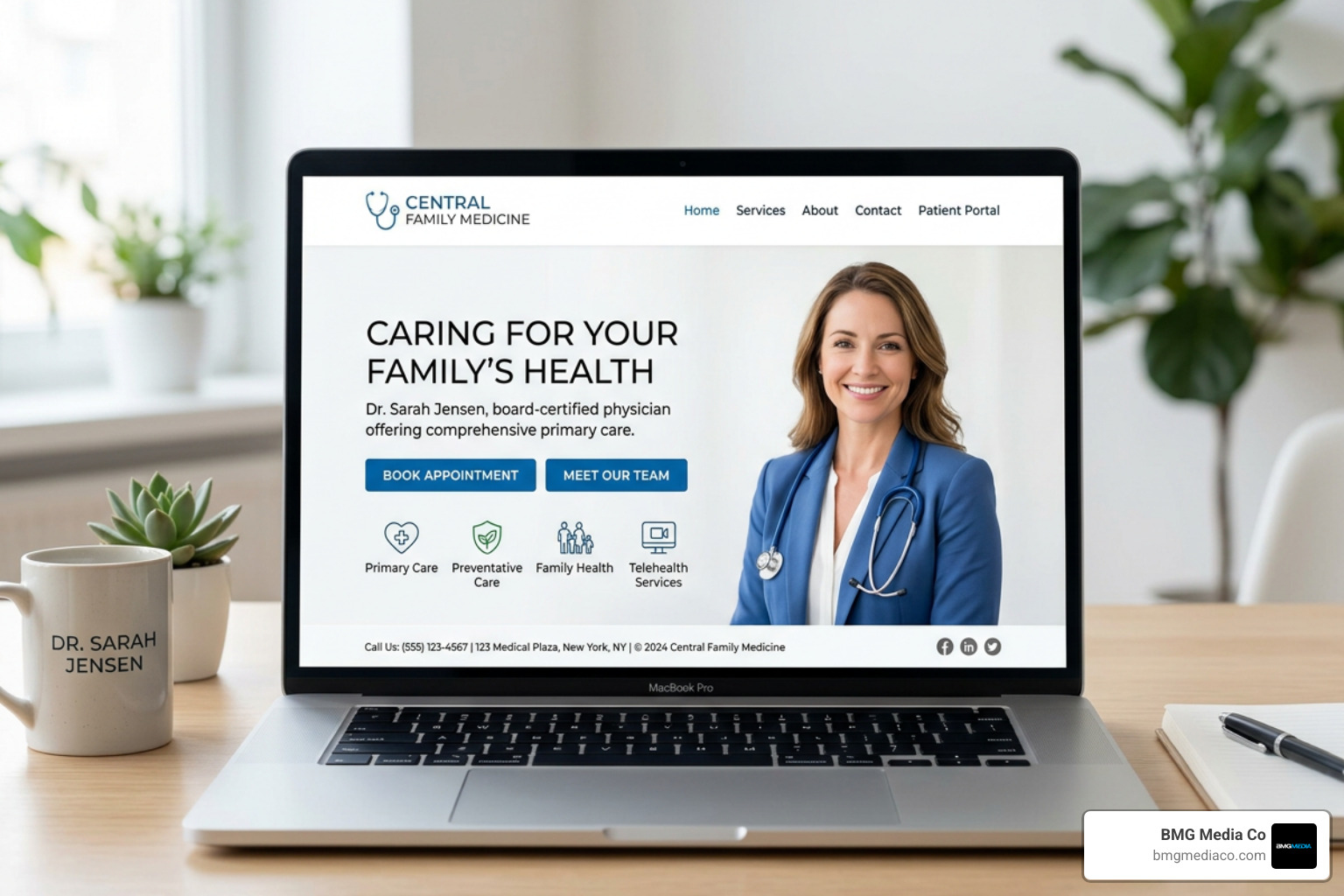
When we approach website design for medical doctors, we view it as a direct reflection of your professionalism. If a website is slow, cluttered, or difficult to use on a mobile phone, a prospective patient may subconsciously associate that technical friction with the quality of care they might receive. A poorly designed site creates immediate credibility barriers. Conversely, a robust, custom-built site acts as a 24/7 salesperson, working to educate and convert visitors even while your clinic is closed.
In a highly competitive healthcare landscape, having a superior Medical Healthcare Web presence provides a distinct advantage. It moves the conversation from “Are they competent?” to “How soon can I book?” By investing in a high-quality interface, you aren’t just buying code; you are designing trust.
Designing for the medical field isn’t like designing for a retail store or a restaurant. We have to navigate unique hurdles, such as heavy regulatory requirements and a tendency for branding similarity across the industry. (How many blue and white medical logos have you seen today?)
To stand out, a medical website must balance a high volume of complex information with a clean, uncluttered aesthetic. We focus on creating a single-minded user journey. This means that regardless of why a user is there—whether to check symptoms, find a provider, or pay a bill—the path to that goal should be obvious and unobstructed.
A great example of this focused approach can be seen on the HealthMatch website, which excels at leading users through a specific journey with prominent, clear calls-to-action (CTAs) like “Check your eligibility.” By removing visual noise, you allow the patient to focus on the information that matters most.
Medical websites often suffer from “menu bloat.” With dozens of services, provider bios, and patient resources, it’s easy for a navigation bar to become an overwhelming mess. We advocate for simple, intuitive menus that categorize information logically.
Furthermore, robust website search functionality is a game-changer for patient experience. By implementing advanced search tools—like those seen on the Mayo Clinic site—patients can manually enter conditions or symptoms and receive immediate, relevant results. Features like autocomplete and alphabetical filtering save patients time and reduce the frustration of digging through deep page hierarchies.
Taking a cue from the athenahealth approach, we prioritize clean design and messaging. When the interface is simple, the user feels more in control and less overwhelmed by the medical data they are consuming.
Accessibility is not just a “nice to have” in healthcare; it is an ethical and often legal requirement. Ensuring your site meets WCAG 2.2 AA compliance means that individuals with visual impairments, motor disabilities, or cognitive challenges can access your services without barriers.
This includes implementing:
Organizations like Rest Assured® demonstrate a strong commitment to these principles, building sites that cater specifically to seniors and individuals with disabilities. By adhering to WCAG guidelines, you ensure that your “digital front door” is wide open to every member of your community.
A successful medical website requires a blend of patient-facing convenience and backend security. At BMG Media Co, we don’t believe in templates. Every practice has different needs, but there are several “non-negotiables” that we include in our Healthcare projects.
| Feature | Importance | Benefit to Practice |
|---|---|---|
| HIPAA-Compliant Forms | Critical | Protects patient data and ensures legal compliance. |
| Online Scheduling | High | Reduces staff phone time and increases conversion. |
| Mobile Responsiveness | Critical | Essential for SEO and patients on the go. |
| Patient Portals | High | Provides easy access to records and bill pay. |
| EMR Integration | Moderate | Streamlines data flow between the site and your office. |
| Physician Directory | High | Helps patients find and “meet” their doctor online. |
Mobile responsiveness is particularly vital. With more than half of web traffic coming from mobile devices, your site must look and function perfectly on a smartphone. Whether it’s a specialized site for a group like Legacy Dermatology Group or a surgical center like Motor City Orthopedics, the experience must be seamless across all screens.
Content is the heartbeat of your website. To move beyond a sterile, clinical feel, we use high-quality original imagery that features real people and real offices. Avoid generic stock photos of “doctors smiling at stethoscopes”—patients can spot those a mile away and they do little to build genuine connection.
Video is another powerful tool. Engaging video storytelling, such as provider interviews or facility tours, allows patients to build a rapport with your staff before they even arrive. It humanizes the practice and reduces patient anxiety.
Furthermore, providing informative health content and reliable medical information delivery establishes your practice as an authority. When you offer well-written articles on health conditions or wellness tips, you aren’t just helping patients; you’re also boosting your SEO. Search engines love fresh, expert-reviewed content, which helps you outrank competitors in local searches.
We are often asked: “How much does it cost?” While a basic, leased template might seem cheap, a custom-built, high-performing medical website is an investment in your practice’s growth. Generally, a professional medical website starts at around $5,000 for smaller practices and can scale significantly higher for large medical groups or hospitals requiring complex integrations.
The timeline for a custom build typically ranges from 30 to 90 days. This allows for:
Our commitment to excellence has not gone unnoticed; BMG Media earns Clutch Leader Award for healthcare design, reflecting our dedication to building sites that perform as well as they look. We’ve handled over 1,000 projects, including high-end builds like Thomas Sebold Associates, ensuring that every client receives a unique, non-templated solution.
The cost varies based on the complexity of features like EMR integration, the number of pages, and custom functionality. A high-quality, patient-acquiring solution typically starts at $5,000. Large organizations with extensive physician directories and patient portals can expect to invest more to ensure performance and security.
For most small to medium practices, a site can be launched in about 30 days. More complex projects for large medical groups or hospitals can take up to 90 days. This ensures there is ample time for custom design, rigorous testing, and accessibility audits.
To keep the project on track, the practice should have high-resolution logos, professional provider bios, and a clear list of services. Being ready with your practice’s forms, insurance policies, and any specific patient instructions will significantly speed up the development process.
Building a successful online presence requires more than just a pretty layout; it requires a strategic approach to website design for medical doctors. At BMG Media Co, we specialize in creating fully custom, award-winning websites that do more than just sit there—they convert visitors into loyal patients.
From HIPAA compliance and ADA accessibility to lightning-fast load times and custom SEO strategies, we handle the technical heavy lifting so you can focus on what you do best: caring for your patients. If you’re ready to move away from generic templates and build a digital front door that truly reflects the excellence of your practice, we’re here to help.
Build your custom medical healthcare web presence with BMG Media Co.
