September 2026

When looking at high-throughput digital infrastructure, the State of Michigan’s public sector environment offers a prime case study in scalable system connectivity. At the center of this ecosystem is MiIntegrate, the enterprise integration platform developed for the Michigan Department of Health and Human Services (MDHHS). Built on a Service-Oriented Architecture (SOA) and low-code/no-code API management principles, MiIntegrate serves as the central engine for secure, high-volume communications across state agency software systems.
The numbers behind the platform demonstrate its immense capacity:
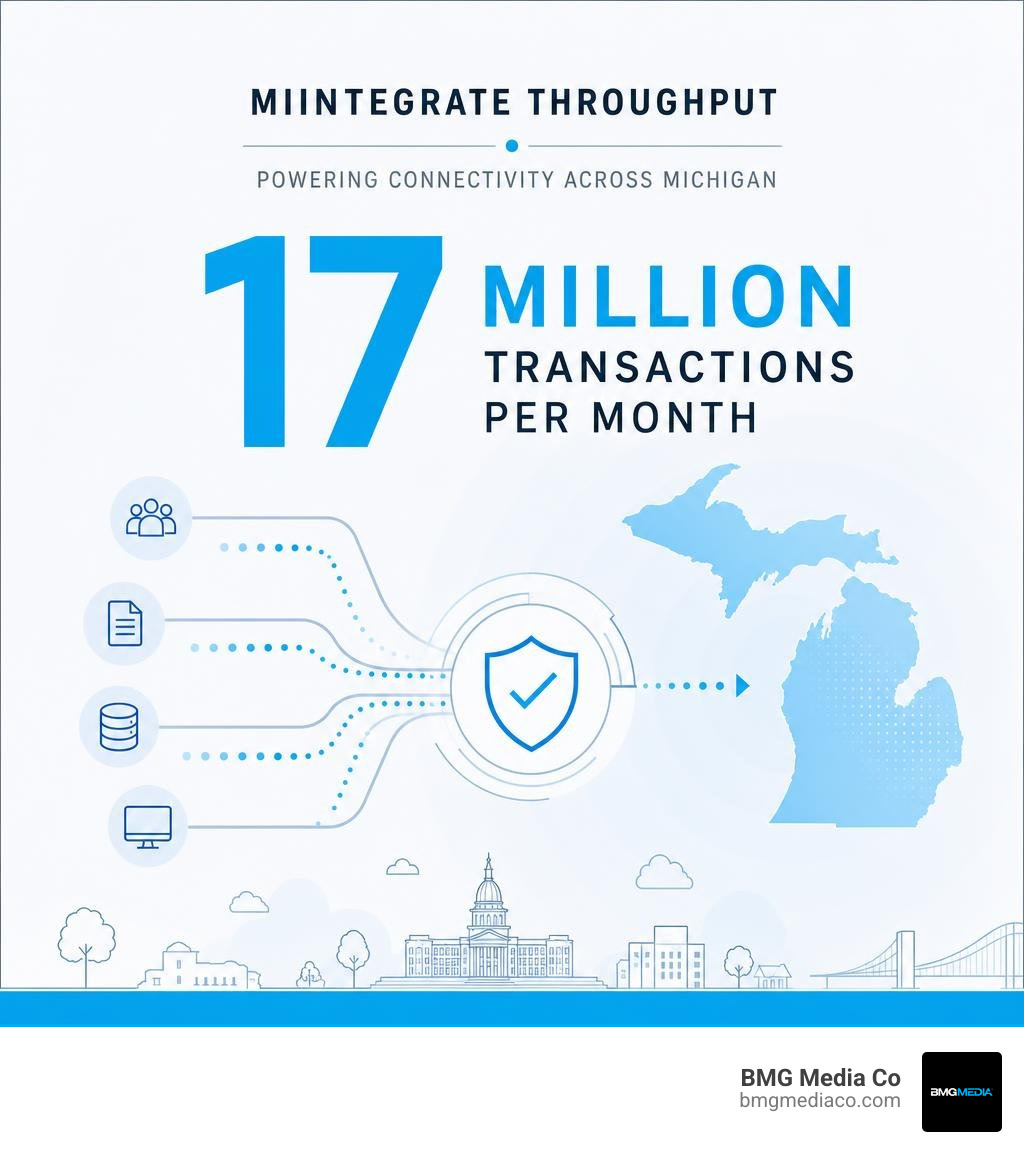
For developers and institutions looking to interface with state public health records, public benefits administration, or agency portals, understanding the public sector platform architecture is essential. MDHHS organizes its public APIs into three core operational tiers:
Organizations can explore platform capabilities and documentation directly via the official MiIntegrate API Portal .
Connecting to complex public platforms like MiIntegrate requires a clear understanding of identity governance and strict authentication protocols. To prevent unauthorized data exposure, developers must complete a structured onboarding process.
The path from initial access to production execution follows several mandatory steps outlined in the Developer Onboarding Guide – MiIntegrate API Portal :
Developers can fetch tokens using standard tools like cURL, Postman, or SoapUI. A standard cURL command to request a Bearer token looks like this:
curl -X POST "https://login.microsoftonline.com/{tenant}/oauth2/v2.0/token" -d "grant_type=client_credentials&client_id={API_KEY}&client_secret={API_SECRET}&scope={SCOPE}"
Once generated, the token is passed in the HTTP Authorization header (Authorization: Bearer {TOKEN}) alongside transaction tracking headers such as Http-txn-id. To review step-by-step connection scripts, visit the Get Started Developer Onboarding Guide – MiIntegrate API Portal .
Before an integration moves to production, state systems require rigorous testing and formal governance intake. This prevents fragile code from impacting critical public services.
Developers access interactive “try-it” consoles and sandbox environments to validate payload structures (REST, JSON, XML, SOAP, HL7, FHIR) without touching live records. However, setting up a new custom interface or connecting an external agency database requires submitting a detailed intake assessment via the MiIntegrate API Portal .
The intake process evaluates several core technical criteria:
Private businesses and specialized software vendors across Michigan face distinct regulatory requirements when building integrations. Whether managing compliance reporting, syncing clinical data, or connecting academic networks, choosing professional michigan api integration services ensures full compliance with local and federal rules.
For software developers building POS systems, inventory management platforms, or seed-to-sale tracking tools in Michigan’s legal cannabis market, state compliance hinges on communicating with Metrc. The state mandates that third-party vendors pass a strict six-step validation workflow before obtaining a production API key:
Building reliable bridges between point-of-sale systems and regulatory compliance engines requires careful architecture to avoid inventory discrepancies. For a deeper look at connecting cloud software to commercial web systems, check out our guide on The Missing Link: A Guide to Software Integration Web Apps.
In healthcare, administrative friction directly impacts patient care and financial health. Integrating Optum Real APIs into practice management systems and Electronic Health Records (EHR) equips healthcare networks across Michigan with real-time data exchange capabilities.
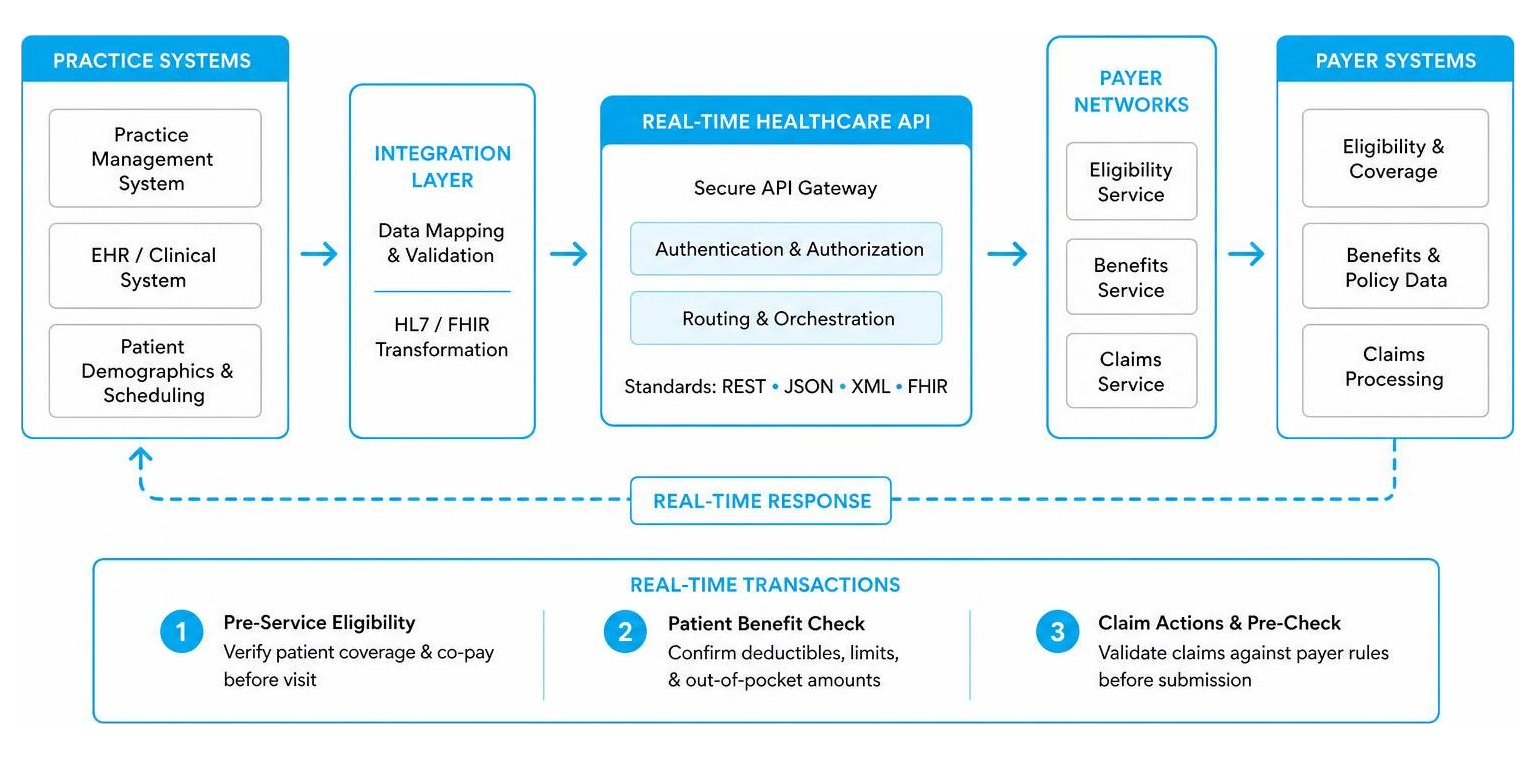
Rather than forcing staff to manually log into insurer portals or make phone calls, real-time healthcare APIs handle complex tasks automatically:
The operational results are dramatic. Automated claim status checks via real-time APIs cut claim processing runtime down from 5 hours across 2 days to roughly 20 minutes. Supporting standard formats like HL7, FHIR, and JSON, these health integrations reduce administrative costs while keeping clinics compliant with federal HIPAA and PHI protection rules.
Michigan’s higher education and research institutions operate massive digital footprints that rival enterprise corporations. For instance, the University of Michigan relies on a centralized API Directory to manage secure data access across campus divisions, medical research units, and administrative software.
To maintain security, institutional API management incorporates strict governance rules:
Building secure system connections requires aligning your visual brand with robust backend technology. Explore our thoughts on pairing technical infrastructure with modern brand design in our article on Top Professional Branding Services Michigan and Software Integration Experts.
While public sector and regulatory platforms follow strict rigid guidelines, private commercial enterprises require tailored custom integration strategies. Off-the-shelf plugins often fail to handle custom database logic, multi-tier pricing models, complex ERP workflows, or real-time inventory syncing.
For businesses operating in Detroit, Troy, Ann Arbor, and across Southeast Michigan, integrating business software is vital to driving operational efficiency. Proprietary applications need to communicate seamlessly with modern payment gateways, shipping carriers, enterprise CRMs, and accounting platforms.
Custom michigan api integration services deliver substantial business impact by automating core operational tasks:
At BMG Media Co., we frequently help regional businesses break free from manual data management. Relying on disconnected spreadsheets and manual data entry creates bottlenecks, causes stockouts, and limits growth.

Custom software integrations allow enterprises to modernize their workflows efficiently:
Designing reliable API architectures requires selecting the appropriate protocols, structuring clean data payloads, and protecting systems against outages.
Choosing the correct architecture depends on your operational goals:
| Architectural Style | Ideal Use Case | Data Formats | Key Advantages |
|---|---|---|---|
| REST (Representational State Transfer) | Web applications, mobile backends, flexible public APIs | JSON, XML, Plain Text | Lightweight, stateless, widely supported, high caching capability |
| SOAP (Simple Object Access Protocol) | Legacy enterprise systems, banking, strict public sector interfaces | XML exclusively | Built-in ACID compliance, formal WS-Security standards, strict contract specs |
| GraphQL | Complex data structures, mobile apps, low-bandwidth interfaces | JSON | Single endpoint, prevents over-fetching data, precise client query control |
Beyond choosing an architectural style, enterprise engineering teams must incorporate core architectural safety measures:
Http-txn-id) through request headers to trace data across distributed microservices during debugging.If you are evaluating custom software architectures for your business, dive into our technical guide: The Complete Guide to Custom Software Developers.
To authenticate with the MiIntegrate portal, developers must first complete consumer organization onboarding and register an Application to obtain an API Key and Secret. Using the Azure OAuth 2.0 client credentials grant model, applications send a POST request containing their client credentials to the Azure OAuth endpoint. The endpoint returns a temporary JSON Web Token (JWT) Bearer token, which must be included in the Authorization: Bearer {TOKEN} HTTP header for all subsequent API calls.
Third-party vendors must complete a six-step validation process:
Real-time APIs (such as Optum Real APIs) connect healthcare practice management systems directly to insurance payers using modern JSON or HL7/FHIR endpoints. This allows providers to verify patient eligibility, check out-of-pocket benefits, and run pre-claim checks before rendering service. This automation reduces claim status processing runtimes from 5 hours across two days down to just 20 minutes, while eliminating manual entry errors and lowering administrative costs.
At BMG Media Co., we believe your software integration should conform to your business workflows—not the other way around. Headquartered in Birmingham, Michigan, our team brings over 15 years of experience engineering high-performance web applications, custom databases, and enterprise API connections.
We do not use cookie-cutter templates, drag-and-drop page builders, or bloated pre-made connectors that slow down your applications. Every line of code, every custom REST endpoint, and every system integration we build is crafted from scratch to align with your specific performance, scalability, and security goals.
Whether you need to connect legacy internal databases to modern web platforms, integrate custom point-of-sale systems with regulatory platforms, or build automated e-commerce workflows, we deliver the technical expertise required to scale seamlessly. Explore how our custom engineering team can elevate your web infrastructure by visiting our Custom Web Design Services pillar page today.
