May 2026

Software integration web apps are platforms and tools that connect separate applications so they can share data and automate workflows automatically — no manual copying, no data silos.
Here’s a quick overview of how they work and why they matter:
Think of it like this: without integration, your CRM, website, email platform, and billing software are all speaking different languages. With the right integration layer, they work as one connected system.
The impact is real. Companies using modern integration tools have reported cutting lead response times by 90% and saving hundreds of thousands of dollars annually in manual labor costs.
But most business owners don’t know where to start — or which tools are right for their situation.
I’m Blake George, Founder of BMG MEDIA, and over more than a decade of building custom web apps and digital platforms for businesses across real estate, healthcare, manufacturing, and more, software integration web apps have become one of the most powerful — and most overlooked — tools I recommend to clients. In this guide, I’ll walk you through everything you need to know to connect your systems and work smarter.
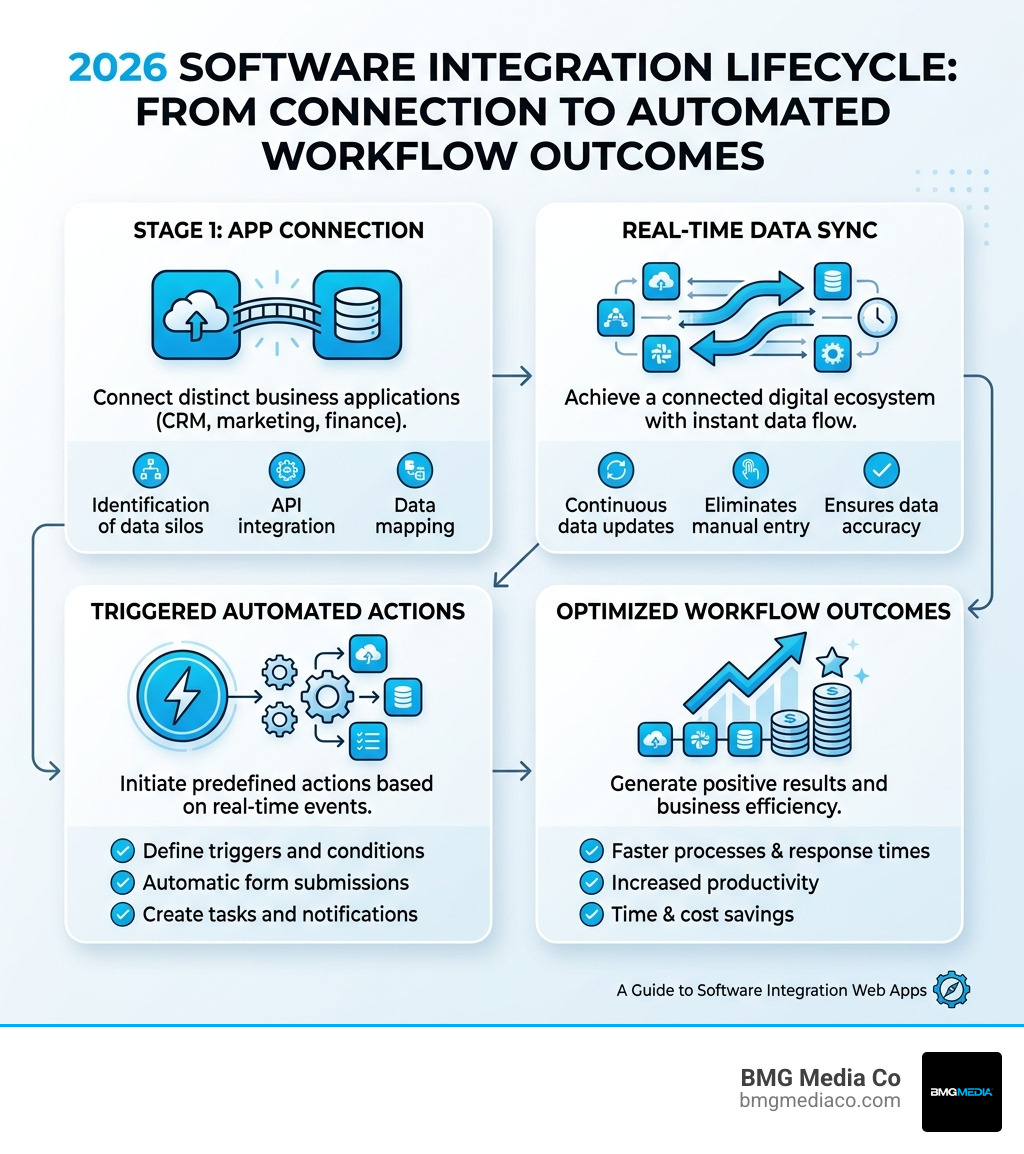
Software integration web apps terms at a glance:
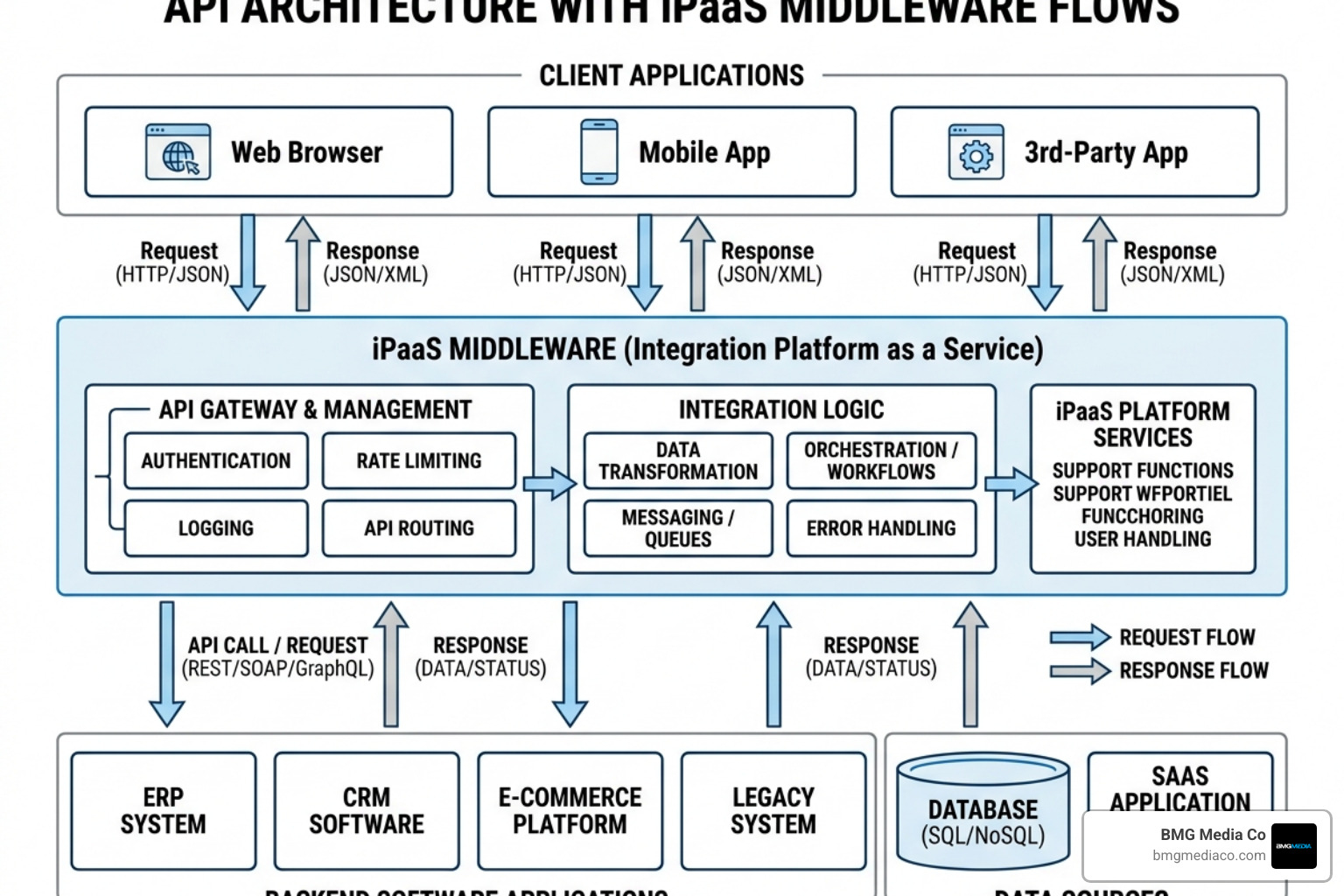
In the early days of the web, getting two different programs to talk to each other was like trying to host a dinner party where every guest spoke a different language and refused to use a translator. Today, what is application integration? It is the sophisticated “translator” that sits in the middle, ensuring that your disparate apps—from your custom-built storefront to your third-party accounting software—share a single source of truth.
Modern software integration web apps (iPaaS) function as middleware. They sit between your applications, handling the heavy lifting of authentication, data mapping, and error handling. This is achieved through three primary methods:
By implementing these tools, we eliminate the dreaded “data silo,” where valuable customer information is trapped in one department’s software and invisible to everyone else. In 2026, real-time synchronization isn’t just a luxury; it’s a requirement for security and scalability. When your systems are integrated, you reduce the “telephone game” effect where data gets lost or corrupted as it moves through your organization.
Why should your Michigan-based business care about software integration web apps? The answer lies in the massive shift from manual “busywork” to high-level strategy.
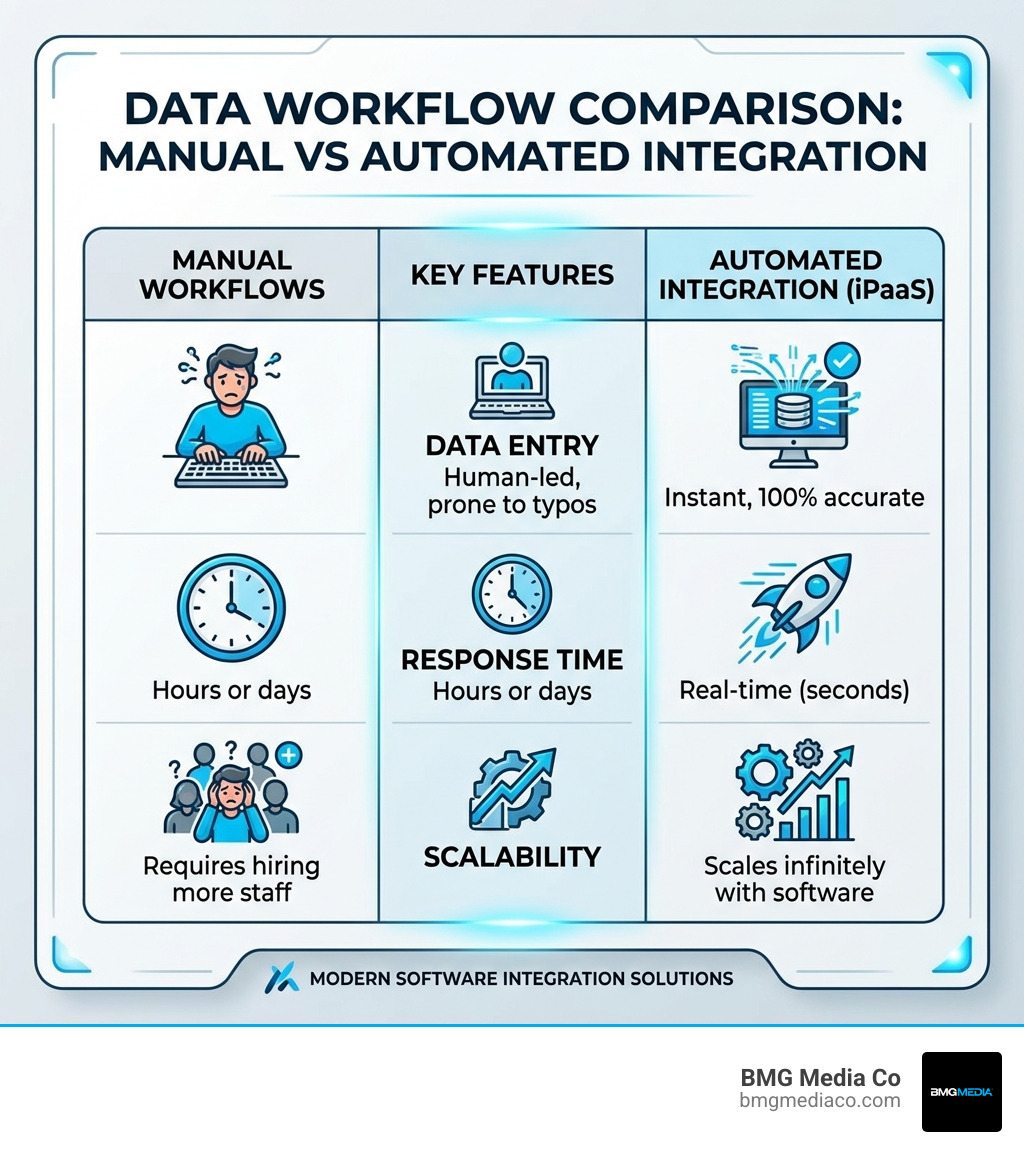
| Feature | Manual Workflows | Automated Integration (iPaaS) |
|---|---|---|
| Data Entry | Human-led, prone to typos | Instant, 100% accurate |
| Response Time | Hours or days | Real-time (seconds) |
| Scalability | Requires hiring more staff | Scales infinitely with software |
| Cost | High hourly labor costs | Fixed platform subscription |
| Error Rate | High (human fatigue) | Low (logic-based) |
The most immediate benefit is operational efficiency. When we build Custom Software for our clients, we often find that teams are spending 20% of their week just moving data between windows. Integration platforms reclaim that time.
Furthermore, the ROI is staggering. Research shows that companies can save upwards of $500,000 annually by automating millions of small tasks—like IT ticket routing or lead synchronization. By 2026, the trend has shifted toward “Agentic AI,” where integrations don’t just move data; they use AI to make decisions, such as categorizing a customer’s mood in a support ticket before routing it to the right specialist.

Selecting the right platform can feel overwhelming. There are over 70 products listed in Best Application Integration Platforms Reviews 2026 – Gartner, each with its own strengths. When we consult with businesses in Birmingham and beyond, we look at four key pillars:
For SMBs, the goal is usually rapid deployment and cost-effectiveness. You don’t need a massive enterprise suite to sync your Shopify store with your QuickBooks. Tools like Zapier and Make excel here because they use a “trigger-action” model.
These platforms allow “citizen developers”—non-technical staff—to build powerful automations in minutes rather than weeks.
Large-scale organizations require more than just simple triggers; they need governance and unified control planes. In a hybrid multi-cloud environment, you need to see every data flow in one place to prevent “integration sprawl.”
Enterprise-grade solutions like Workato ONE or SnapLogic provide AI-assisted mapping, which suggests how data fields should align between complex ERP systems. They also offer “runtime intelligence,” which can automatically detect and resolve errors before they break your supply chain or HR processes.
Not all software integration web apps are built for the same purpose. Understanding the three main categories is vital when finding the ultimate guide to picking a web app partner.
By 2026, we are also seeing the rise of Autonomous Workflows. Unlike traditional “if-this-then-that” logic, agentic AI can solve problems in real-time—like automatically re-routing a shipment if it detects a weather delay in the supply chain integration.
One of the biggest frustrations for startups and agencies is the 3-6 month delivery window for a new web app. At BMG Media, we’ve pioneered ways to slash those timelines using the very tools we’ve discussed.
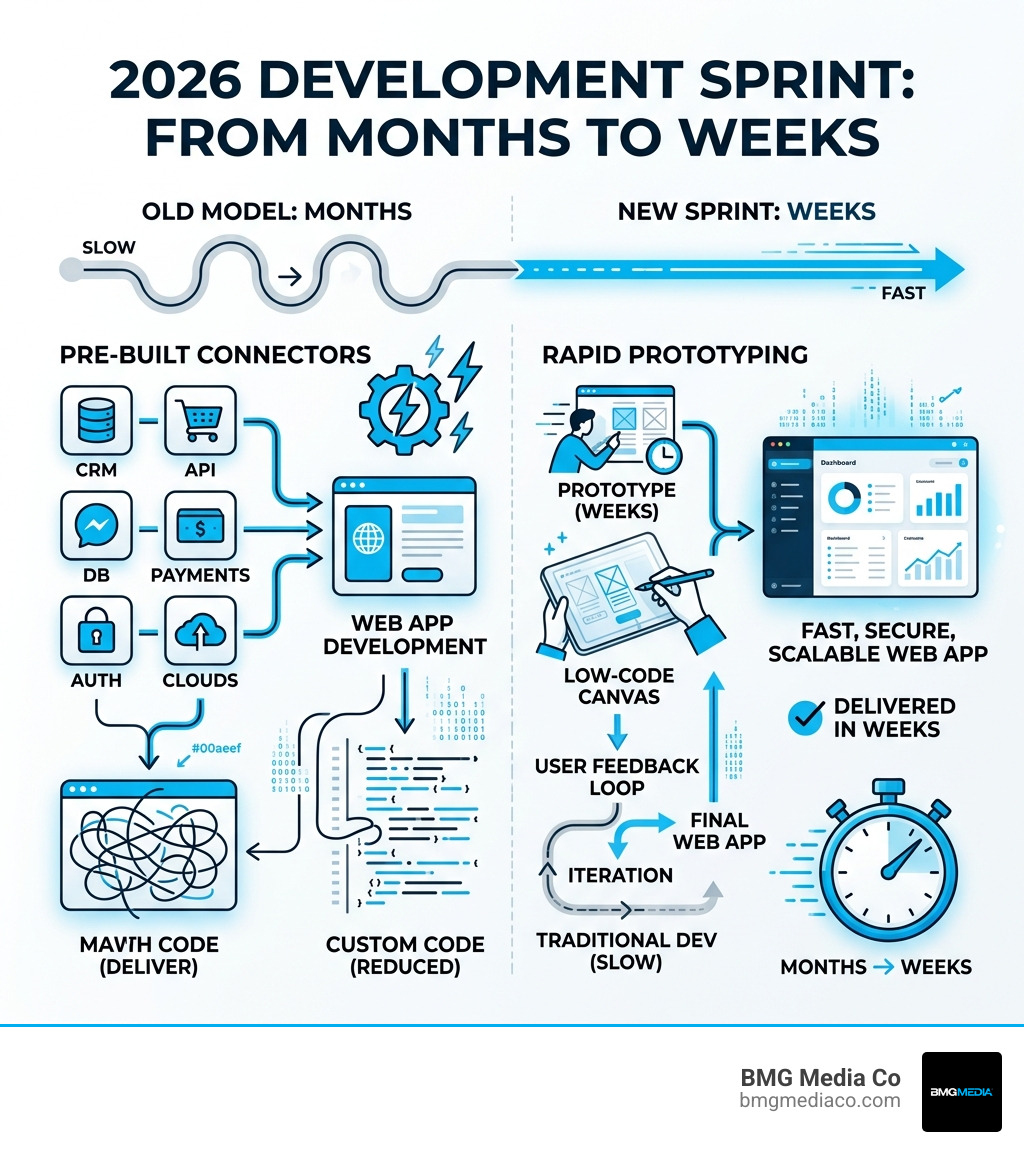
The secret to speed lies in standardization and reusability:
This approach allows us to move from requirements-gathering to a live, functioning integration in a fraction of the time it took just a few years ago.
Application integration is about real-time workflows. It’s the process of making sure that when a customer buys a product, your shipping software knows about it instantly. Data integration is more about analytics. It involves moving large batches of data into a “data warehouse” so you can run reports and see long-term business trends.
They allow SaaS companies to stay “sticky.” If your software integrates with every other tool your customer uses, they are much less likely to cancel their subscription. Using an embedded solution like Merge.dev (which supports 220+ integrations) means your small dev team doesn’t have to spend all their time maintaining API connections.
Yes—and often faster. Smaller, agile agencies in Michigan use component libraries and software integration web apps to bypass the bureaucracy of larger firms. By leveraging “Integration Ops,” we can cut costs by 50% and workloads by 90%, delivering enterprise-grade power with startup speed.
In 2026, your business is only as strong as its weakest connection. Whether you’re a small business in Birmingham looking to automate your marketing or a growing enterprise needing to sync global supply chains, software integration web apps are the key to unlocking true efficiency.
At BMG Media Co, we don’t believe in “one-size-fits-all” templates. We specialize in building custom, high-performance web apps that are designed to play well with others. Based right here in Birmingham, Michigan, our award-winning team has completed over 1,000 projects, helping businesses turn “disparate apps” into a unified, money-making ecosystem.
Ready to bridge the gap in your digital strategy? More info about custom web design and development services is just a click away. Let’s build the missing link together.
