July 2026
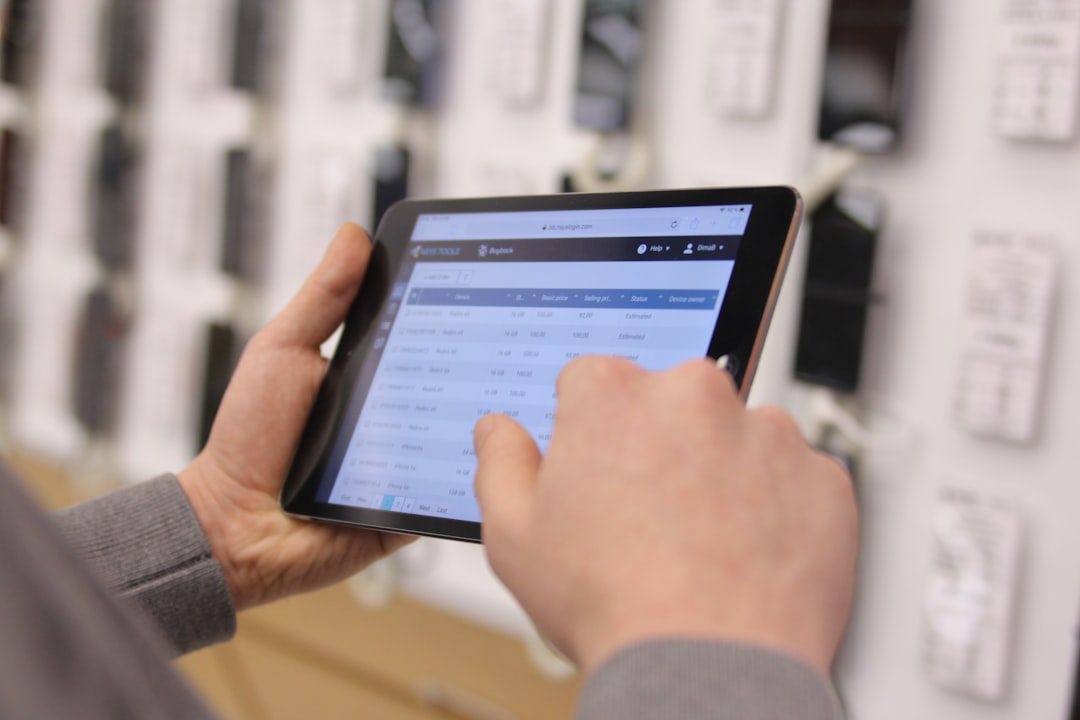
Custom inventory management software is a purpose-built system designed around your exact products, warehouses, workflows, and team — instead of forcing your operation to fit a generic template.
Quick answer: What is custom inventory management software?
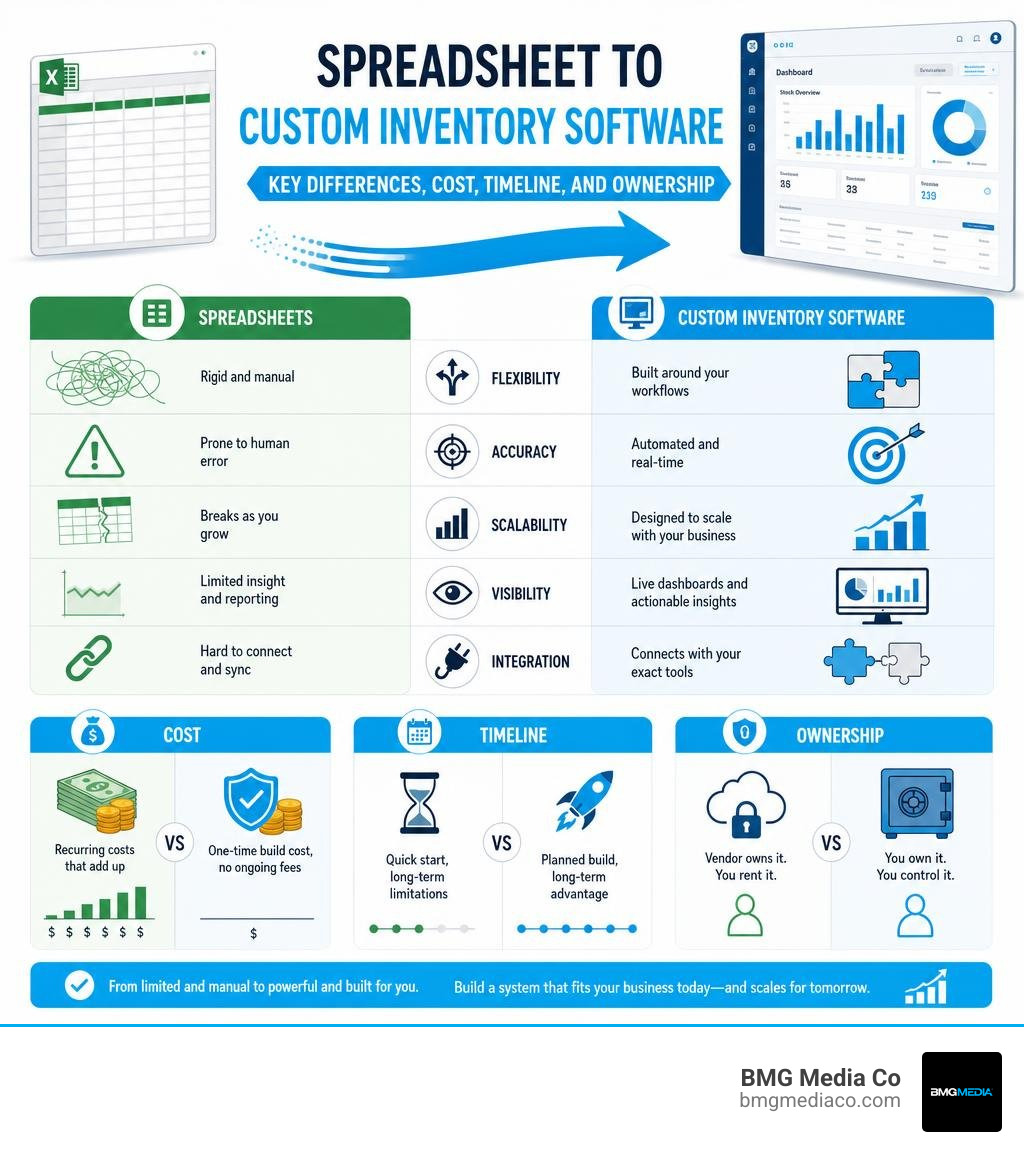
| Feature | Custom Inventory Software | Off-the-Shelf SaaS (e.g., Zoho, Cin7) |
|---|---|---|
| Data model | Built around your SKUs and workflows | Generic — you adapt to their structure |
| Pricing | One-time build cost, you own the code | Recurring monthly fees that compound at scale |
| Users/locations | Unlimited by design | Capped per pricing tier |
| Integrations | Built to your exact stack | Limited to supported connectors |
| Ownership | 100% yours — code, data, and logic | Vendor controls your data |
| Scalability | Grows with your business | Hit walls as orders, users, and locations increase |
Most businesses start with a spreadsheet. Then they graduate to a SaaS tool like Zoho or Cin7. And at some point, the tool stops fitting the business — and the business starts bending itself to fit the tool.
That’s the moment this guide is written for.
You might be managing stock across five warehouses. You might have 12,000 SKUs, a production floor, and an ERP that doesn’t talk to anything. Or you might just be paying $350 a month for a subscription that’s quietly crept toward $1,800 as you’ve added warehouses and users — with nothing to show for it at the end of three years.
The real question isn’t whether custom software is better. It’s whether your operation has outgrown the alternative.
I’m Blake George, founder of BMG Media Co., a custom web and software development agency with over 15 years of experience building bespoke digital systems — including custom inventory management software — for businesses ranging from regional manufacturers to multi-location retail chains. In this guide, I’ll walk you through everything you need to know to build a system that actually fits how your business moves.
Custom inventory management software definitions:
Off-the-shelf software is built for the average business. The problem is that no high-performing business is truly “average.” When you buy a generic Software-as-a-Service (SaaS) tool, you are buying into a pre-packaged data model. If your inventory workflows involve complex assemblies, specialized cutting lists, or multi-location routing, you will find yourself forcing your unique operations into a rigid template.
This friction is exactly Why Your Business Deserves Custom Web Development Solutions. Instead of bending your warehouse staff, sales reps, and shippers to fit a vendor’s pre-programmed logic, custom-built software bends to fit your business.
On the surface, SaaS platforms look affordable. A basic plan might only cost $50 to $100 a month. But as your business scales, these models reveal their hidden teeth.
Most out-of-the-shelf tools scale their pricing based on order volume, user seats, and physical warehouse locations. For example, Zoho Inventory’s free plan caps you at 50 orders a month, a single user, and one location. If you scale up to their Enterprise plan, you are looking at $249 a month, which is still capped at 7,500 orders, 10 users, and 6 locations.
When your business expands, these compounding fees can escalate dramatically. Adding a new warehouse or bringing twenty floor workers onto the system shouldn’t double your software bill. Over a three-year period, a subscription to a mid-tier SaaS platform can quietly exceed $60,000. At the end of those three years, you have zero equity, no code ownership, and you are entirely at the mercy of the vendor’s next price hike.
Additionally, data lock-in is a massive risk. If a SaaS provider changes their API, limits your access, or goes out of business, migrating your logistics history can cost six figures in emergency consulting fees.
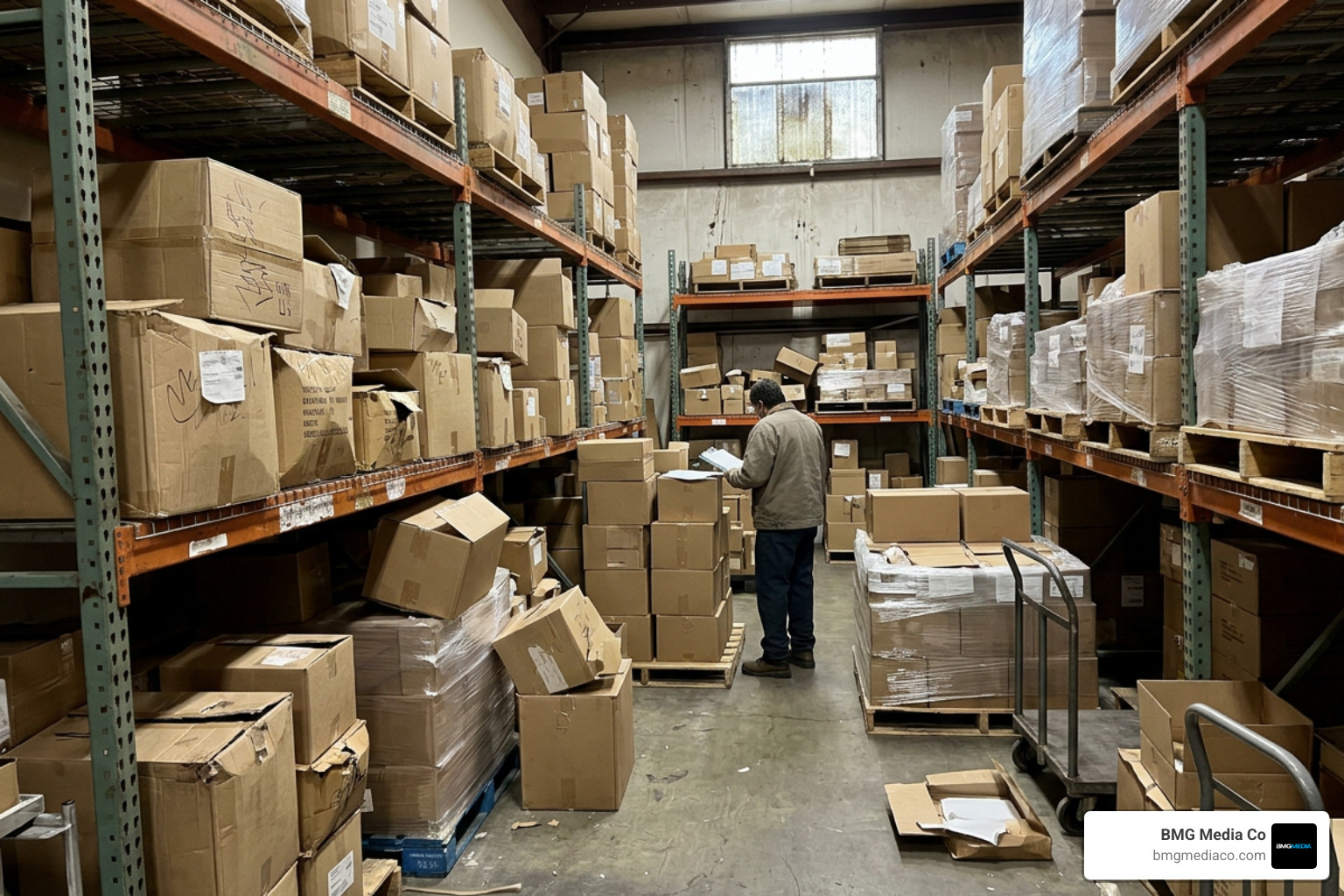
Relying on generic inventory platforms or fragmented systems inevitably leads to severe operational bottlenecks. We frequently speak with business owners who are drowning in manual workarounds. The classic symptoms of an outdated inventory system include:
When operations are siloed, the cost of manual labor skyrockets. We have seen businesses eliminate enough manual data-entry work to offset the need for two full-time employees simply by centralizing their communication and data sharing across all physical locations.

When we build custom inventory management software, we start by designing a clean, relational database architecture. Every item, location, transaction, and user permission is mapped out to ensure lightning-fast queries and absolute data integrity.
A high-performing system does not live in a vacuum. It must act as the nervous system of your business, seamlessly connecting your front-end sales channels with your back-end logistics. This level of connectivity is explored in The Missing Link A Guide to Software Integration Web Apps.
To build an inventory system that actually drives efficiency, several core modules must be engineered from scratch:
A major flaw in off-the-shelf systems is that they try to do everything poorly, rather than doing their core job exceptionally well. In a custom architecture, we believe in keeping your Enterprise Resource Planning (ERP) or core accounting system (like QuickBooks) as the financial source of truth, while your custom inventory software manages the operational reality on the floor in real-time.
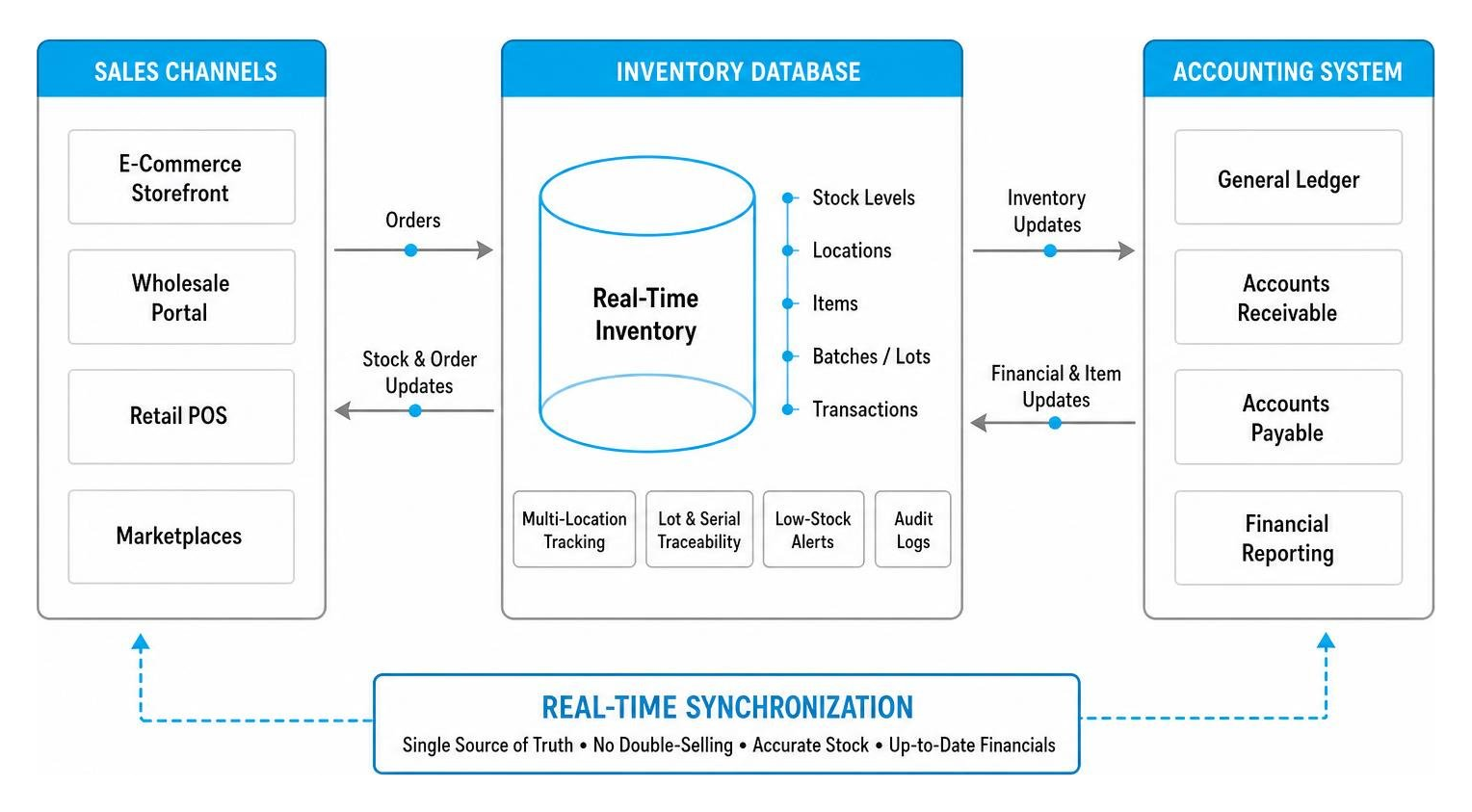
We build robust, bi-directional API integrations to sync:
Choosing how to build your software depends on your operational complexity, scaling plans, and budget. Here is a direct look at how different development models compare:
| Metric | Off-the-Shelf SaaS | No-Code / Low-Code Platforms | Fully Custom-Coded Software |
|---|---|---|---|
| Upfront Cost | Low ($100 – $1,000/mo) | Medium ($5,000 – $15,000) | High ($50,000 – $150,000+) |
| Long-Term Cost | High (per-user/tier fees) | Medium (platform subscriptions) | Extremely Low (hosting only) |
| Time to Launch | Days | 2 to 6 weeks | 3 to 6 months |
| IP Ownership | None | Limited (locked to platform) | 100% Yours |
| Scalability | Poor (capped by vendor) | Moderate (database row limits) | Unlimited |
| Customization | Low (rigid templates) | Medium (visual builders) | Unlimited (built from scratch) |
Understanding these trade-offs is crucial when budgeting. To get a deeper sense of budgeting for custom web applications, read our guide on Web App Development Costs From Shoestring to Enterprise.
No-code platforms and AI-powered builders have gained popularity for rapid prototyping. If you are a small business with basic workflows, tools like Knack or Gufi can help you move away from spreadsheets quickly. You can even use AI-assisted tools like Chattee AI to prototype basic user interfaces or build lightweight tools.
However, no-code solutions eventually hit a wall.
If your business manages tens of thousands of SKUs, you will quickly run into database row limits and performance bottlenecks. Furthermore, hosting highly sensitive, proprietary supply chain data on third-party no-code platforms introduces significant security and compliance risks.
When you invest in a fully custom-coded solution, you are building an actual business asset. You own 100% of the intellectual property, meaning you pay zero licensing fees as your user count grows from ten to one thousand. For more on selecting the right team for this journey, consult The Complete Guide to Custom Software Developers.
Building a true custom-coded system requires a structured, phase-based approach. While some agencies quote timelines of 12 months or more, we focus on continuous project momentum and agile delivery.
A typical high-performance build follows these general phases:
An inventory system for a custom merchandise shop looks completely different from a system built for a medical device manufacturer. A cookie-cutter SaaS tool forces both of these businesses to use the same generic “item” fields, leading to highly inefficient workarounds.
When we design custom software, we tailor the logic to match the physical movement of your goods:
For developers looking to see how these complex structures are handled on an open-source codebase, repositories like Inventoros offer a fantastic look at Laravel-based multi-warehouse and assembly structures.
Your supply chain data, vendor pricing, and customer purchase histories are highly sensitive. Storing this information on shared public cloud infrastructure without dedicated security protocols is a major liability.
When we build custom software, security is baked into the architecture from day one:
Data drift occurs when your financial records (ERP) and physical reality (warehouse floor) fall out of sync. Custom software solves this by acting as the operational layer that sits on top of your ERP. When a warehouse worker scans a barcode to receive a shipment, the custom system processes the physical transaction instantly on the floor, and immediately pushes a clean data payload to the ERP via a secure API. This keeps your ERP as the financial source of truth while ensuring your floor staff are working with real-time operational data.
Yes. In large steel-framed warehouses or remote manufacturing yards, Wi-Fi dead zones are common. We design custom mobile applications to handle disconnects gracefully. The app utilizes a local database cache on the mobile device. When a worker scans an item in a dead zone, the transaction is saved locally. Once the device re-establishes a network connection, the application automatically queues and syncs the data back to the central database without losing a single scan.
When you use a third-party no-code platform, your proprietary business logic and database live on shared public infrastructure. You do not own the underlying code, meaning you cannot perform custom security audits, implement specialized encryption, or guarantee compliance with strict data-localization laws. If the platform experiences an outage, your entire warehouse operation grinds to a halt. True custom-coded software eliminates this vulnerability entirely.
Ditching the spreadsheet isn’t just about cleaning up your desktop — it is about unlocking the next phase of your business’s growth.
At BMG Media Co., we don’t believe in shortcuts. We don’t use templates, we don’t use bloated page builders, and we don’t force your business to fit someone else’s mold. Every line of code we write is hand-crafted from scratch to match your exact workflows, SKUs, and scaling goals.
Whether you are operating a multi-site manufacturing plant in Metro Detroit, a national retail chain, or a fast-growing e-commerce brand, we have the engineering depth and design sophistication to build an inventory system that moves as fast as you do.
Ready to take control of your supply chain and own your software asset forever? Book a scoping call with BMG Media Co. today and let’s build something custom.
