September 2026
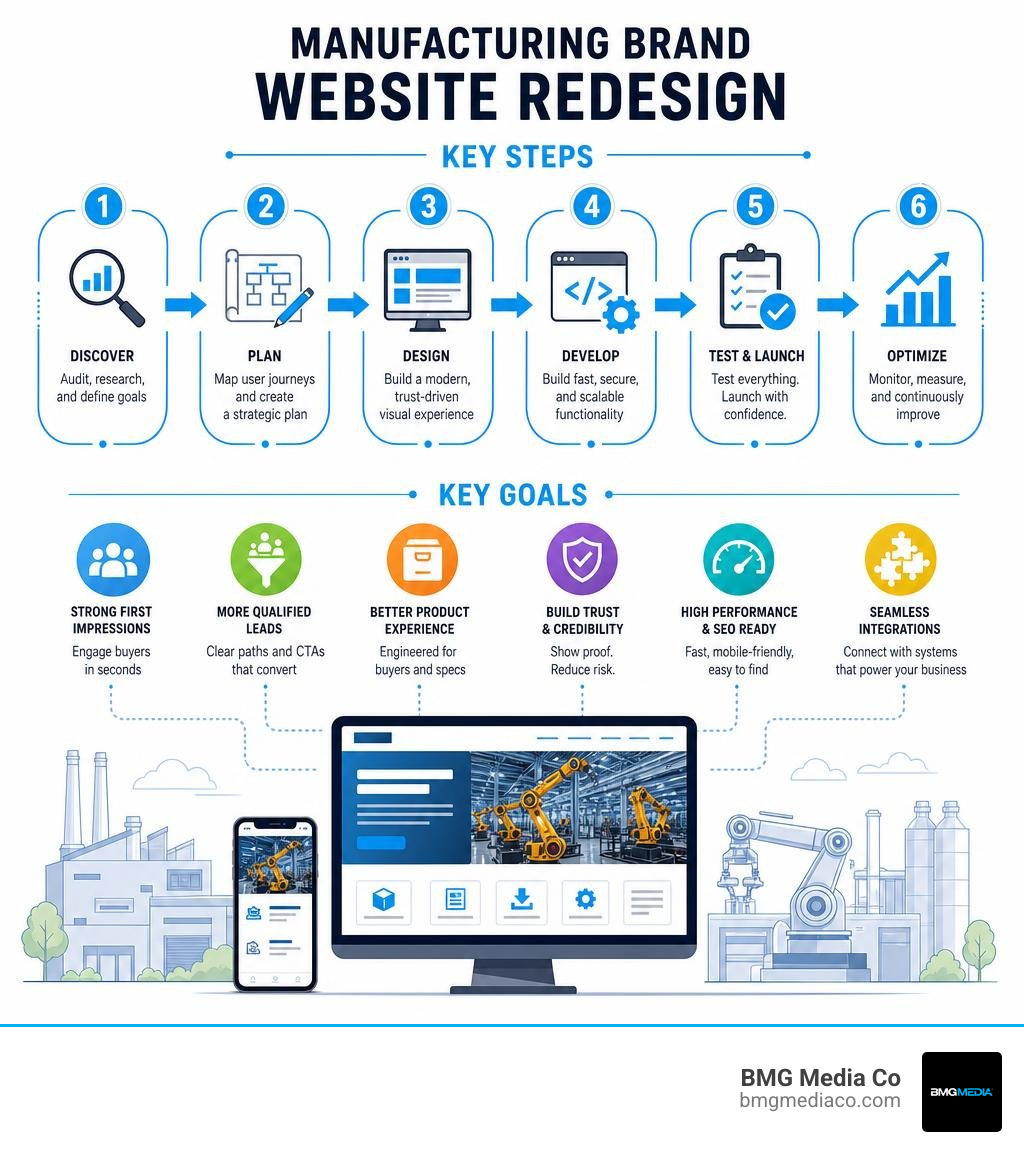
A manufacturing brand website redesign is the process of rebuilding your industrial company’s website from the ground up — improving its structure, visual identity, technical performance, and lead generation capability to match how modern B2B buyers actually research and evaluate suppliers.
Here’s what a successful manufacturing website redesign addresses:
Most B2B buyers research vendor websites before they ever pick up the phone. If your site is slow, confusing, or looks five years out of date, they move on to a competitor — quietly, without ever telling you.
The numbers make this hard to ignore. U.S. B2B eCommerce manufacturing sales already exceed $620 billion annually, and over 80% of B2B customers prefer placing orders through digital channels. Your website is no longer a brochure. It is your most active sales tool.
Yet many manufacturing companies are still running on legacy sites built before mobile-first indexing existed, before AI search changed how buyers discover vendors, and before a one-second page delay became the difference between a lead and a lost opportunity.
I’m Blake George, founder of BMG Media Co. — a custom web design and development agency based in Birmingham, Michigan, with over 1,000 websites built from scratch across industries including manufacturing, healthcare, real estate, and enterprise technology. I’ve led manufacturing brand website redesign projects for companies ranging from regional industrial suppliers to global multi-plant manufacturers, and in this guide I’ll walk you through exactly what it takes to get it right.
For decades, the manufacturing sales model relied on trade shows, physical catalogs, and direct sales relationships. But in July 2026, the landscape looks fundamentally different. The modern B2B buyer is younger, digitally native, and highly resistant to traditional sales pitches. They do not want to sit through an introductory cold call just to find out if your facility can handle their required tolerances.
Instead, they self-educate. Over 80% of B2B customers prefer using digital self-service channels or eCommerce to place orders, and they evaluate your production capabilities long before your sales team even knows they exist. If your digital presence feels like an afterthought, buyers assume your manufacturing floor is equally neglected.
This shift has turned high-performance web development into a core business requirement. A modern industrial website must serve as a 24/7 digital sales representative that answers complex technical questions instantly. When done correctly, a strategic redesign acts as an organic lead generator. To explore what makes a site highly effective in this space, check out our guide on Industrial Website Design Ideas That Drive Leads.
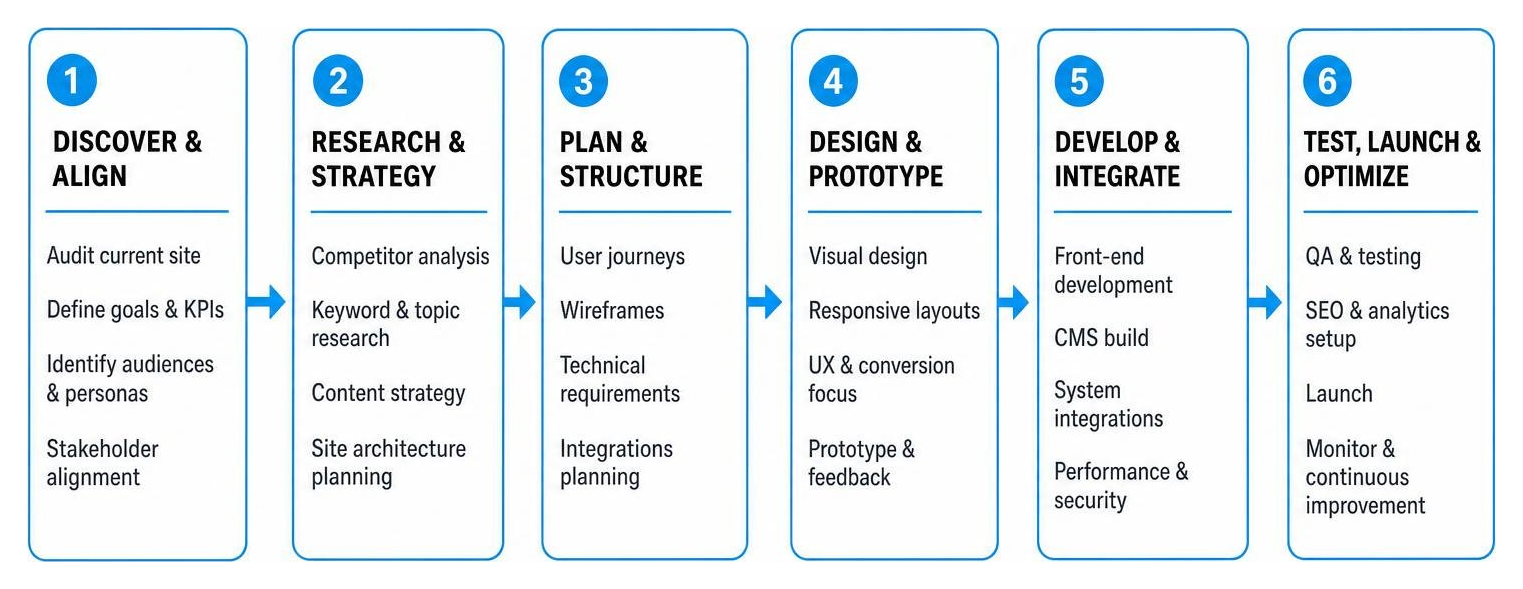
A successful manufacturing brand website redesign is not an aesthetic facelift; it is an engineering project. Just as you wouldn’t tool a production line without precise blueprints, you shouldn’t write a single line of website code without a rigorous discovery and planning phase.
At BMG Media Co., our discovery process uncovers your target personas (typically split between engineers who need technical specs and procurement officers who need pricing and logistics), your compliance requirements, and your legacy data systems. To help you map out this process, we’ve put together a comprehensive Website Redesign Checklist Key Considerations for a Successful Revamp.
The ultimate metric of success for an industrial website is the volume and quality of its Requests for Quote (RFQs). To support this, your site architecture must guide users toward high-intent conversion points without friction.
A common mistake is hiding the RFQ form behind multiple clicks or asking for too much non-essential information upfront. High-performing manufacturing sites place prominent, high-contrast “Request a Quote” CTAs in the top-right header and at key decision points on product pages. These forms should be optimized to collect only what your engineering team needs to estimate the job—such as material specifications, quantity, and CAD file uploads—while keeping the user experience seamless. For manufacturers looking to capture direct online sales or streamline complex quoting, implementing tailored digital transactional tools is key, as detailed in our guide on E-Commerce Website Development for the Industrial Sector.
B2B buyers are busy, and choice overload is a psychological reality. If your main navigation is cluttered with vague, corporate jargon like “Synergistic Solutions” or “Innovation Hub,” users will experience decision paralysis and bounce.
Instead, use concrete, self-explanatory labels that align with how your buyers actually search. If you offer “CNC Machining” or “Injection Molding,” list those exact terms.
For engineers and procurement managers, your product catalog is the website. They are not looking for marketing fluff; they are looking for dimensions, tolerances, materials, and compliance standards.
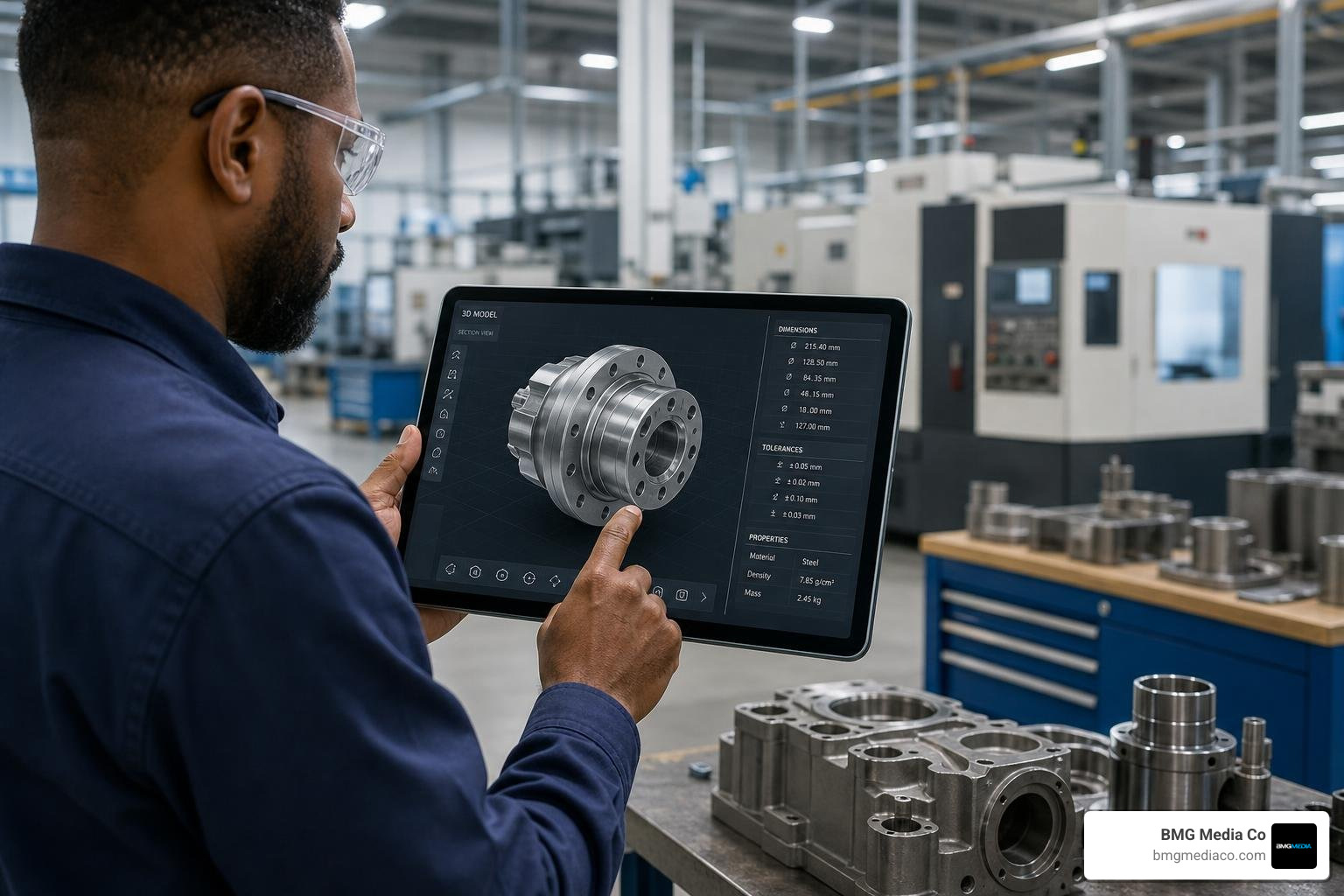
To satisfy these technical users, you must present dense data in a highly organized, interactive format. This is where custom development shines. Off-the-shelf templates and rigid page builders cannot handle the complex filtering, CAD file integrations, and custom database structures that industrial portfolios require. To see how we build high-capacity databases for heavy-duty industrial catalogs, explore our insights on Custom Site Development for Complex Manufacturing Needs.
An effective manufacturing product page must be structured like a technical datasheet. It needs a predictable, scannable layout that prioritizes core specifications above the fold, followed by detailed technical tables and downloadable assets.
| Feature | Standard Template Limits | BMG Custom Built Spec Tables |
|---|---|---|
| Data Structure | Rigid text fields, prone to formatting breakages | Dynamic, responsive tables mapped to custom databases |
| Searchability | Hidden inside flat PDFs; unreadable by search engines | Fully indexable, schema-marked HTML text |
| CAD & File Downloads | Siloed in generic resource folders | Tied directly to the specific part number above the fold |
| Responsive Layout | Tables scroll awkwardly off-screen on mobile | Adaptive layouts that stack or collapse cleanly |
If your catalog contains hundreds or thousands of part numbers, a basic search bar will not suffice. You need a fast, forgiving, and intelligent search engine that can handle partial part numbers, industry acronyms, and minor misspellings.
Additionally, implementing faceted filtering allows buyers to narrow down vast catalogs by selecting specific criteria—such as material, voltage, outer diameter, or certification (e.g., ISO 9001). This dynamic filtering must update instantly without reloading the entire page, providing a seamless, B2C-like shopping experience for complex B2B components.
When a visitor arrives on your website, you have exactly 10 seconds to capture their attention and communicate your value proposition. If your layout is cluttered or confusing, they will leave. Visual hierarchy is the practice of arranging elements on a page in order of importance, guiding the user’s eye naturally from your core value statement to your primary call to action.
In the industrial sector, trust is built on physical capability. Generic, overly polished stock photography of actors wearing pristine hardhats does not build trust—it erodes it. B2B buyers want to see your actual facility, your machinery, and your team in action.
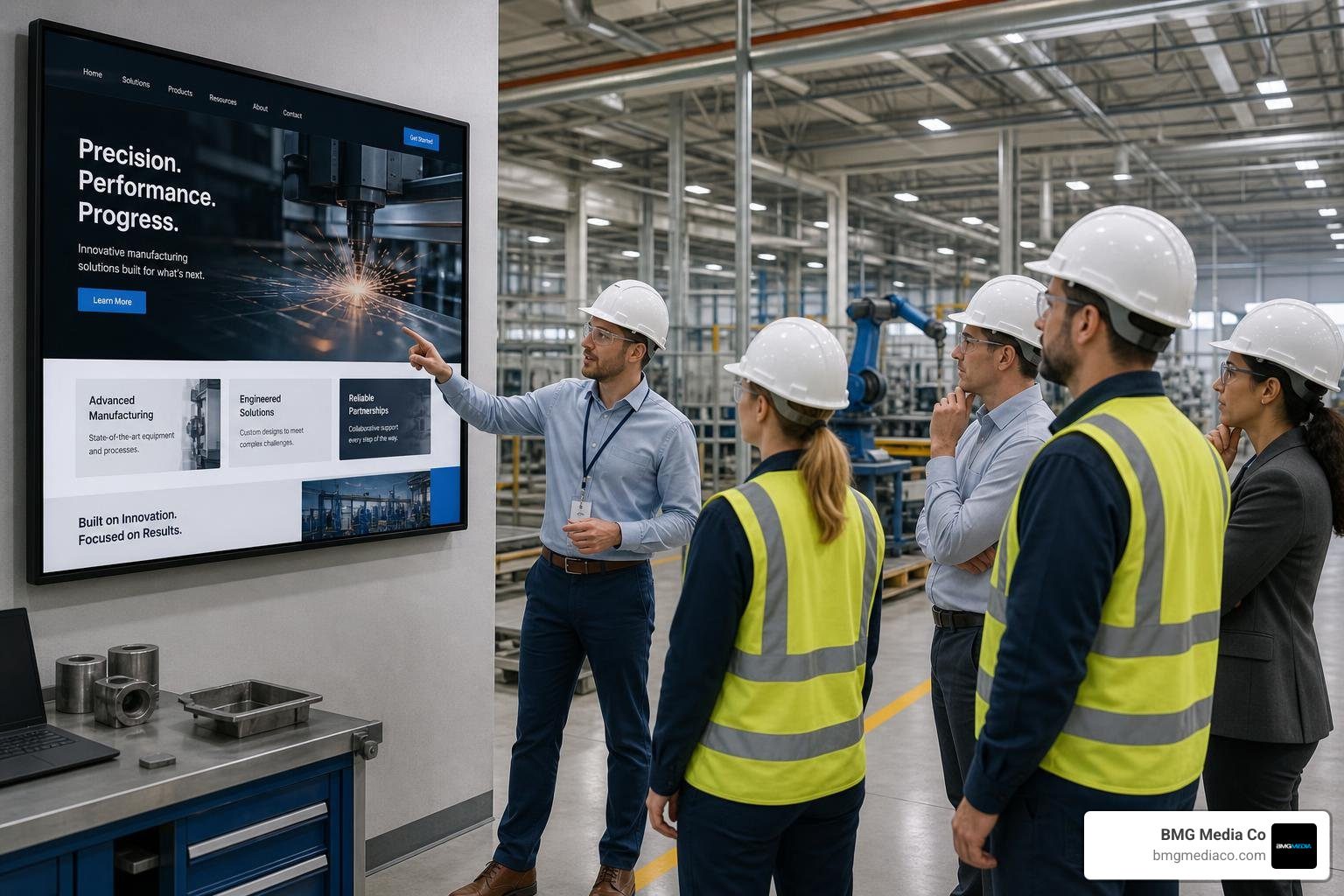
A clean, localized solutions-based layout can elevate an industrial brand, showing buyers that you understand their specific regional and operational needs.
B2B purchases involve significant financial investment and operational risk. To mitigate this risk, your website must prove that you have successfully solved similar challenges for other clients.
Case studies are your most powerful tool for this. In fact, 66% of business buyers share case studies with other decision-makers, and 86% make purchasing decisions based on testimonials. Rather than writing dry, text-heavy summaries, structure your case studies around a clear narrative:
An industrial brand transformation that aligns physical facility aesthetics with digital authority helps build immediate credibility with procurement teams.
An industrial website can look beautiful, but if it doesn’t load quickly or rank on search engines, it won’t generate leads. Technical performance is the foundation of digital marketing. To understand how we bridge the gap between design and technical execution, read our guide on Manufacturing Website Design From Blueprint to Launch.
A major risk of any website redesign is losing the organic search rankings and traffic your old site built over several years. If you change your URL structures without a proper migration plan, Google will crawl broken links, your search rankings will plummet, and your inbound leads will dry up.
At BMG Media Co., we prevent this by mapping out a meticulous 301 redirect strategy before launch. We audit every single URL on your legacy site and map it to its exact counterpart on the new site, preserving your “link juice” and search equity. Across our last 50 projects, this rigorous attention to technical SEO has resulted in an average 14% year-over-year organic traffic lift post-launch.
A modern manufacturing website should not exist in a digital silo. To maximize operational efficiency, your site must integrate seamlessly with your existing back-office systems, such as:
By building custom API integrations, we eliminate manual data entry, reduce administrative errors, and accelerate your sales cycle.
Many web agencies rely on cheap, pre-built templates or bloated page builders like Elementor or Divi to build manufacturing sites. While this saves them time, it costs your business money in the long run through slow load speeds, security vulnerabilities, and a generic online appearance.
At BMG Media Co., we do things differently. We build every website 100% custom from scratch.
When we build a custom WordPress site, we write clean, lightweight code tailored specifically to your business requirements. We use Advanced Custom Fields (ACF Pro) to create custom Gutenberg blocks, giving your internal marketing team a modular, drag-and-drop editing experience without the performance-killing bloat of a page builder.
This custom approach ensures your site loads instantly, complies with strict ADA accessibility standards, and achieves perfect Core Web Vitals scores. If you are looking to collaborate with a premier custom agency, we serve clients right from our headquarters in Birmingham, MI, as well as neighboring communities including West Bloomfield, Farmington Hills, and the broader Metro Detroit area.
Our analysis of the top manufacturing websites reveals eight common structural features that optimize the user experience and drive conversions:
If you are evaluating web design partners across Michigan, BMG Media Co. stands out for our design sophistication, enterprise capability, and founder-direct access in areas like Rochester Hills, Novi, and Northville. For advanced engineering and prototyping operations, companies like Manufacturing Solutions | Troy Design & Manufacturing demonstrate the high level of technical presentation required in modern industrial sectors.
A comprehensive, custom manufacturing brand website redesign typically takes between 12 to 16 weeks from discovery to launch. This timeline allows for in-depth technical discovery, custom UI/UX design, database engineering for your product catalog, API integrations with your ERP/CRM, and rigorous quality assurance testing.
We build custom WordPress sites using modular, database-driven structures. This means your internal team can easily add, edit, or delete products, part numbers, and technical specifications through a simple backend interface without needing to write code or contact a developer. Alternatively, we can set up automated syncs that pull product data directly from your ERP.
Templates and page builders are packed with unnecessary code that slows down your site. Even a one-second delay in page load can significantly reduce your conversion rates, and pages taking over 5 seconds to load can see conversions cut in half. Furthermore, templates limit your ability to build custom interactive tools, like CAD file viewers or faceted search filters, which are critical for engaging engineering buyers.
Your website should work as hard as your production line. If your current digital presence is slow, difficult to navigate, or failing to generate high-quality RFQs, it is costing your business valuable contracts.
A strategic manufacturing brand website redesign is an investment in your company’s long-term growth. By partnering with BMG Media Co., you get a team of elite designers and developers who understand the unique complexities of industrial marketing, technical SEO, and back-office system integrations. We build 100% custom, high-performance web platforms designed to showcase your engineering capabilities and turn anonymous visitors into long-term customers.
Ready to transform your digital presence? Speak to a web strategist at BMG Media Co. today and let’s build something built to last.
