March 2026
Industrial website templates are pre-built website designs made specifically for manufacturing, construction, engineering, factory, and other heavy industry businesses.
Here are the top platforms and template options to explore right now:
| Platform | # of Templates | Price Range | Best For |
|---|---|---|---|
| ThemeForest | ~3,980 results | $39–$2,600 | WordPress themes |
| Envato Elements | 210+ industrial | Subscription | HTML & WordPress |
| Colorlib | Multiple free options | Free–$349 (support) | Budget-friendly starts |
| Nicepage | 210+ free templates | Free | HTML, WordPress, Joomla |
| Webflow | Community cloneables | Free–paid | No-code flexibility |
These templates are built for businesses that need to:
Most industrial templates come with responsive design, Bootstrap frameworks, and integrations with tools like WPBakery or Elementor — so you don’t need to write a single line of code.
The challenge isn’t finding a template. It’s finding the right one for your specific industry, goals, and technical setup.
I’m Blake George, founder of BMG Media Co, a web design agency that has built over 1,000 custom websites across manufacturing, healthcare, real estate, and more — including numerous industrial website templates and fully custom solutions for heavy industry clients. In this guide, I’ll walk you through everything you need to make a confident choice.
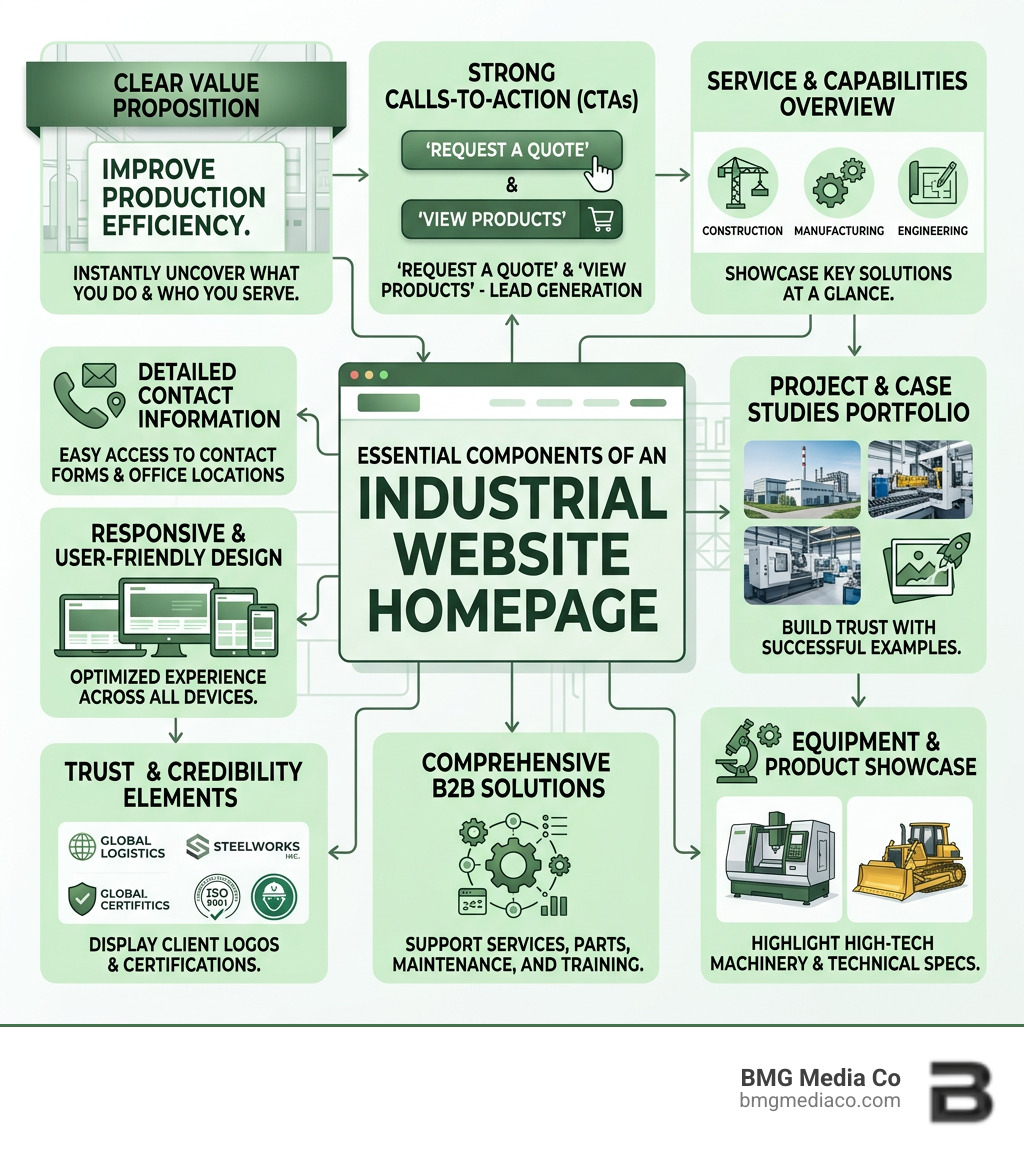
When you are browsing through thousands of industrial website templates, it is easy to get distracted by flashy animations. However, for a heavy-duty business, performance and utility are what actually move the needle. A high-performance template should act as a digital extension of your sales team, working 24/7 to capture leads and showcase your technical expertise.
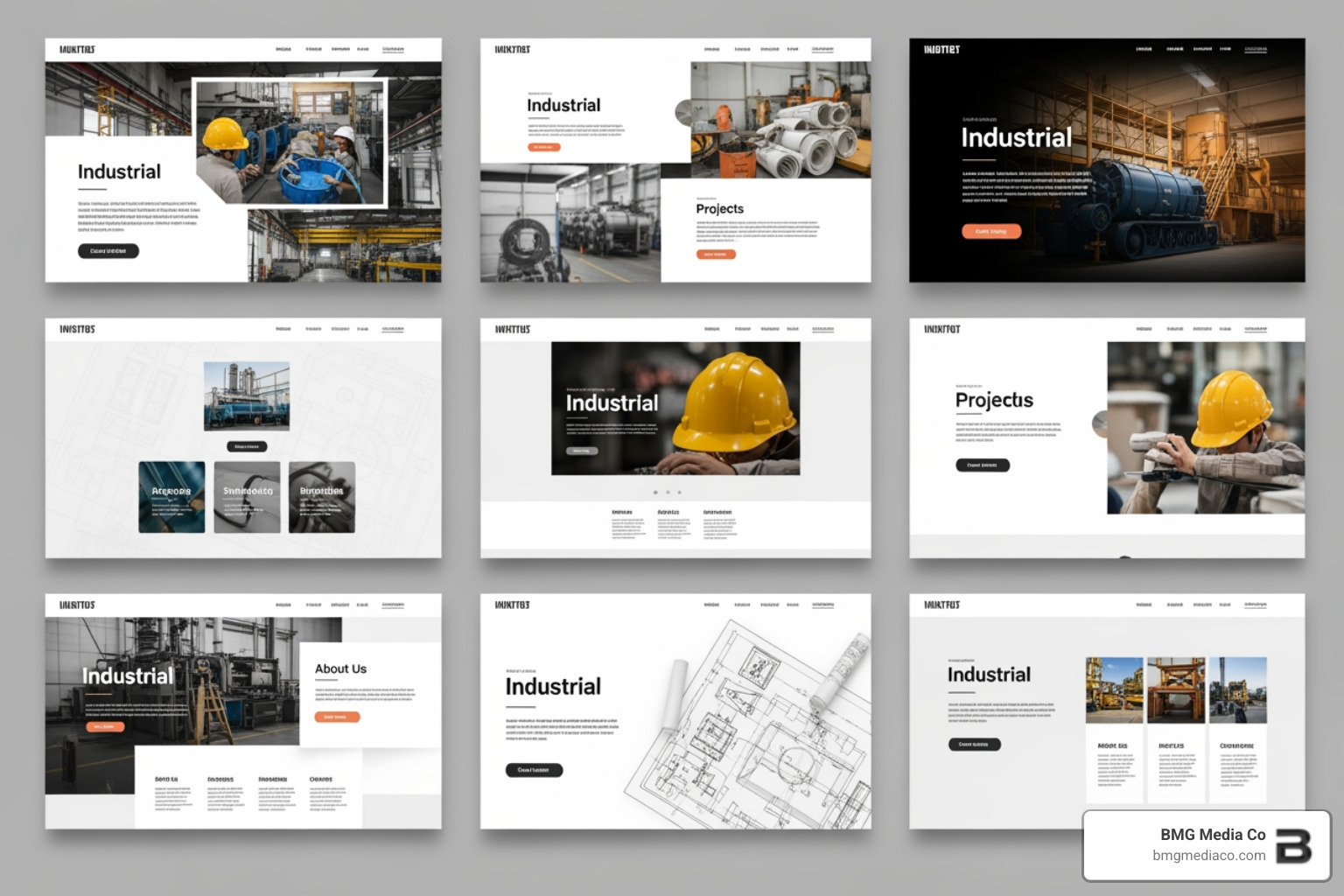
The most effective templates prioritize responsive design. With more procurement officers and project managers checking specifications on-site via tablets or smartphones, your site must look flawless on every screen size. Mobile optimization isn’t just a “nice-to-have” anymore; it is a fundamental requirement for modern manufacturing web design.
Beyond responsiveness, look for templates that offer:
It is tempting to grab a free template and call it a day, but there are significant trade-offs to consider. While free options from platforms like Colorlib or Nicepage are great for getting started, premium themes usually offer a more robust foundation for a growing business.
| Feature | Free Templates | Premium Templates |
|---|---|---|
| Customization | Limited to basic colors/fonts | Deep control via theme panels |
| Support | Community forums only | Dedicated technical support |
| Security | Infrequent updates | Regular patches and updates |
| Plugins | Often require separate purchases | Premium plugins (valued at $70+) included |
| Unique Design | Used by thousands | More niche and professional |
One of the biggest selling points of modern industrial website templates is that you don’t need to be a developer to use them. Most premium themes come bundled with drag-and-drop builders like WPBakery or Elementor. These tools allow you to move sections, swap images, and change layouts visually.
Features like one-click demo importers are lifesavers. They allow you to import a professionally designed demo—complete with pages for “About Us,” “Services,” and “Contact”—in seconds. From there, you just swap out the placeholder text and images for your own. If you ever get stuck, resources like Learn with Envato Tuts+ provide excellent step-by-step guides on how to master these builders.
Under the hood, the best industrial website templates are built on solid frameworks like Bootstrap 4 (or 5). This ensures the code is clean, fast-loading, and compatible with all modern browsers. For businesses operating in the AEC (Architecture, Engineering, and Construction) sector, specific technical features are non-negotiable:
Not all industrial website templates are created equal. A template designed for a local handyman won’t have the “heft” required for a global aerospace firm. You need to choose a design that aligns with the visual language of your specific niche.
Whether you are managing a factory or a construction firm, your website needs to reflect the scale of your operations.
In the industrial world, your past work is your best resume. High-quality templates offer sophisticated grid layouts and filterable galleries to help visitors find relevant examples of your work. For instance, if you look at the SME USA portfolio, you can see how organized project data builds immediate trust.
Effective portfolio sections should include:
Many industrial companies are moving toward digital sales. Whether you are selling spare parts or allowing clients to book maintenance services, WooCommerce integration is a must. A template that supports a professional product catalog allows you to display thousands of SKUs without slowing down the site.
Look at how Dijet USA manages technical product data. This level of organization is what converts a casual browser into a long-term B2B partner. Whether it is parts ordering or complex service booking—as seen with BA Forging Enterprises—your template should make the transaction as frictionless as possible.
Choosing your template is just the first step. To keep it running like a well-oiled machine, you need to focus on long-term maintenance. Industrial buyers are often looking for reliability; if your website is slow or has broken links, they might assume your machinery is just as neglected.
SEO optimization is built into the core of top-tier industrial website templates. This means the code is structured in a way that Google loves, helping you rank for keywords like “custom metal fabrication” or “industrial automation services.” However, SEO isn’t a “set it and forget it” task. You need a theme that supports fast page speeds and regular security updates.
For companies like Cold Heading, maintaining a fast, secure site is vital for keeping their competitive edge. Always ensure your template provider offers:
The right plugins can turn a basic template into a powerhouse. Most industrial website templates come pre-integrated with:
For complex data management, tools like B-File Systems show how custom integrations can elevate a site’s utility. Additionally, if you operate in international markets, ensure your theme is compatible with WPML for seamless translation.
For smaller operations, we recommend “niche-targeted” templates. These are themes specifically designed for one type of business (e.g., a “Steel Works” theme vs. a general “Business” theme). Look for lightweight code to ensure the site loads quickly even on slower connections. Scalability is also important—you want a theme that can grow as you add more services. A great example of a focused, high-performance industrial presence can be seen with Palltronics.
Most premium industrial website templates include basic SEO features like schema markup and clean header structures. However, true SEO success comes from how you use the template. You must ensure you are using fast-loading images and that your site passes “mobile-friendly” tests. Cross-browser compatibility is also crucial, as some older industrial firms may still be using legacy versions of browsers like Internet Explorer or older Edge versions.
If you are just testing an idea, a free template is fine. But if you are a serious business looking to generate six or seven-figure B2B contracts, go premium. The access to dedicated support, regular security patches, and more flexible licensing terms far outweighs the initial $50–$60 investment.
At the end of the day, industrial website templates are a fantastic starting point. They provide a cost-effective way to get online quickly and professionally. However, as your business grows, you might find that a “one-size-fits-all” design starts to feel a bit tight.
At BMG Media Co, we are proud of our “fully custom, no templates” approach. Based in Birmingham, Michigan, our award-winning team has completed over 1,000 sites, helping industrial giants and small factories alike achieve high-performance results. While templates are great for many, a fully custom site allows you to build a digital platform tailored exactly to your unique workflows, branding, and customer needs.
Whether you decide to go with a premium template or you are ready to invest in a completely custom build, the goal remains the same: a website that works as hard as you do.
Ready to take your industrial presence to the next level? Get a custom manufacturing web design quote from our team today and let’s build something heavy-duty together.
