October 2026

Looking to hire a custom theme developer in Michigan? Ask each team to review your current site’s speed, show you relevant custom WordPress work, and explain how they will test mobile pages before launch. A theme built for your site can avoid the unused styles and scripts that often come with pre-built templates. But custom code alone is no guarantee of speed: images, plugins, and hosting still matter.
I’m Blake George, founder of BMG Media Co. in Birmingham, Michigan. My work in custom WordPress development and digital strategy shapes how I approach Michigan custom theme development: start with the business goal, then build and test for the people using the site. Through our custom web design and development services, we engineer WordPress themes from scratch to eliminate template bloat and maximize mobile performance.
Michigan custom theme development terms you need:
When businesses in Detroit, Troy, Ann Arbor, or Grand Rapids buy off-the-shelf themes from commercial marketplaces, they are purchasing software designed to solve every possible problem for every possible business. A multi-purpose template contains hundreds of color switchers, slider scripts, mega-menu variations, and bloated visual page builders. To offer that level of generic flexibility, developers pack these themes with massive asset files and deep nested wrappers.
The result is severe technical debt. Every visitor downloading your page must pull down megabytes of code your business never uses. When you decide to stop using bloated templates with custom theme development services, you replace that unnecessary overhead with lightweight, purposeful architecture engineered purely for your brand’s operational workflows.
| Performance Metric | Pre-Built Marketplace Template | Bespoke Custom WordPress Theme |
|---|---|---|
| Typical Page Weight | 2.5 MB – 5.0+ MB | 300 KB – 800 KB |
| HTTP Requests | 70 – 150+ asset requests | 10 – 25 asset requests |
| DOM Tree Depth | 25 – 40+ nested container levels | Clean, semantic (5 – 8 levels) |
| Lighthouse Score | 30 – 55 (Mobile out of box) | 90 – 100 (Mobile out of box) |
| Maintenance Burden | High (frequent breaking plugin updates) | Low (isolated custom codebase) |
Pre-built templates load an assortment of third-party libraries—such as multiple slider frameworks, icon font libraries containing thousands of unused glyphs, animation plugins, and polyfills—regardless of whether a specific page actually displays those elements. Browsers are forced to parse, compile, and execute these scripts before rendering your critical content.
Bespoke frontend development takes the opposite path. We build using modular architecture where assets are loaded strictly on demand. If a page does not contain an interactive calculator or a video modal, the browser never loads that script. By stripping away render-blocking CSS and minifying our custom styles, we ensure the browser builds the Document Object Model (DOM) instantly, avoiding visual stutters and sluggish load states.
Google evaluates real-world user experience through Core Web Vitals, treating page performance as a direct organic ranking signal. Pre-built themes routinely fail these thresholds due to architectural deficiencies:
Furthermore, a handcrafted theme allows us to inject structured schema markup directly into the template files, giving search engine crawlers direct, semantic insight into your local Michigan operations, services, and product catalogs.
A modern frontend architecture should balance editorial flexibility on the backend with clean simplicity on the frontend. Instead of locking clients into rigid, fragile page builders, custom theme development structures pages around tailored Advanced Custom Fields (ACF Pro) flexible blocks. Content editors get an intuitive backend interface with custom fields crafted specifically for their brand, while the frontend renders semantic, clean HTML.
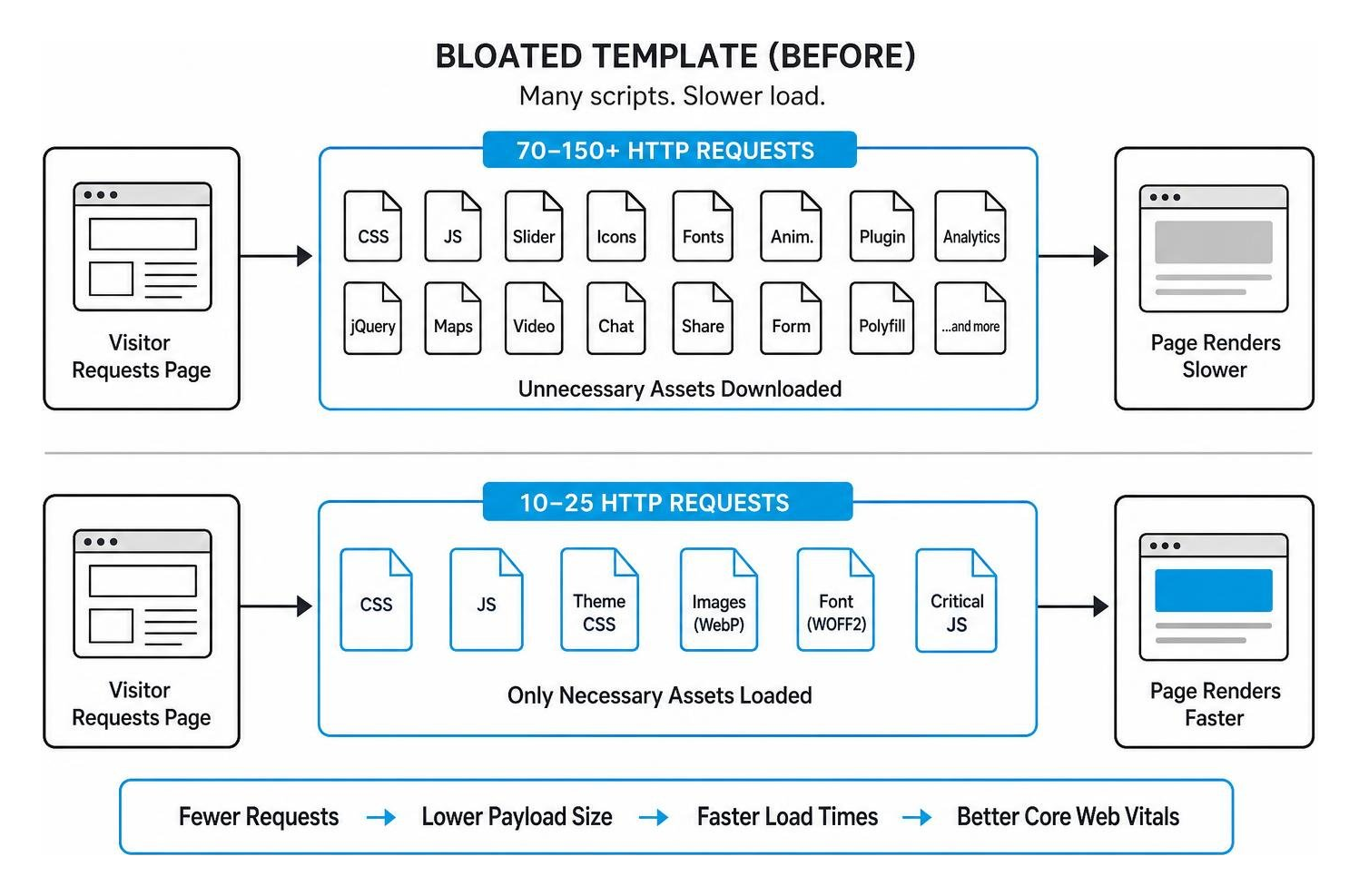
Every separate CSS stylesheet, JavaScript plugin, tracking script, and custom font file triggers an HTTP network request. On standard commercial themes, a single visit can spark over 100 separate requests before the page stabilizes.
With custom engineering, asset delivery is tightly governed. Stylesheets are compiled into lean, unified bundles, modern WebP and AVIF image formats are delivered natively with responsive markup, and fonts are self-hosted with modern system-font fallbacks. By dropping total payload sizes by over 80%, server overhead decreases dramatically, allowing your website to handle high-traffic spikes across Southeast Michigan without degrading performance.
Over 60% of all web traffic across Michigan industries originates from smartphones. When a site takes several seconds to load on a mobile device, bounce rates climb significantly. Faster mobile load times correlate directly with improved conversion rates and better user engagement.
Custom theme architecture approaches the mobile layout first. Instead of trying to hide desktop elements on mobile screens via CSS rules—which still forces the phone to download hidden assets—we write lightweight code tailored for mobile processing power and cellular network limitations. Touch targets, sticky calls-to-action, navigation overlays, and responsive typography are designed around the user’s thumb zone, removing friction from the mobile conversion funnel.
Developing an enterprise-grade website requires an engineering process focused on long-term maintainability. Understanding why handcrafted website design is worth every penny comes down to seeing how deliberate architectural choices prevent costly redesign cycles down the road.
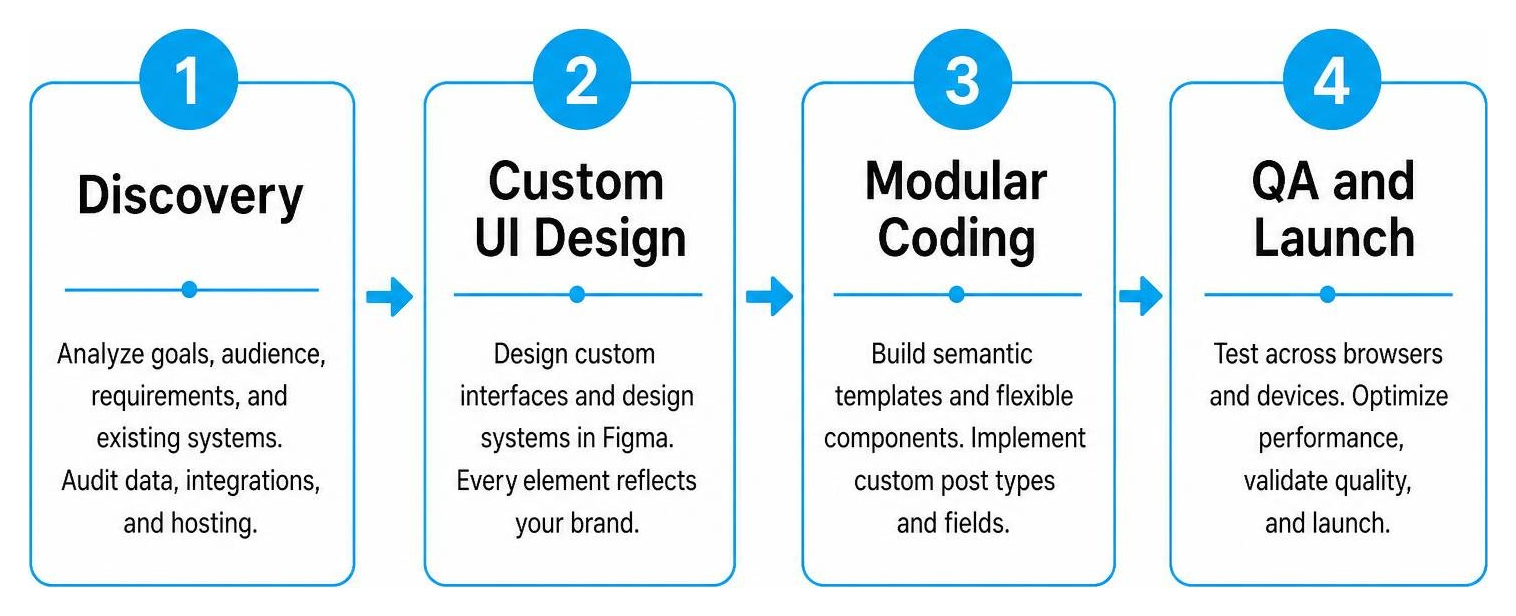
A professional custom build follows a clear, multi-stage methodology to ensure the final digital platform meets both aesthetic and technical requirements:
For e-commerce brands, checkout performance directly impacts your bottom line. Standard WooCommerce implementations frequently suffer from multi-step form lag, unoptimized checkout scripts, and complex shipping calculation calls that cause shoppers to abandon their carts.
Our custom theme engineering streamlines the e-commerce funnel with high-converting optimizations:
Selecting an agency is an investment in your company’s digital infrastructure. When finding the right custom development partner, you want a team that delivers both design sophistication and deep backend engineering capability.
Custom web engineering is an investment in a durable business asset. While basic pre-made template installations might cost a few thousand dollars upfront, their hidden costs—constant maintenance, broken plugin updates, and lost revenue from poor conversions—quickly accumulate.
When interviewing development agencies across Birmingham, Troy, Rochester Hills, or Bloomfield Hills, look beyond visual design portfolios and evaluate their technical standards:
For a closer look at how we approach custom builds, explore our custom web design and development services or request a consultation and custom quote to discuss your project.
Yes. WordPress maintains a clean separation between database content and frontend display templates. When migrating to a custom theme, all of your existing blog posts, pages, WooCommerce product catalogs, customer histories, and SEO metadata remain intact within the database. During our initial architectural discovery, we audit your active plugins, identify opportunities to replace redundant plugins with lean custom functions, and ensure your critical business tools integrate smoothly with the new frontend templates.
Custom theme development directly addresses the root causes of poor mobile Core Web Vitals scores. By eliminating heavy JavaScript frameworks, we minimize thread blocking, which keeps the Interaction to Next Paint (INP) metric fast and responsive. By preloading key brand assets and serving modern image formats with explicit dimensions, we ensure Largest Contentful Paint (LCP) loads quickly and eliminate Cumulative Layout Shift (CLS).
While pre-built themes have lower initial costs, custom themes deliver a significantly higher return on investment over their operational lifespan. Custom platforms achieve higher search rankings through clean technical SEO, generate more revenue through faster mobile experiences and streamlined conversion funnels, and require fewer emergency bug fixes during routine WordPress core updates.
A generic, off-the-shelf template might seem like an easy shortcut, but its long-term cost in sluggish page speeds, low search visibility, and lost revenue quickly outweighs any initial savings. Your digital platform is the modern front door to your business, and it deserves an architecture engineered around your brand’s unique goals.
At BMG Media Co., we have delivered 1000+ websites since 2009. Headquartered in Birmingham, Michigan, our founder-led team builds high-performance digital experiences from scratch, applying the same lightweight, custom-coded approach described throughout this article to every Michigan business we partner with. We do not use generic templates, bloated page builders, or shortcuts. Every line of code and every interface element is hand-crafted to help your business grow.
Explore our custom web design and development services to see how our engineering elevates leading brands, or request a consultation and custom quote today to begin building your custom platform.
