October 2026

Custom plugin development gives a Michigan business a feature built for its own workflow, rather than forcing a ready-made tool to fit. It may be the better choice when a standard plugin adds features you do not need, cannot connect to your systems, or cannot handle a required checkout or admin task. A well-built custom plugin can reduce unnecessary code, but speed gains should be measured, not assumed.
Start by writing down the task the plugin must solve and the systems it must work with. Then ask a developer how they will test security, site speed, and compatibility before launch and after platform updates. This matters because a custom plugin should be an operational asset, not a long-term maintenance burden. When the plugin is scoped correctly, it can also improve Core Web Vitals by removing unused scripts, reducing database calls, and keeping the frontend lean.
I’m Blake George, founder of BMG Media Co in Birmingham, Michigan. My background in custom WordPress development shapes how I approach Michigan custom plugin development: start with the business need, then build and test only what the site requires. That approach has guided our team through 1000+ websites since 2009, and it remains the standard for every plugin we engineer.
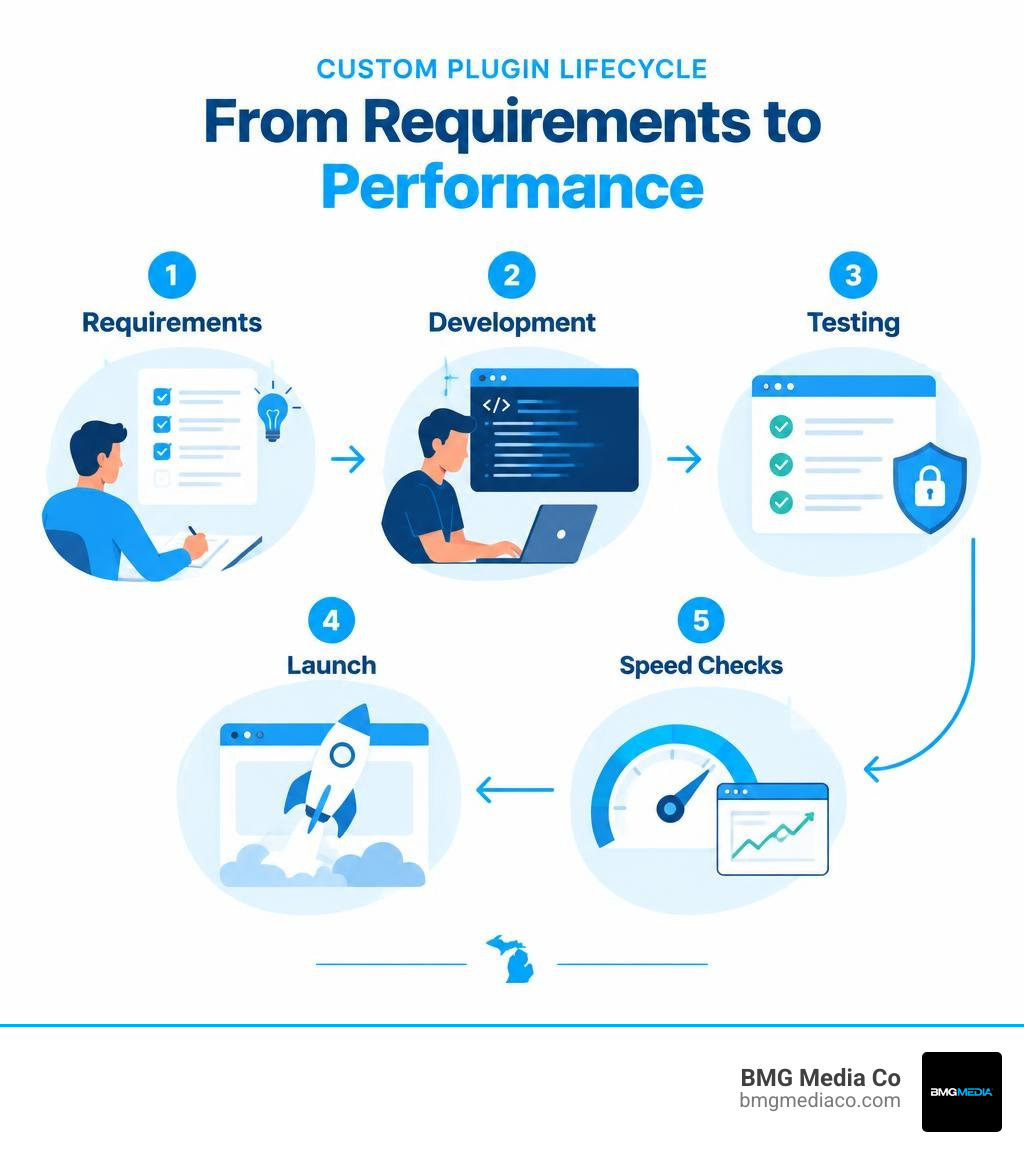
Key michigan custom plugin development vocabulary:
Off-the-shelf plugins are engineered to appeal to the widest possible audience. To achieve mass adoption, third-party developers pack dozens of toggles, styling libraries, tracking scripts, and multi-use modules into a single package. For an enterprise or local commercial business, this means your server loads thousands of lines of code you will never touch.
This unnecessary footprint directly causes database bloat, slow server response times, and recurring security vulnerabilities. Third-party plugins remain the leading attack vector for content management systems because public repositories allow bad actors to inspect code vulnerabilities at scale. Furthermore, when an off-the-shelf plugin author abandons an extension or pushes an untested update, your site faces unexpected downtime. Understanding why your business deserves custom web development solutions begins with recognizing that your digital infrastructure should be an asset, not a continuous maintenance liability.
A purpose-built plugin eliminates third-party licensing fees, removes unused styling assets, and aligns directly with your internal operations. With a bespoke extension, your database queries are stripped of generic wrapper functions, ensuring rapid data retrieval even under peak server load.
| Feature / Metric | Off-the-Shelf Marketplace Plugins | Custom Plugin Architecture |
|---|---|---|
| Code Footprint | Bloated with unused features and styling | 100% purposeful, lean, and lightweight |
| Database Queries | High overhead, generic data tables | Tailored schemas and optimized indexing |
| Security Risks | Publicly known vulnerabilities and exploits | Private codebase adhering to modern standards |
| System Integrations | Restricted to basic pre-built connectors | Direct API synchronization with internal tools |
| Upgrade Stability | Prone to third-party breaking changes | Isolated architecture built on stable CMS hooks |
Enterprise plugin development demands modern backend practices. We write clean, secure PHP that strictly adheres to WordPress and PSR coding standards. By leveraging modern REST APIs and GraphQL endpoints, custom plugins can asynchronously pull and push data without blocking the browser rendering process.
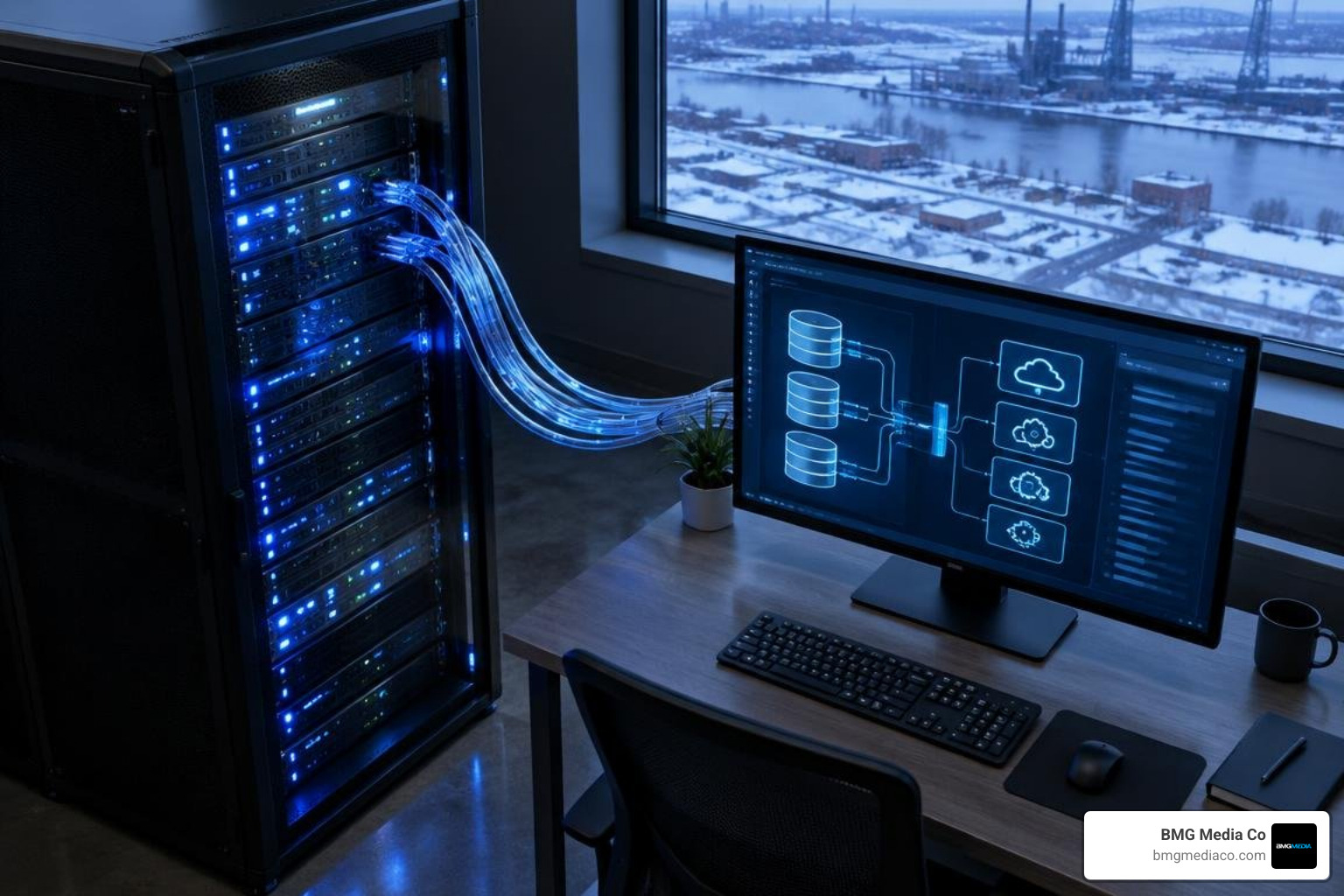
Google’s Core Web Vitals measure real-world user experience, focusing heavily on script execution time, DOM depth, and layout stability. Generic plugins frequently enqueue heavy JavaScript libraries (such as bloated slider scripts or outdated jQuery components) across every page of your site—even where they are not used.
Custom plugin engineering isolates asset loading. Stylesheets and scripts only execute on the specific administrative pages or frontend templates where they are explicitly required. This targeted delivery slashes Total Blocking Time (TBT) and keeps your Largest Contentful Paint (LCP) well within optimal thresholds.
A frequent concern among business leaders is whether a custom plugin will break during a CMS update. Professional engineering mitigates this risk by avoiding core hacks and relying entirely on backward-compatible, documented APIs. Reviewing the complete guide to custom software developers highlights the value of strict unit testing, continuous integration, and proactive deprecation monitoring to keep code stable over years of operation.
In 2026, Michigan’s commercial ecosystem—spanning advanced manufacturing in Auburn Hills, healthcare networks in Ann Arbor, and professional services across Birmingham and Detroit—requires specialized digital tooling.
Many commercial businesses turn to custom development because off-the-shelf tools cannot support their unique business rules. For example, a precision manufacturing business may require a custom configure-price-quote (CPQ) plugin that calculates material costs, tolerance adjustments, and freight rates in real time, synchronizing seamlessly with an internal ERP like SAP or Epicor. Across our 1000+ websites since 2009, our team has engineered this kind of purpose-built integration for Michigan businesses, and exploring how a Michigan custom development agency scales local businesses demonstrates how these integrations streamline complex operations and connect web applications directly to internal databases.
Standard checkout flows often cause friction for B2B distributors and specialty retailers. Custom extensions allow businesses to introduce dynamic pricing tiers, net-30 invoicing options, and Multi-Source Inventory (MSI) routing directly within the checkout interface. Implementing custom software tailored to your specific logistics transforms a basic storefront into an automated operational powerhouse.
From general contractors in Oakland County to regional medical practices, managing secure client intake requires bulletproof data isolation. Custom plugins can generate role-restricted admin dashboards, private document vaults, and automated lead routing systems. When expanding your web capabilities, finding the right web design contractor for your project ensures your custom portals meet strict data privacy and security benchmarks.
Ready to put this kind of custom engineering to work for your business? Request a consultation with our team today.
Building mission-critical web applications requires close collaboration, clear communication, and ongoing accountability. Partnering with a regional team ensures you work with engineers who understand your market, maintain your timezone, and provide direct access to senior developers.
When vetting technical agencies in Birmingham, Detroit, Troy, or Rochester Hills, demand transparency regarding their codebase. Ensure they do not rely on visual page builders or bloated third-party plugin stacks. Reviewing strategies for finding the best Michigan custom WordPress development partner will help you evaluate an agency’s technical depth, code review processes, and architectural standards.
Project investments generally range from $5,000 for focused workflow tools to $30,000 or more for complex enterprise ERP synchronizations and custom checkout engines. Pricing is dictated by the depth of API integrations, database architecture, security requirements, and custom user interface design. A clear project scope and development timeline help control cost while ensuring the plugin is built to perform under real business conditions.
Custom plugins avoid breaking by utilizing official CMS action hooks, filter hooks, and public APIs rather than altering core platform files. High-grade developers follow strict coding standards, maintain isolated plugin namespaces, and perform compatibility testing against core release candidates before platform updates deploy. This modular approach keeps the plugin stable even as the underlying CMS evolves.
A custom plugin is built to run natively within an existing content management system like WordPress, leveraging the host platform’s authentication, routing, and database layer. Custom software, by contrast, refers to standalone web applications, microservices, or headless platforms built on independent backend frameworks to serve distinct organizational functions. For a deeper comparison, the WordPress plugin architecture documentation explains how plugins extend a CMS without replacing it.
Relying on generic, mass-market plugins limits your site’s speed, creates security risks, and forces your business to adapt to rigid software constraints. Custom plugin development provides the precision engineering your enterprise needs to scale operations, automate manual workflows, and deliver elite digital performance.
At BMG Media Co., we have engineered 1000+ websites since 2009 from our headquarters in Birmingham, Michigan. We build 100% custom from scratch—no templates, no page builders, and no bloat. Explore our custom web design and development services to see how custom engineering elevates modern business performance.
Ready to build high-performance tools tailored to your exact operational workflows? Request a consultation with our engineering team today.

