October 2026
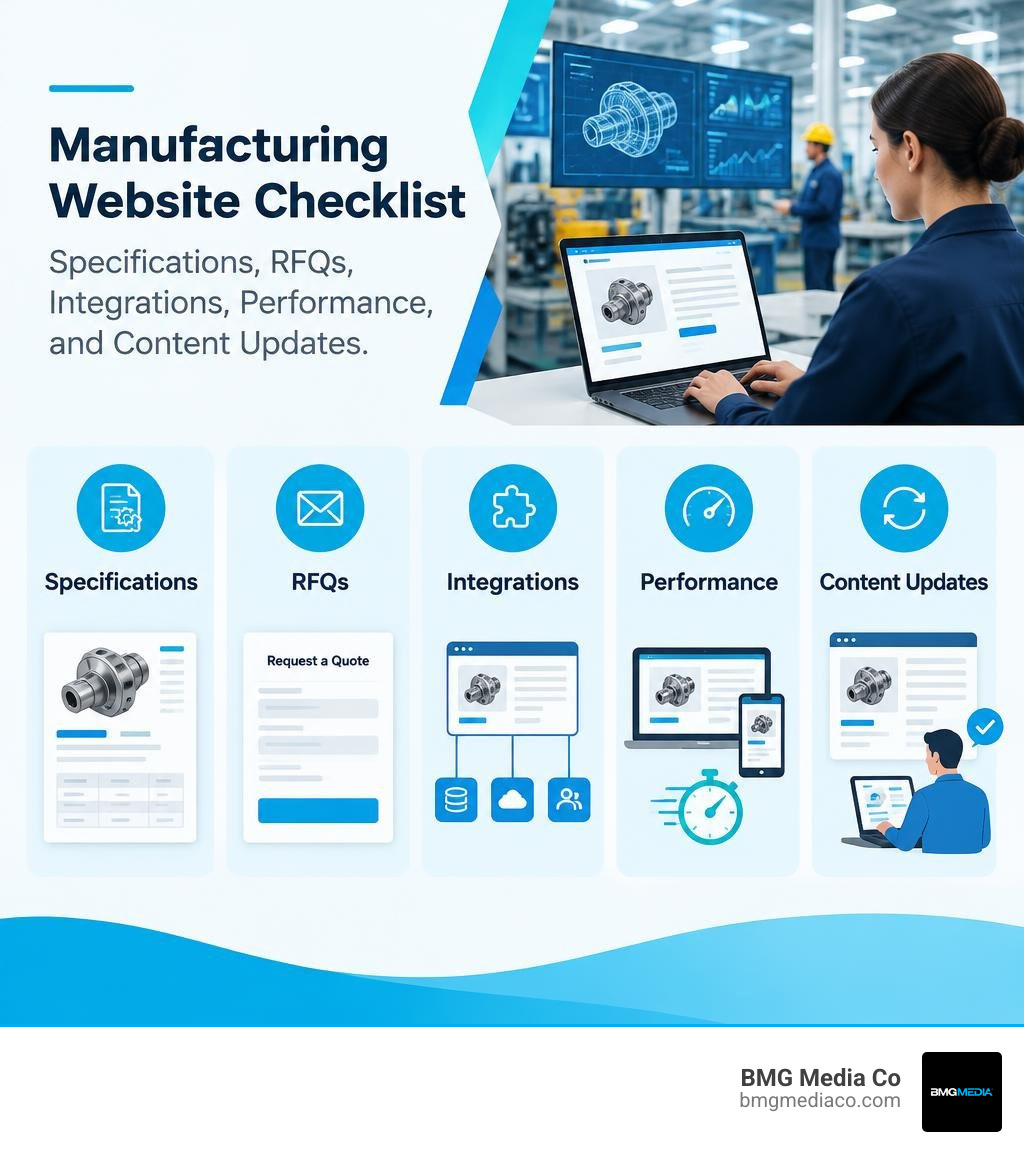
A website for manufacturing companies should help buyers find the right product or capability, check specifications, and request a quote without digging through PDFs or calling for basic details. When comparing options, look for clear technical pages, searchable product data, an easy RFQ form, and support for the systems your team uses, such as an ERP or CRM. Then check speed, mobile usability, and how easily your team can keep information current.
I’m Blake George, founder of BMG Media Co. My work on a website for manufacturing companies draws on custom WordPress development, user experience design, and digital strategy. Here’s the checklist to use as we compare your options.
Basic website for manufacturing companies vocab:
The global industrial landscape demands speed, precision, and clarity. Modern manufacturing encompasses everything from high-volume precision turning and heavy equipment fabrication to agile, short-run advanced composites. Operating as a competitive global industrial enterprise requires a digital presence that reflects this physical scale and sophistication.
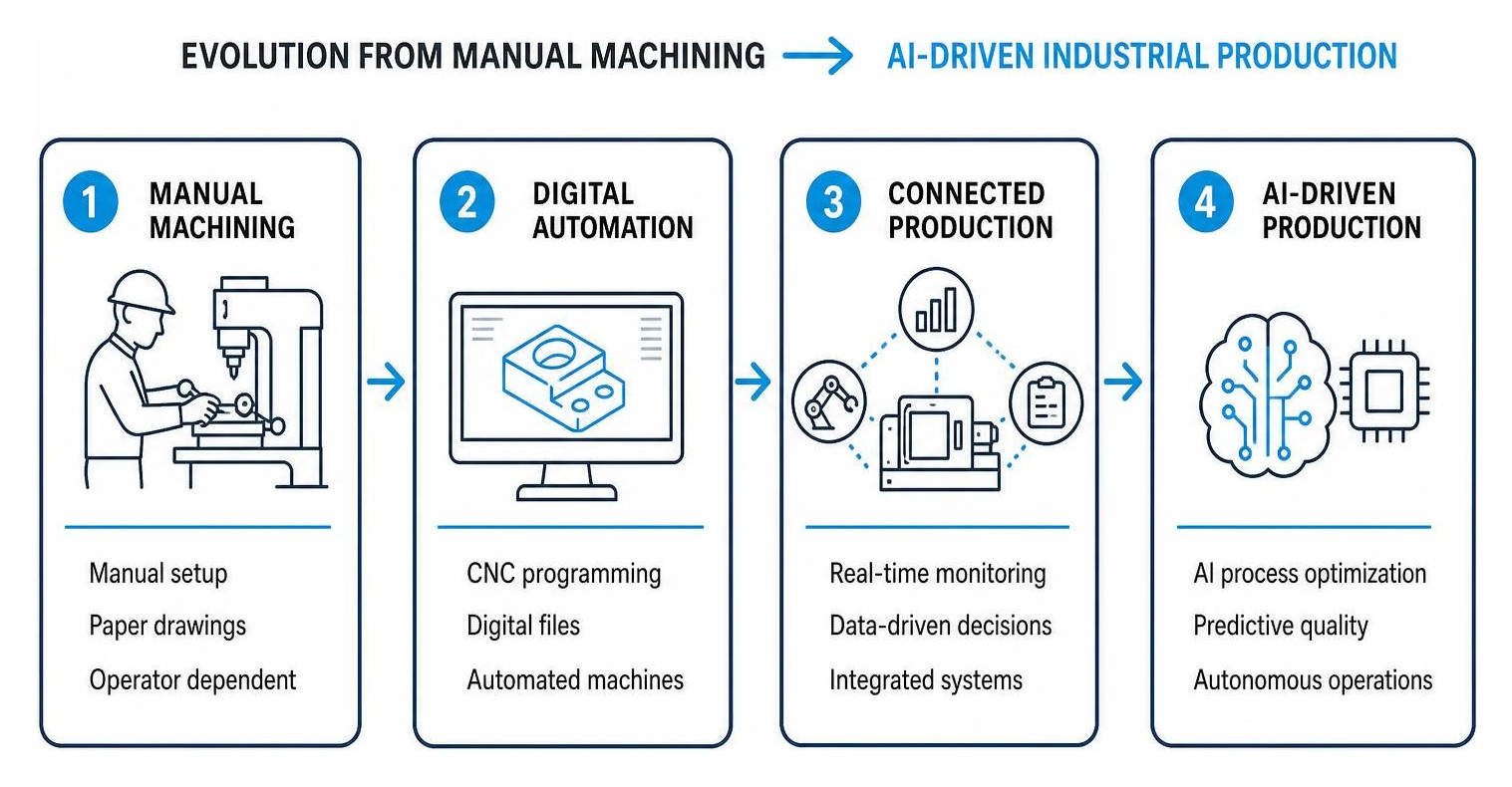
A successful digital strategy aligns directly with your production model:
Whether your shop floor executes lean manufacturing pull systems to eliminate waste or coordinates world-class manufacturing across multi-facility operations, your website architecture must communicate these operational strengths to procurement specialists instantly. BMG Media Co. has built custom site development for complex manufacturing needs for manufacturers across these production models, delivering spec-driven platforms that turn technical traffic into qualified RFQs.
Industrial buyers, mechanical engineers, and procurement directors do not browse websites like everyday consumers. They buy by strict specification, tolerance thresholds, and material compatibility. When evaluating digital platforms, engineering-focused user experience (UX) and raw technical performance must take priority over purely decorative aesthetics.
When selecting the technical foundation for your site, prioritize these core architectural benchmarks:
Building a platform that accommodates these requirements often demands custom site development for complex manufacturing needs, ensuring your backend data structures can handle thousands of unique SKUs effortlessly.
Your website should not function as an isolated marketing brochure; it must serve as an active portal connected directly to your operational software ecosystem:
For most industrial operations, the quote funnel represents the primary conversion engine. Traditional static PDF download forms create unnecessary friction that slows down commercial momentum.
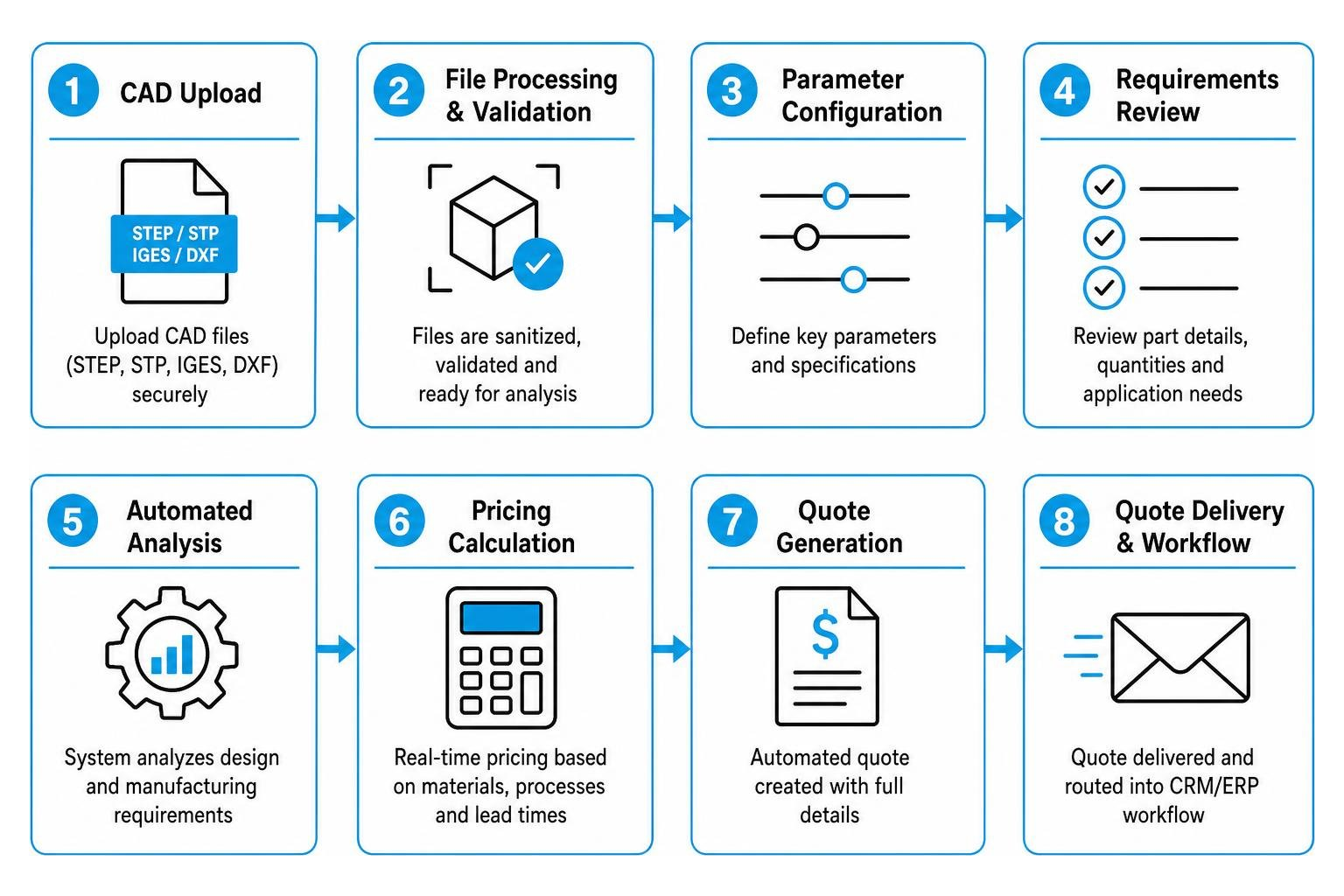
Modern quoting engines should offer:
Industrial contracts are won on trust, traceability, and verified quality standards. A website for industrial operations must establish technical credibility the moment an engineering director lands on a capabilities page.
Your website framework must prominently display, document, and organize critical regulatory standards:
Demonstrating engineering support—such as in-house Design for Manufacturability (DFM) reviews, finite element analysis (FEA), and rapid functional prototyping—is essential when executing manufacturing brand website redesign strategies. Showing buyers that your engineering team collaborates on tooling optimization builds immediate confidence.
When choosing how to build or rebuild your industrial website, you will generally face two paths: deploying generic pre-made templates or investing in custom engineering built from the ground up.
| Evaluation Factor | Custom WordPress Architecture | Off-the-Shelf Page Builder Templates |
|---|---|---|
| Code Cleanliness & Speed | Lightweight, zero bloat, optimized Core Web Vitals | Heavy script overhead, third-party plugin drag |
| ERP / CRM Integration | Direct, secure API endpoints tailored to your stack | Fragile webhook connections prone to breaking |
| Data Architecture | Custom post types tailored to exact part specs | Rigid layouts that force specs into basic text blocks |
| Cybersecurity | Hardened, minimal attack surface, role-based access | Vulnerable to generic plugin exploits |
| Conversion Focus | Custom RFQ funnels engineered for technical buyers | Generic contact forms with high friction |
Using generic templates often leads to slow loading speeds and broken styling when attempting to present dense engineering tables. Exploring tailored industrial website design ideas shows how custom development accommodates complex product trees, parametric finders, and custom quoting logic without compromising performance.
The most critical feature is a spec-driven catalog with an integrated, intuitive RFQ workflow. Industrial buyers need to verify tolerances, materials, and dimensional parameters quickly. If an engineer cannot confirm that your machines can hold their required specifications within seconds, they will move on to another supplier.
A custom platform uses modular data structures and parametric search filtering. This allows buyers to filter across hundreds of custom variations based on material, finish, outer dimensions, and batch size, while enabling dynamic quoting forms that capture exact project parameters.
Industrial procurement begins with highly specific searches for exact part numbers, mil-spec standards, material grades, or niche processes (such as 5-axis Swiss micro-machining). Specialized technical SEO and structured schema ensure that search engines index technical tables, allowing buyers searching for precise specifications to land directly on relevant capability pages.
A modern industrial website is more than a digital brochure—it is a core engine for your sales, quoting, and client onboarding workflows. From organizing complex spec sheets and displaying ISO certifications to connecting directly with shop-floor ERP systems, your digital platform must operate with the same reliability and precision as your manufacturing equipment.
At BMG Media Co., we have built 1000+ websites since 2009. From spec-driven digital catalogs to conversion-focused RFQ funnels, we hand-craft custom digital platforms from scratch with clean code, dedicated data structures, and conversion-focused architectures designed specifically for the industrial sector, including custom site development for complex manufacturing needs that streamlines technical specifications and RFQ conversions for precision industrial fabricators.
Ready to elevate your digital presence and turn technical traffic into high-value purchase orders? Request a free quote today to review your project with our engineering and development team.


