October 2026
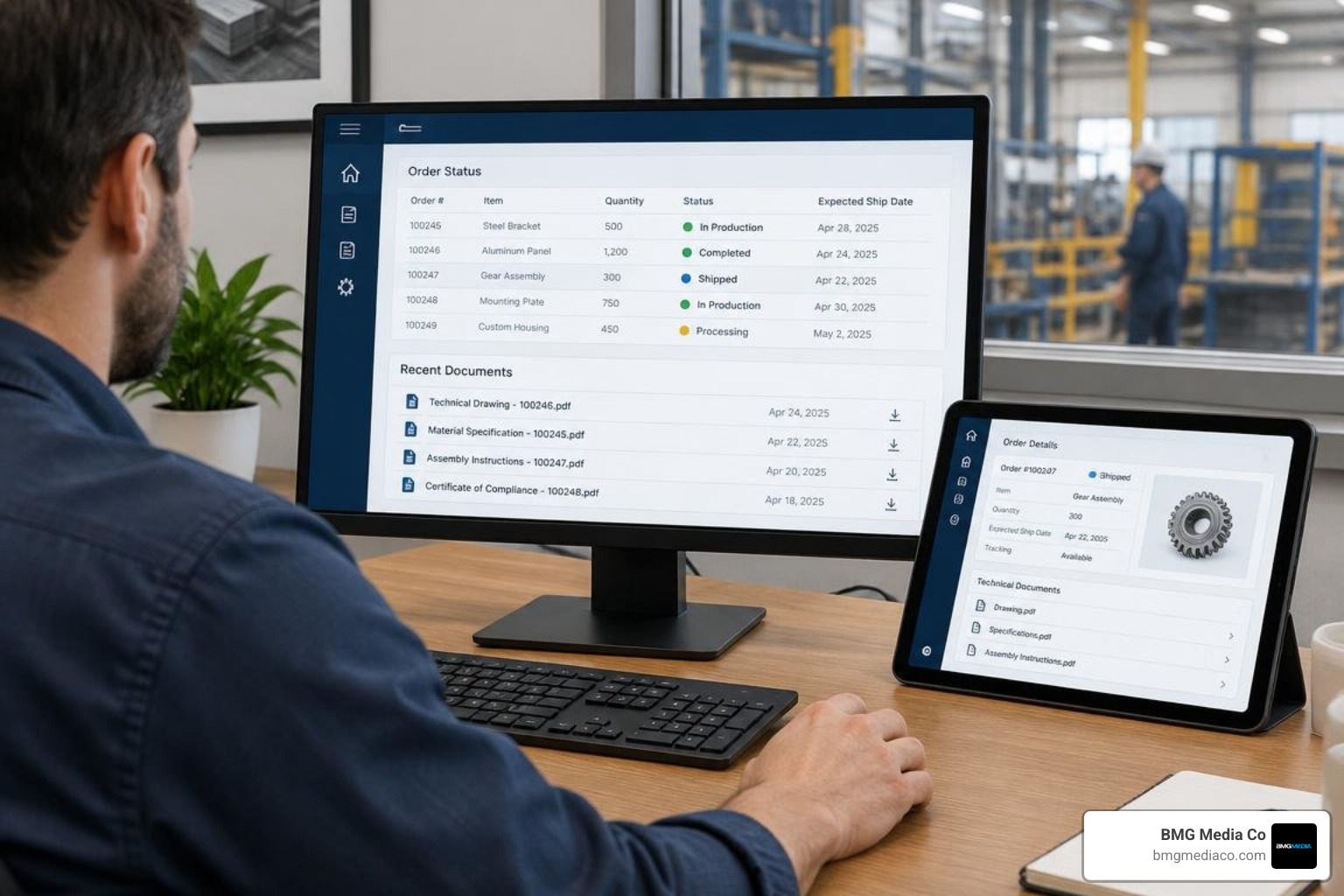
A manufacturing customer portal website is a secure place where buyers can check order status, find technical documents, request quotes, and get support without waiting for an email or phone call. To create one, start with the tasks customers ask your team about most. Then connect the portal to the systems that hold the answers, such as your ERP, MRP, and CRM.
That connection matters. A portal is only useful if customers can trust the prices, production updates, and files they see. It also needs clear permissions so each buyer sees only the information meant for their account.
I’m Blake George, founder of BMG Media Co. My work in custom web development for manufacturers shapes how I think about a manufacturing customer portal website: make useful information easy to reach, without losing control of sensitive data.
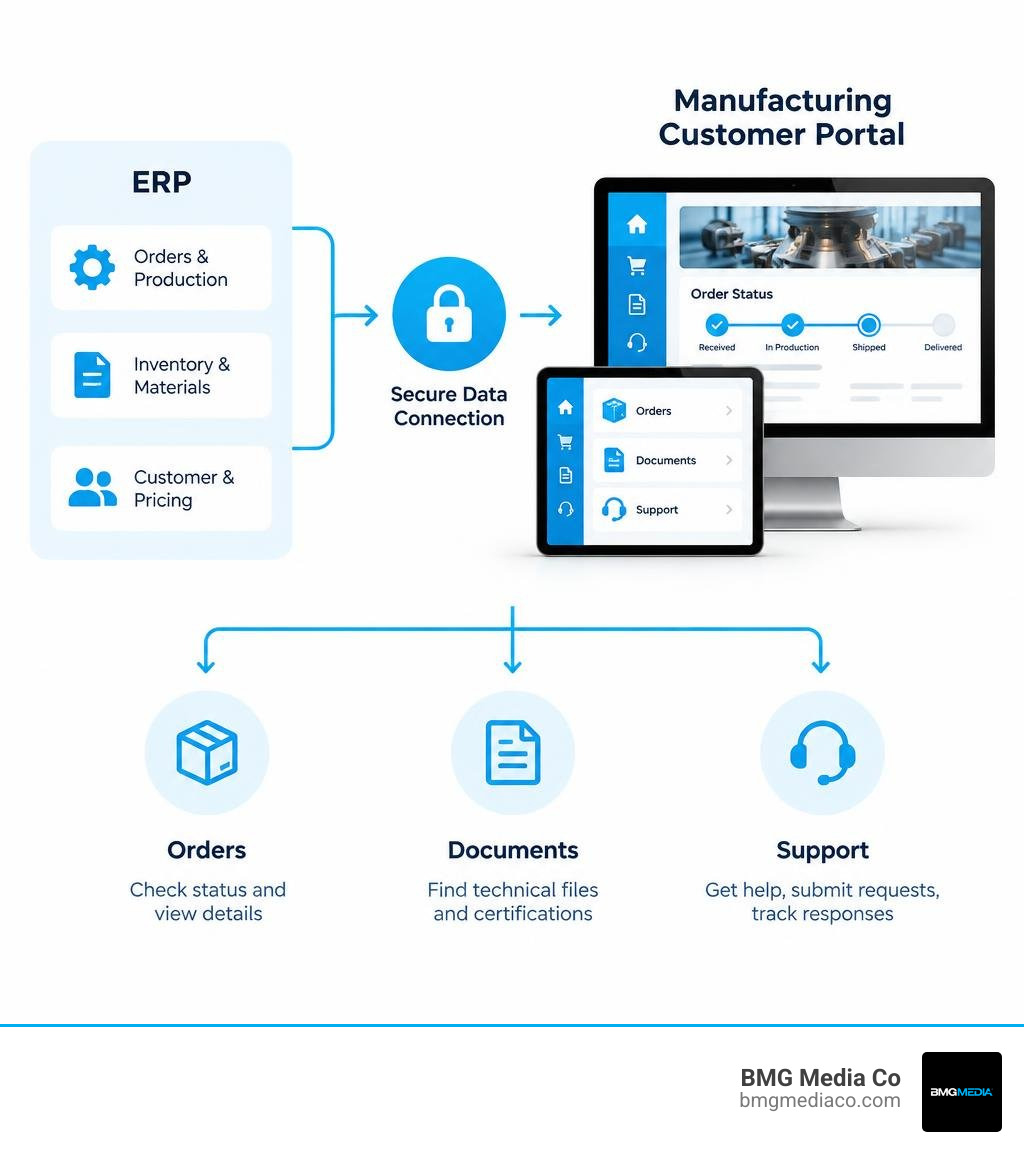
Quick manufacturing customer portal website terms:
Standard business-to-consumer e-commerce websites revolve around immediate transactions: adding items to a cart, entering a credit card, and receiving a fixed-rate tracking number. In contrast, industrial manufacturing operates in a complex environment driven by custom contracts, multi-tiered accounts, variable batch sizes, and extensive technical requirements.
A manufacturing customer portal serves as an operational bridge between a supplier’s factory floor and an enterprise buyer’s procurement team. Many B2B buyers now initiate their purchasing workflow online and prefer digital self-service when placing or repeating orders. A basic online storefront cannot handle these requirements, so manufacturers need a purpose-built customer portal that supports their operational workflows.
| Feature Area | Standard E-Commerce Website | Manufacturing Customer Portal Website |
|---|---|---|
| Pricing Engine | Fixed catalog pricing across all visitors | Dynamic, account-negotiated tiered pricing and blanket agreements |
| Ordering Model | Instant credit card checkout / basic cart | Multi-step RFQ workflows, purchase orders (POs), and blanket release schedules |
| Data Synchronization | Periodic catalog sync to inventory | Bi-directional, real-time integration with backend ERP, MRP, and MES systems |
| Document Access | Basic receipts and shipping tracking numbers | Certificates of Analysis (COAs), material test reports (MTRs), CAD files, and compliance records |
| Access Controls | Simple single-user login profiles | Strict role-based permissions (engineers, buyers, AP clerks) and NDA-scoped views |
| Production Visibility | “Shipped” or “Out for Delivery” statuses | Live stage tracking (e.g., Material Sourced, Machining, QC, Finishing) |
B2B manufacturing clients buy on strict tolerances, material specs, and lead times rather than marketing imagery. Industrial purchasing involves multi-department approvals, repeat order schedules, and complex logistics:
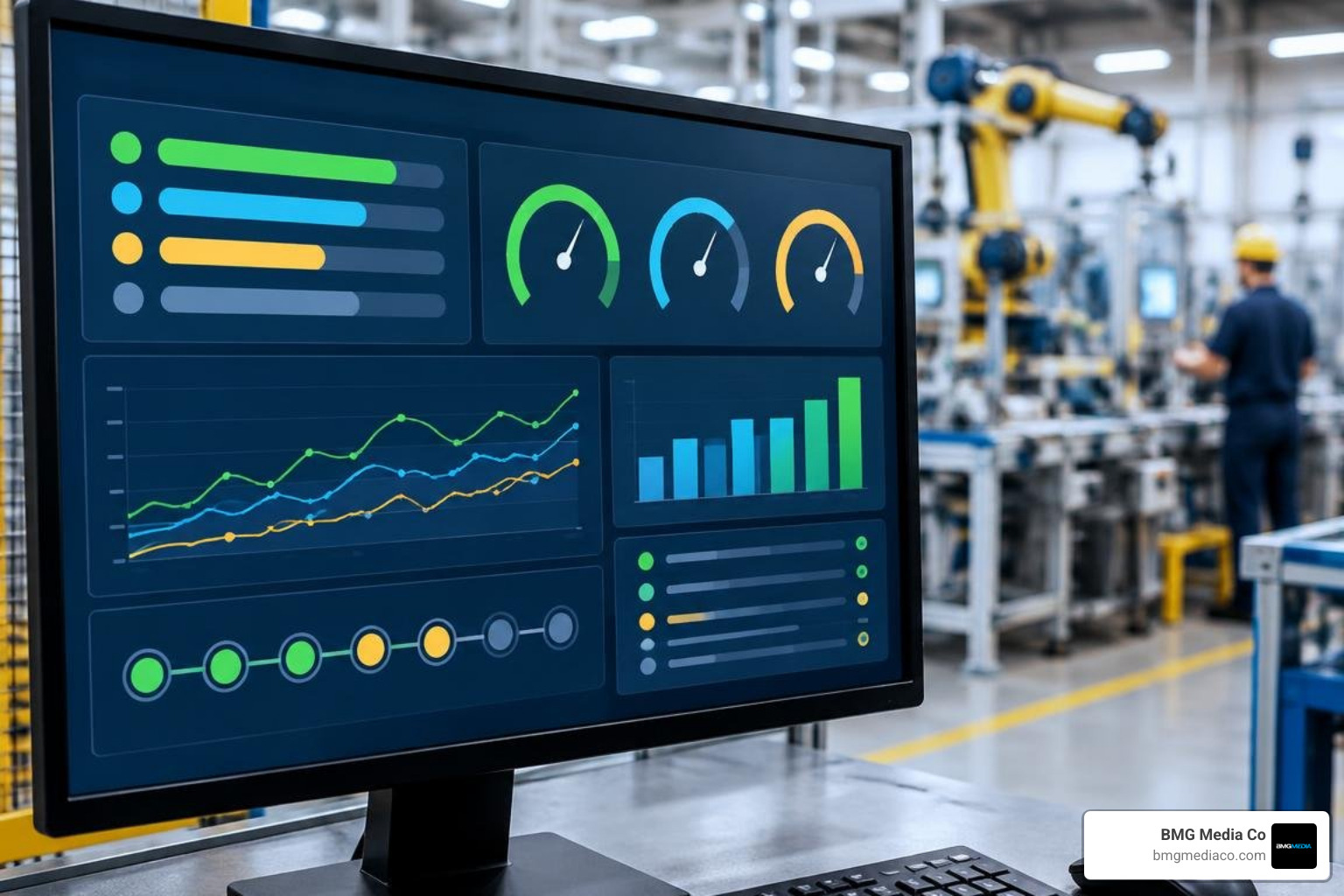
When designing a modern platform, manufacturers need more than static web pages. Building a high-performance system requires custom site development for complex manufacturing needs that aligns day-to-day operations with customer requirements:
Industrial buyers manage significant technical documentation for every assembly. A manufacturing portal serves as a centralized, indexed document repository:
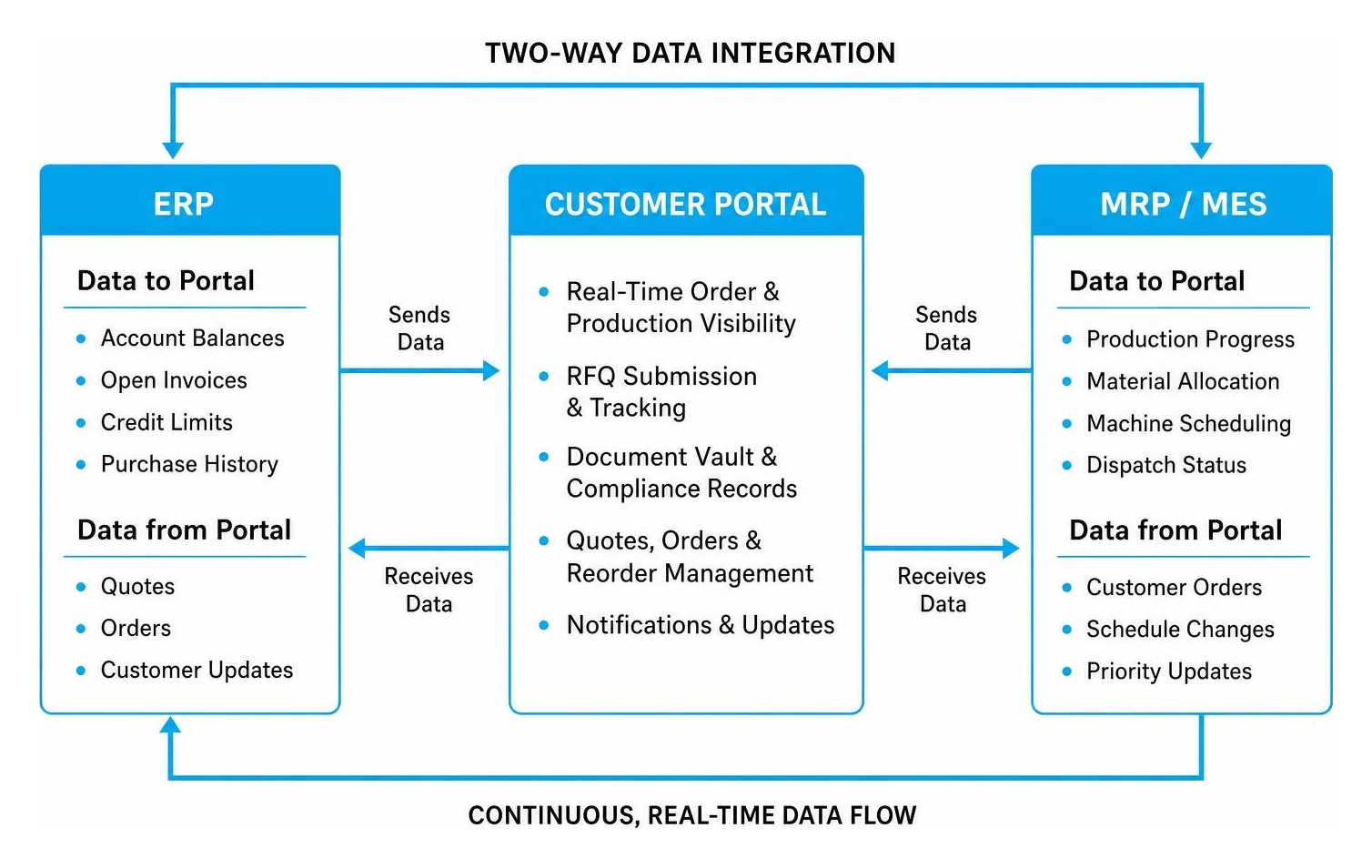
A customer portal is only as reliable as the data behind it. Connecting the platform to central business systems transforms it into an active operational hub. A custom portal development approach helps maintain accurate, continuous data flow across platforms:
Investing in an enterprise-grade portal delivers direct, measurable returns by automating manual administrative tasks:
Protecting intellectual property and proprietary tooling designs is critical when sharing data with external partners. Industrial portals must maintain stringent security protocols:
Selecting the right development path requires balancing short-term deployment speed against long-term flexibility, data ownership, and system compatibility. A clear assessment of operational requirements helps clarify these trade-offs:
| Strategic Factor | Custom Manufacturing Portal Approach |
|---|---|
| Implementation Scope | A phased rollout can prioritize the customer workflows and integrations that matter most first. |
| Integration Flexibility | The portal can connect with legacy ERPs, custom MRPs, and proprietary databases. |
| Data Control and Security | Hosting, permissions, and compliance controls can be designed around the organization’s requirements. |
| Workflow Alignment | The experience can support the shop floor’s quoting, approval, document, and account-management workflows. |
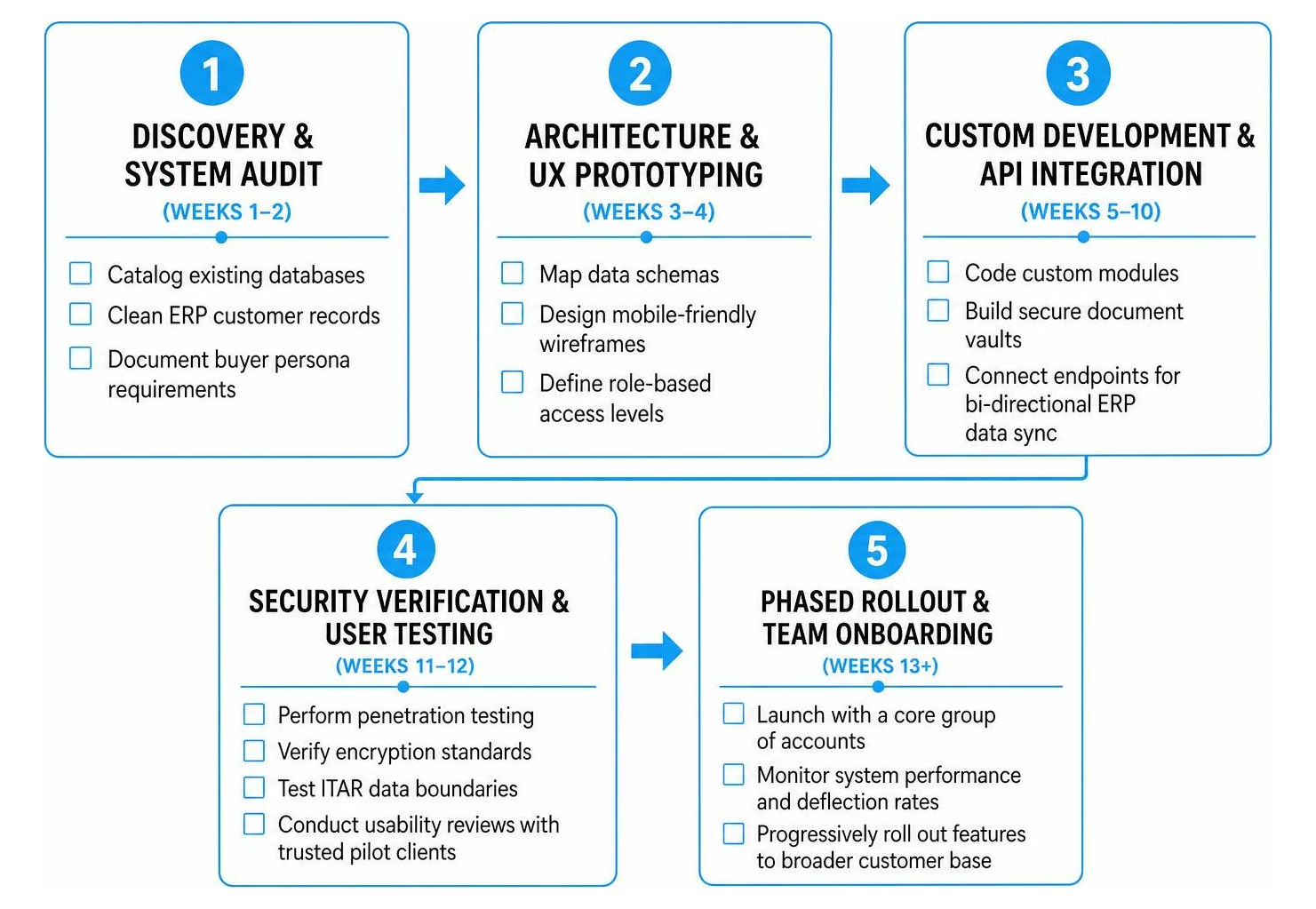
Deploying an industrial portal follows a structured, milestone-driven process to ensure data integrity and user adoption:
A properly integrated portal connects directly to the price matrices defined in your ERP system. When a verified customer logs in, the platform queries their account record to apply negotiated contract tiers, volume discounts, and custom freight terms. This approach prevents pricing discrepancies across systems.
Yes. Secure portals enforce granular access controls, multi-factor authentication, end-to-end encryption, and dedicated server environments. ITAR-governed documentation can be restricted using role-based permissions, automated access logging, and dynamic file watermarking so that only authorized, verified personnel can access export-controlled data.
Most manufacturers realize positive returns within 6 to 12 months after deployment. Immediate savings come from lower support call volumes, reduced manual data entry errors, and reclaimed administrative hours. Over time, businesses benefit from higher reorder rates, faster invoice settlements, and stronger retention among top-tier accounts.
Modern B2B buyers expect the speed and convenience of digital self-service alongside the precision required for complex manufacturing contracts. Implementing a manufacturing customer portal website streamlines communication, safeguards sensitive intellectual property, and reduces administrative overhead across your entire organization.
At BMG Media Co., we have built 1000+ websites since 2009, including custom platforms for manufacturing clients who needed secure, ERP-connected workspaces for their buyers. We engineer custom digital platforms from the ground up without generic templates or bloated page builders, delivering hand-crafted solutions designed around specific ERP systems, manufacturing workflows, and strict security requirements.
Explore our dedicated manufacturing website design services or request a free quote to start building a modern, secure customer portal for your business.
