May 2026

Web development for healthcare is the process of designing and building websites, patient portals, and web applications specifically for medical organizations — with a focus on security, compliance, and patient experience.
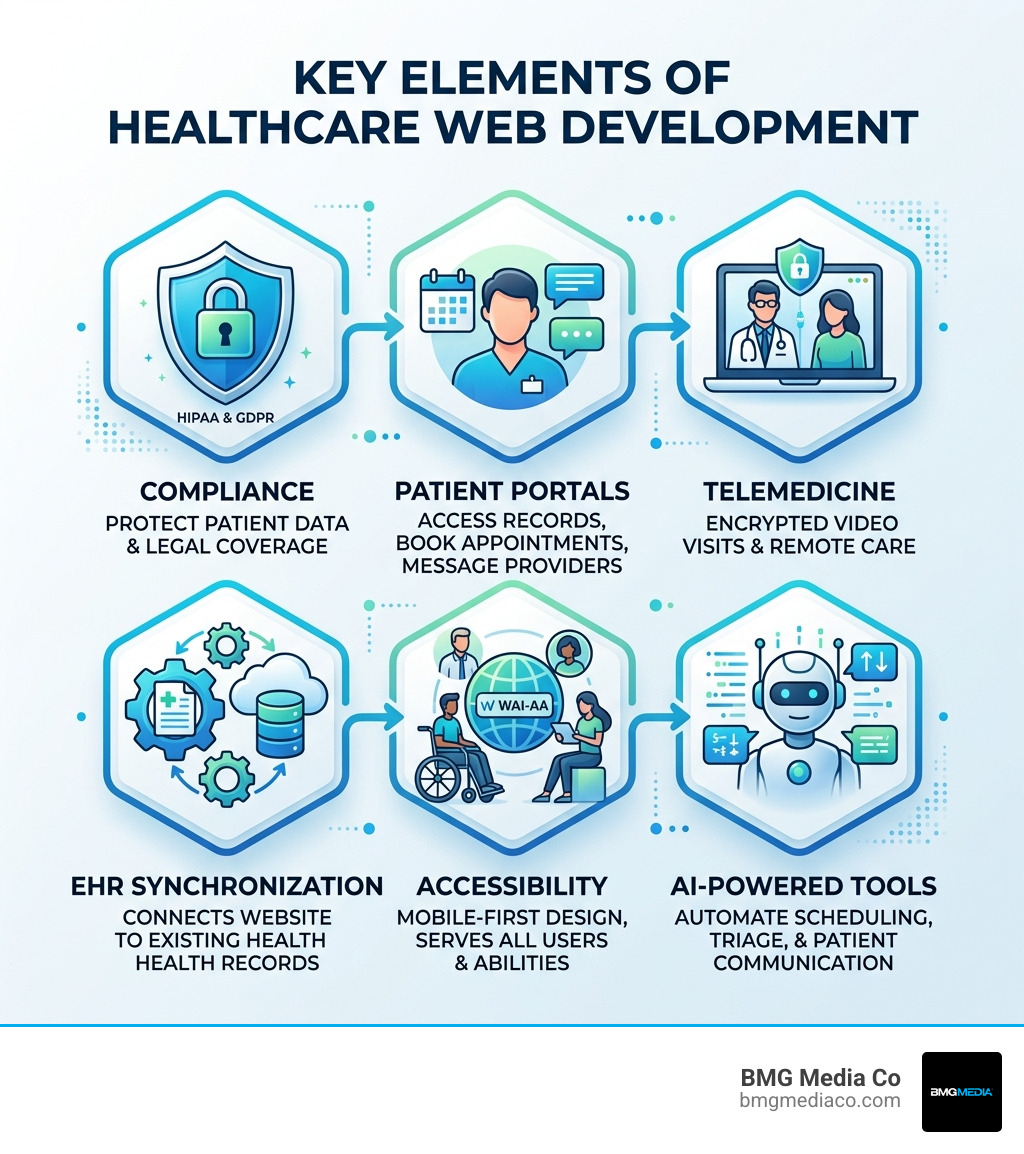
Here’s what great healthcare web development requires at a glance:
| Element | Why It Matters |
|---|---|
| HIPAA & GDPR compliance | Protects patient data and keeps you legally covered |
| Secure patient portals | Lets patients access records, book appointments, and message providers |
| Telemedicine integration | Delivers care remotely through encrypted video visits |
| EHR synchronization | Connects your website to existing health records systems |
| Accessible, mobile-first design | Serves all patients, regardless of device or ability |
| AI-powered tools | Automates scheduling, triage, and patient communication |
The stakes in healthcare are higher than in almost any other industry. Nearly 8 in 10 U.S. adults go online to research health symptoms or conditions, according to Pew Research Center. And 84% of patients check online reviews before choosing a provider. Your website isn’t just a brochure — it’s often the first clinical impression you make.
The global healthcare technology market is projected to grow from $592 billion in 2025 to over $1.25 trillion by 2029. Organizations that invest in strong digital infrastructure now will be far better positioned to compete.
I’m Blake George, founder of BMG Media Co, and over more than a decade leading custom web development for healthcare organizations and beyond, I’ve seen what separates a compliant, high-performing medical website from one that quietly drives patients away. In this guide, I’ll walk you through exactly what it takes to get web development for healthcare right in 2026.
Web development for healthcare vocab to learn:
In 2026, a medical practice without a sophisticated digital presence is like a doctor without a stethoscope — you simply can’t perform at your best. The digital transformation of medicine has shifted from a “nice-to-have” to a fundamental operational requirement.
Trust is the currency of healthcare. Research shows that over 70% of Americans are exposed to medical misinformation online, and nearly half don’t feel confident in the accuracy of what they find. By investing in professional web development for healthcare, we help your organization become a beacon of reliability. A custom-built site serves as a verified resource where patients can find medically sound information, which directly enhances your brand authority.
Health concerns don’t wait for business hours. Patients often search for answers or try to book appointments late at night. A static site that only lists your address and phone number fails these users. Modern Medical Healthcare Web solutions provide a 24/7 digital “front door,” allowing patients to engage with your practice on their own schedule. This convenience is a massive driver for patient retention; 61% of patients say they would visit their provider more often if digital services were better tailored to their needs.
Beyond the patient experience, great web development streamlines your internal operations. When your website handles appointment scheduling, intake forms, and bill payments, your administrative staff can focus on high-value tasks rather than answering repetitive phone calls.
Statistics show the impact clearly:
By focusing on custom solutions rather than generic templates, we ensure your site reflects the unique workflows of your clinic or hospital, giving you a distinct competitive edge in a crowded Michigan market.
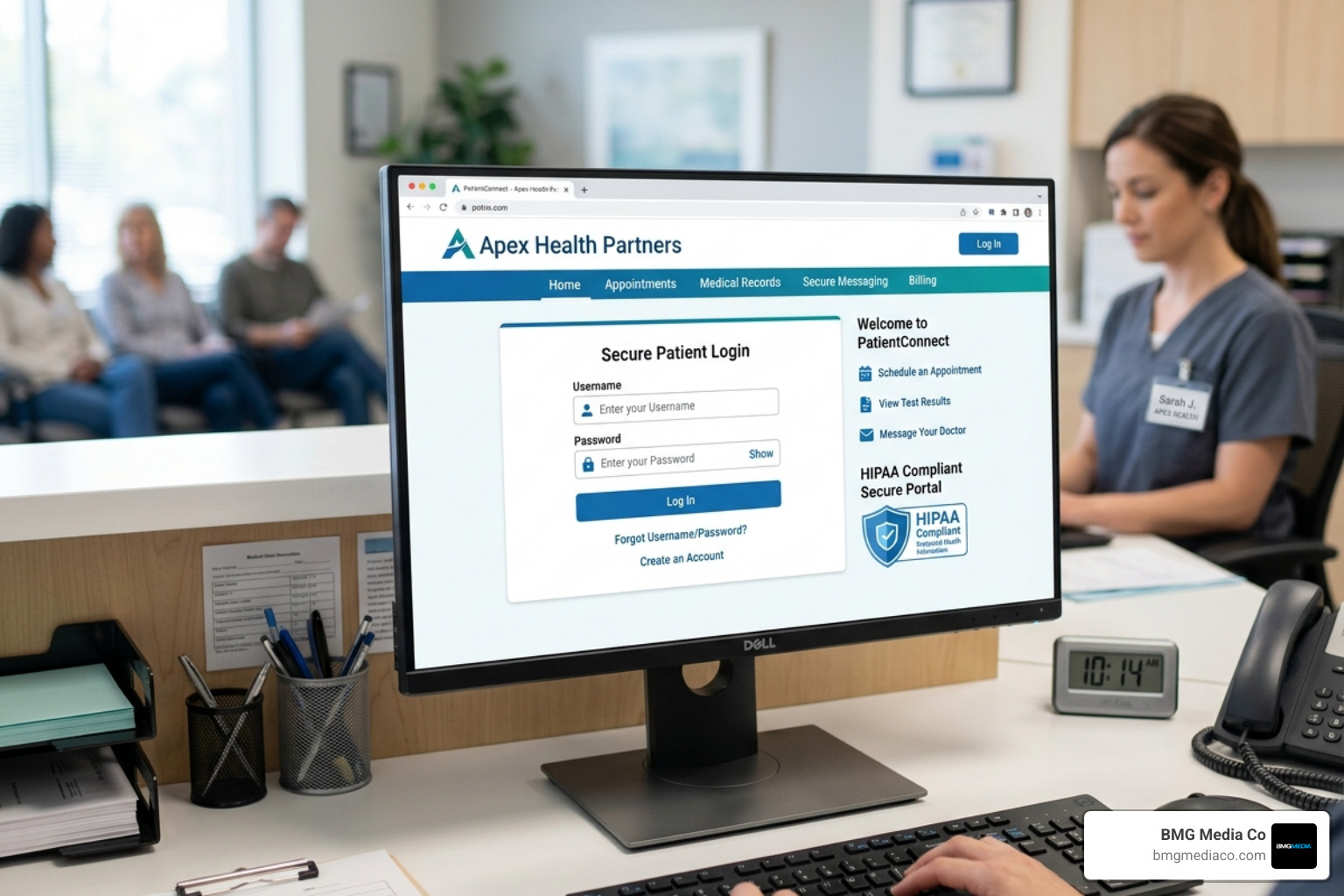
When we talk about web development for healthcare, we aren’t just talking about pretty pictures. We are talking about functional tools that bridge the gap between provider and patient.
The days of “calling to see if the doctor is in” are fading. We prioritize Doctor Appointment Booking Sites That Save Your Sanity by implementing real-time calendar syncing. This reduces no-shows by up to 25% through automated SMS and email reminders.
Telemedicine is no longer an “extra” service; it is a core expectation. 54% of Americans have used telehealth, and integrating secure video consultations directly into your web app ensures a seamless transition from booking to the actual visit without requiring patients to download third-party software.
A great healthcare site acts as an interconnected ecosystem. By using FHIR (Fast Healthcare Interoperability Resources) APIs, we can synchronize your website with Electronic Health Records (EHR) systems. This allows for:
| Feature | Informational Site | Advanced Healthcare Web App |
|---|---|---|
| Purpose | Brand awareness & basic info | Clinical operations & patient care |
| Data Handling | Minimal (Contact forms) | High (PHI, EHR, Lab results) |
| Interactivity | Low (Static content) | High (Telehealth, Portals, Payments) |
| Compliance | Basic SSL | Full HIPAA/GDPR Audit Trails |
Engagement is about more than just a login screen; it’s about providing value. One of the best ways to do this is through content. Knowing How to Set Up Your Medical Blog Without a PhD in Tech allows your practitioners to share insights on preventative care, which keeps patients coming back to your site as a trusted resource.
We also look at The Best WordPress Sites for Doctors and Why They Work to understand the balance between professional aesthetics and functional engagement. Features like AI-powered symptom checkers can guide patients to the right level of care (e.g., “Schedule an appointment” vs. “Go to the ER”), while personalized dashboards show them their specific health milestones.
In healthcare, a data breach isn’t just a PR nightmare — it’s a legal and ethical disaster. Healthcare data is among the most targeted information globally. That’s why security is the foundation of everything we build.
In the U.S., HIPAA (Health Insurance Portability and Accountability Act) is the gold standard. Any site handling Protected Health Information (PHI) must have:
For organizations serving international patients, GDPR (General Data Protection Regulation) adds another layer of privacy by design, ensuring patients have the “right to be forgotten” and total control over their data.
Accessibility isn’t just a buzzword; it’s a legal requirement under the ADA (Americans with Disabilities Act). A patient with a visual impairment or a motor disability should be able to navigate your site as easily as anyone else.
We follow WCAG 2.1 (Web Content Accessibility Guidelines) standards, which include:
Knowing How to Build a Mobile-Friendly Medical Site is also critical, as many elderly or low-income patients rely solely on smartphones for internet access. We focus on inclusive design, like Optometry Practice WordPress Sites That See Clearly, where visual clarity and simple navigation are prioritized to reduce the cognitive load on patients who may already be under stress.
Building a healthcare application is more complex than a standard e-commerce site. It requires a disciplined, phased approach to ensure nothing is missed.
We start by asking “Why?” What problem are we solving? We interview stakeholders — doctors, nurses, and patients — to map out the user journey. During this phase, we also conduct a compliance audit to determine exactly which regulations apply to your specific data types.
Before a single line of code is written, we create interactive wireframes. This allows us to test the “logic” of the site. Can a patient find the “Book Appointment” button in less than three seconds? Is the patient portal intuitive? We aim for 94% easy navigation, as that is the feature users value most.
For web development for healthcare, we recommend robust, scalable technologies:
We don’t believe in “screen scraping.” We use modern FHIR APIs to ensure your site communicates cleanly with your EHR and billing software. This phased integration approach allows us to start with “read-only” access to ensure data integrity before moving to full bidirectional synchronization.
Our QA process is rigorous. We perform:
The cost of web development for healthcare varies based on complexity. A basic informational website for a small practice might range from $10,000 to $30,000. However, a full-scale enterprise telemedicine platform or custom EHR system can range from $100,000 to over $500,000.
Factors that influence the price include:
At BMG Media Co, we are firm believers in custom solutions. Templates are often bloated with unnecessary code that can create security vulnerabilities. Custom sites offer:
AI is transforming web development for healthcare from a passive tool into an active assistant.
Great web development for healthcare is about more than just code; it’s about care. It’s about creating a digital environment where patients feel safe, informed, and empowered, and where providers have the tools they need to work efficiently.
At BMG Media Co, we specialize in high-performance, fully custom web solutions that move the needle for medical organizations. Based right here in Birmingham, Michigan, we’ve completed over 1,000 sites, earning recognition as a leader in the healthcare space. We don’t use templates because we know your practice isn’t “cookie-cutter.”
Whether we are working with the Legacy Dermatology Group to create a seamless digital front door or helping Motor City Orthopedics streamline their patient workflows, our goal is always the same: award-winning design backed by ironclad security.
We were recently honored to see that BMG Media Earns Clutch Leader Award for Top Web Designers in the Healthcare Space, a testament to our commitment to this vital industry.
Ready to modernize your practice? Contact our experts for medical healthcare web solutions and let’s build a digital ecosystem that works as hard as you do.
